Nursing accessories replacement timing
Nursing accessories replacement timing depends on their condition, function, cleaning response, and workplace suitability. Replacement is usually needed when nursing accessories no longer perform their intended role reliably during daily use or no longer respond well to normal care. This is a condition-based decision rather than a fixed calendar rule.
Nursing accessories can wear differently depending on material, frequency of use, handling, and maintenance. An accessory may continue to look old while still functioning adequately, or it may develop reliability concerns before visible aging becomes obvious. For that reason, visible age alone does not determine replacement need.
Wear, hygiene, reliability, and workplace suitability are the main decision lenses for evaluating nursing accessories. Changes in function, recurring performance issues, or a poor cleaning response may indicate that replacement should be considered depending on the accessory's condition and use context. For broader context around accessory use and organization, see the nursing accessories hub. These factors provide the foundation for understanding replacement timing before reviewing specific replacement signs.
Different nursing accessories can reach the point of replacement in different ways. Some may show wear-related function problems, while others may develop hygiene concerns, attachment issues, or reduced practical reliability during daily use. Understanding these differences helps frame replacement timing as a maintenance decision based on condition rather than a universal lifespan.
What replacement means for nursing accessories
Nursing accessories replacement is the process of removing a nursing accessory from regular use when cleaning, repair, or continued use no longer keeps it reliable, hygienic, or practical. It marks the point where the accessory has reached a maintenance limit for its intended role. The definition centers on reliability, hygiene, and practicality.
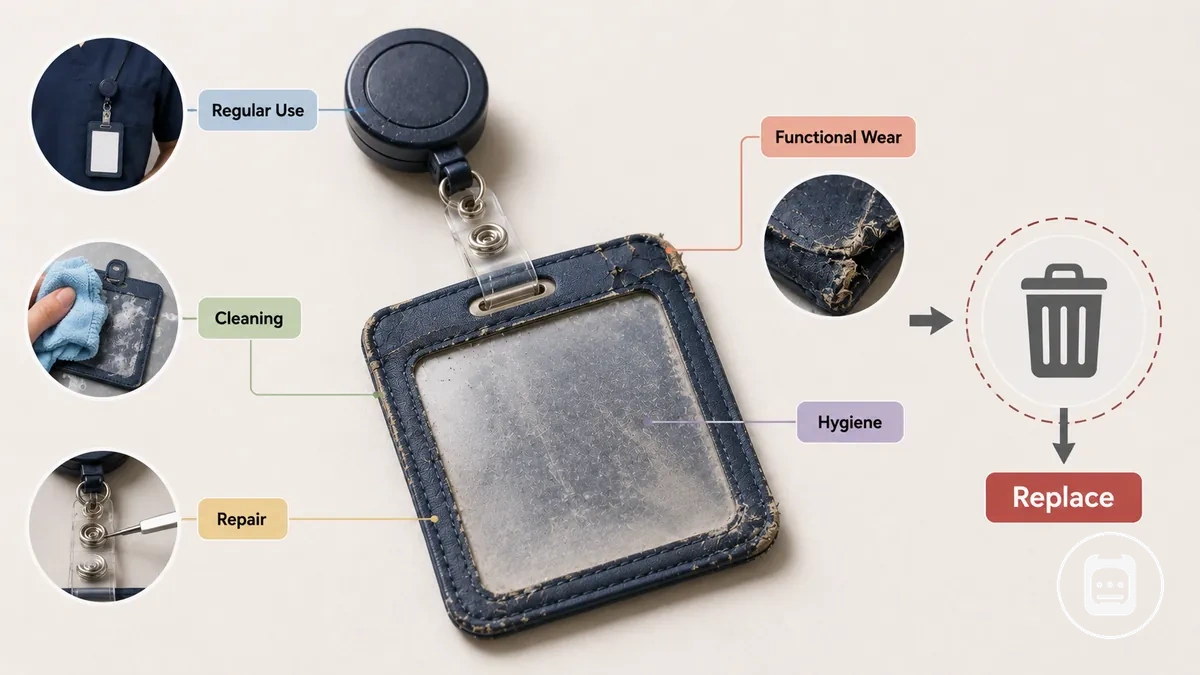
What replacement means for nursing accessories becomes clearer when it is separated from normal maintenance activities. Cleaning and repair are intended to restore a nursing accessory to suitable regular use, while replacement applies when those actions no longer restore acceptable condition or function. Cosmetic age alone does not necessarily require replacement, but functional wear, hygiene decline, or a safety concern may indicate that a worn item should be removed from use. Replacement is not the same as routine cleaning or a temporary repair.
A simple example is a nursing accessory that remains present but continues to show functional wear after cleaning or repair attempts. In that situation, the accessory may be retired because its practical condition is no longer adequately restored for regular use.
Replacement signs that affect nursing use
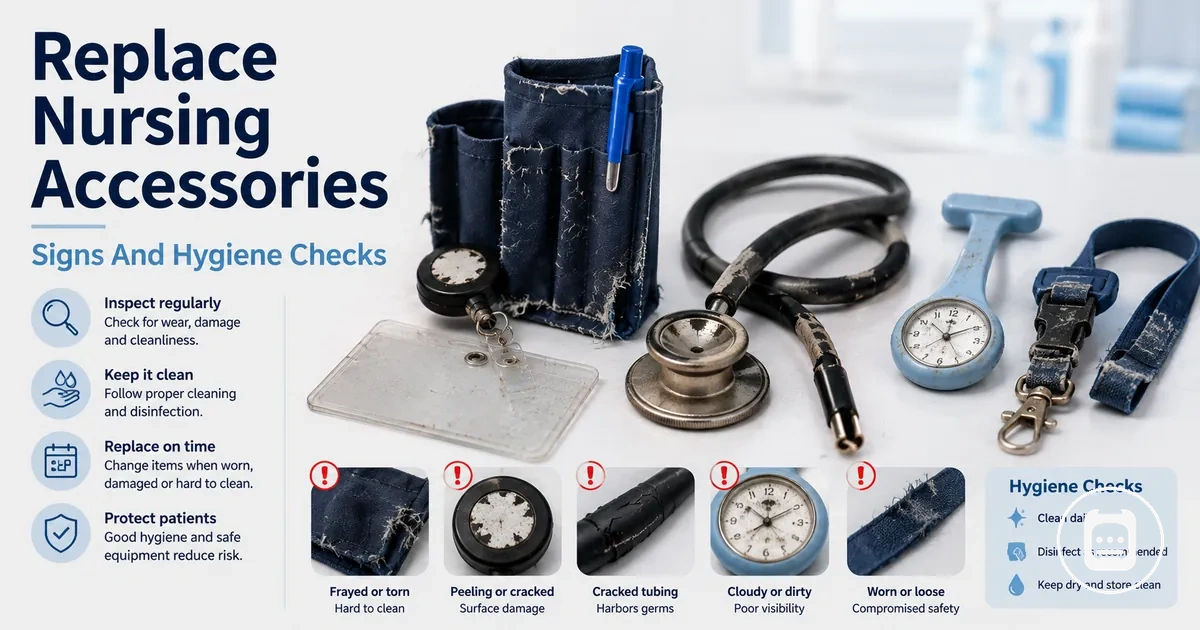
Replacement signs matter when they affect function, hygiene, reliability, or whether a nursing accessory remains suitable for work. A replacement decision should be based on condition severity rather than a single cosmetic mark. The main sign categories are visible wear, function loss, hygiene decline, and reliability problems.
Visible wear and performance issues become more relevant when they change how a nursing accessory part works during normal nursing use. Cracking, loosening, deformation, or recurring function problems may reduce work suitability depending on severity and frequency. Minor cosmetic wear that does not affect use is not necessarily a replacement sign.
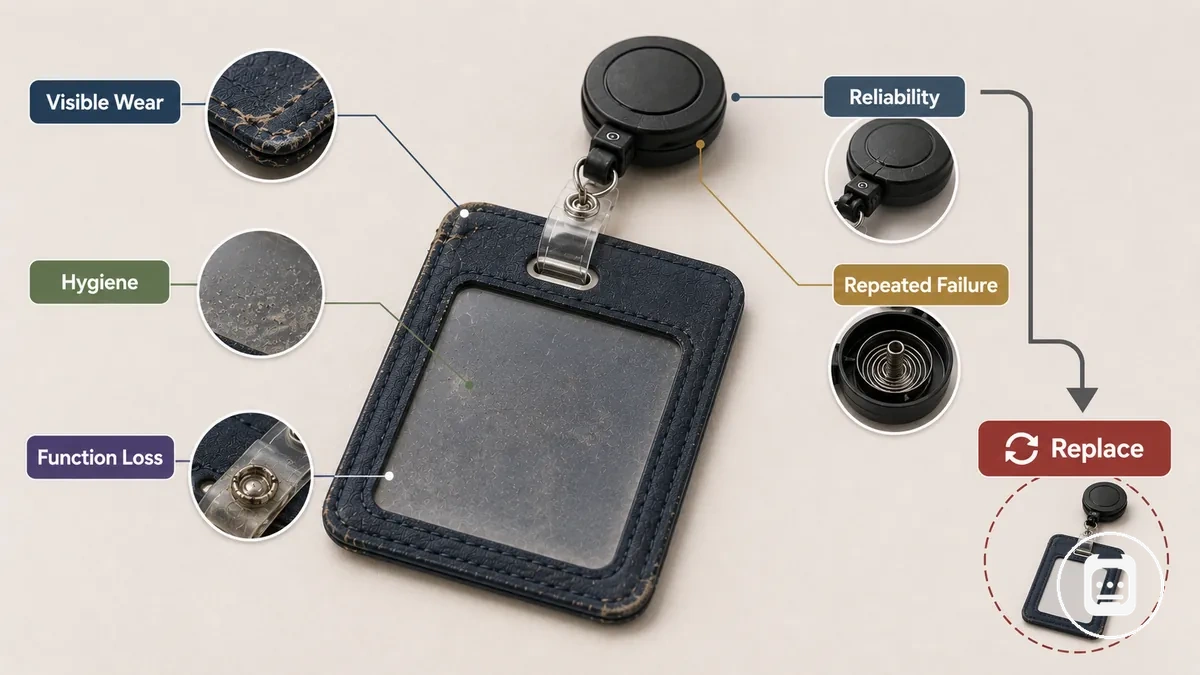
Hygiene concerns and reliability problems can also influence a replacement decision. If cleaning no longer restores acceptable condition, or if residue, deterioration, or repeated use problems remain after normal care, the accessory may become less suitable for work. The effect depends on cleaning response, condition severity, and whether the issue continues during practical use.
An accessory may appear usable but still develop repeated failure during daily shift use. When the same performance issue returns under normal working conditions, reliability can become a stronger decision cue than appearance alone. For related examples and recurring use concerns, see common accessory problems.
Replacement signs that affect nursing use can be reviewed through wear, hygiene, function, and reliability to support a practical replacement decision.
- Visible wear — affects physical condition and handling; suggests assessing whether the accessory remains suitable for work.
- Performance issue — affects normal function; suggests checking whether the problem recurs during regular use.
- Hygiene concern — affects cleanliness and maintenance response; suggests considering replacement when acceptable condition is not restored.
- Repeated failure — affects reliability during nursing use; suggests a higher replacement risk when the same issue continues.
- Accessory part damage — affects practical operation; suggests evaluating condition severity before continued use.
- Poor cleaning response — affects maintenance outcomes; suggests reviewing whether continued repair remains practical.
Physical wear and functional failure
Physical wear and functional failure become important when visible damage starts to reduce normal work function. Cracks, worn surfaces, broken parts, or repeated malfunction can indicate that a nursing accessory is no longer performing consistently during regular use. Physical wear becomes a meaningful condition cue when it contributes to function loss rather than appearance changes alone.
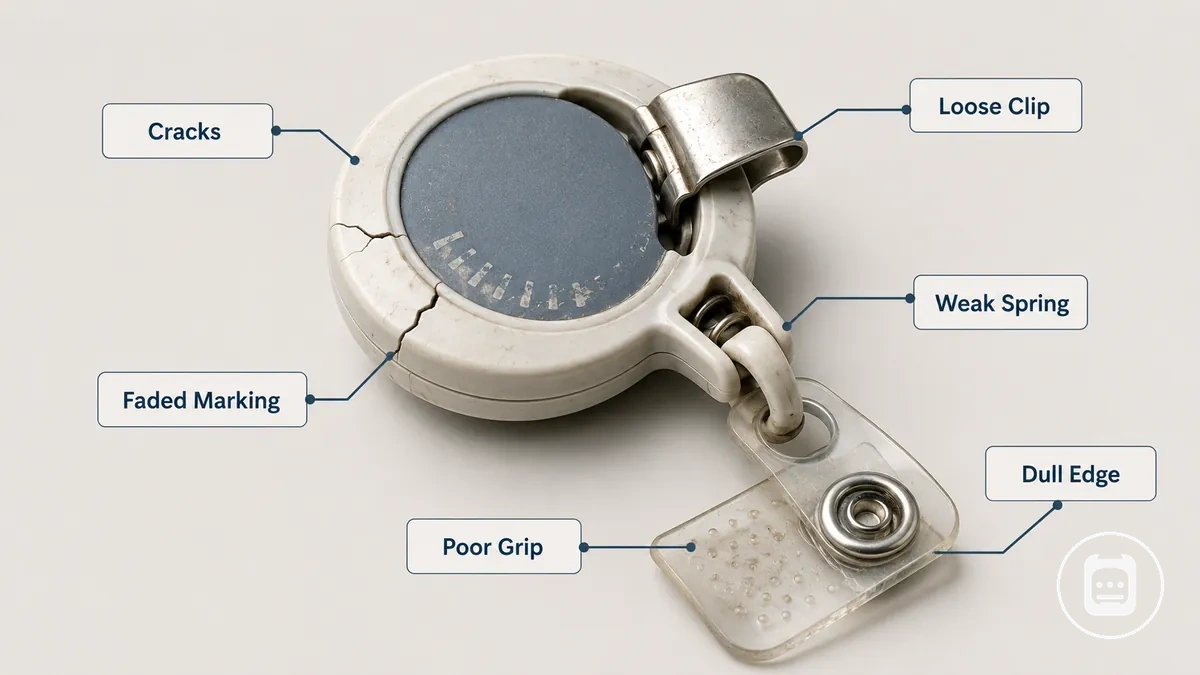
- Cracks in a broken casing — affect structural support and may contribute to function loss when the damage expands during repeated use.
- Loosened clips — affect attachment reliability and may reduce secure positioning during normal work use.
- Weak springs — affect movement or retention and can lead to inconsistent operation over time.
- Dull edges — affect cutting function when edge wear reduces normal work use performance.
- Poor grip surfaces — affect handling and control when a worn surface reduces secure operation.
- Fading markings or repeated malfunction — affect readability or reliability and may create practical issues during repeated use.
Hygiene loss after normal cleaning
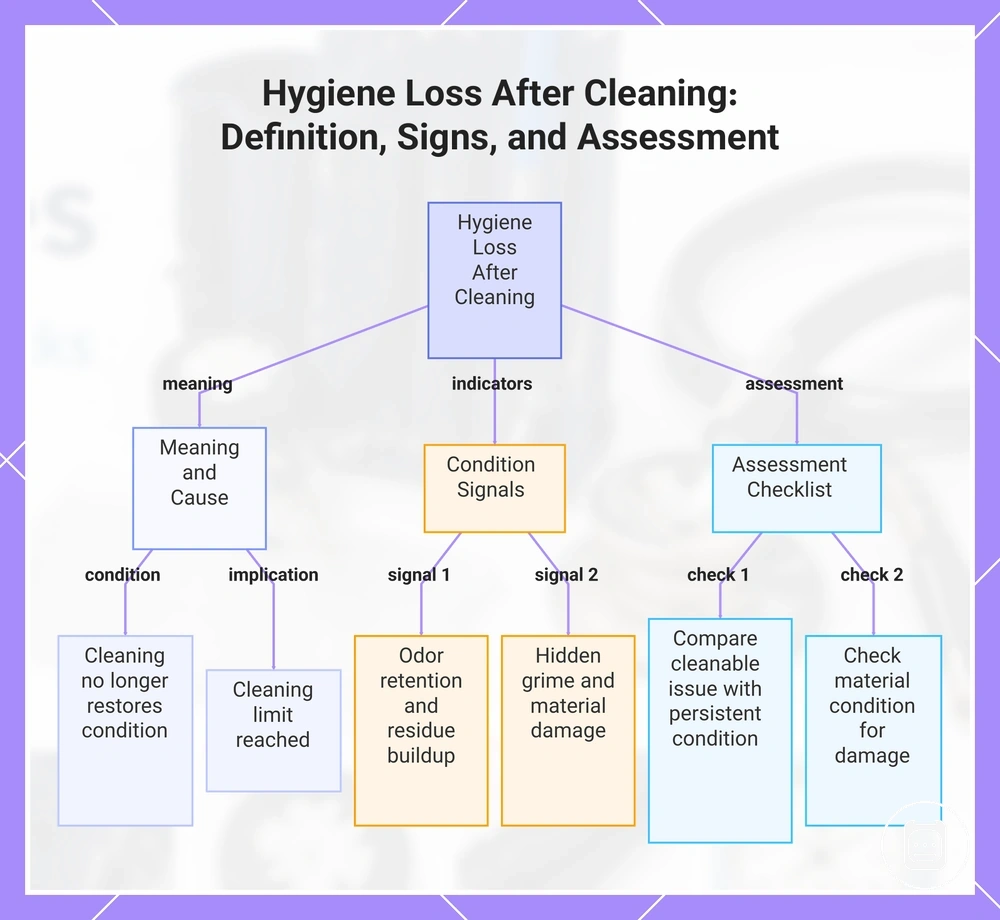
Hygiene loss after normal cleaning occurs when normal cleaning no longer restores a nursing accessory to a hygienic or practical condition. Remaining stains, odor retention, or persistent residue may indicate that cleaning response has reached a cleaning limit rather than resolving the condition. Cleaning response becomes a replacement signal when these issues continue after normal cleaning.
Odor retention, residue buildup, hidden grime, and material breakdown are condition signals that may indicate hygiene decline when they persist despite cleaning efforts. A damaged washable surface can trap persistent residue, while surface damage or material breakdown may reduce how effectively the accessory responds to cleaning over time. These signals are more meaningful when they remain after normal cleaning rather than appearing as temporary issues.
Hygiene loss after normal cleaning can be assessed by comparing a cleanable issue with a condition that continues despite repeated cleaning. The checklist below helps verify whether the concern is linked to cleaning response and material condition.
- Stains remain after normal cleaning and continue to affect practical condition.
- Odor retention persists even after the washable item has been cleaned.
- Residue buildup remains because material condition no longer supports effective cleaning.
- Hidden grime collects in damaged or difficult-to-clean areas and remains after cleaning.
- Material breakdown creates surface damage that may limit future cleaning response.
Cleaning frequency and replacement timing are related, but they are not identical decisions. Guidance for cleaning nursing accessories focuses on maintenance, while replacement timing depends on how the accessory responds after normal cleaning.
This chart shows the definition, key condition signals, and assessment method for hygiene loss that persists despite normal cleaning.
Safety and reliability concerns during shifts
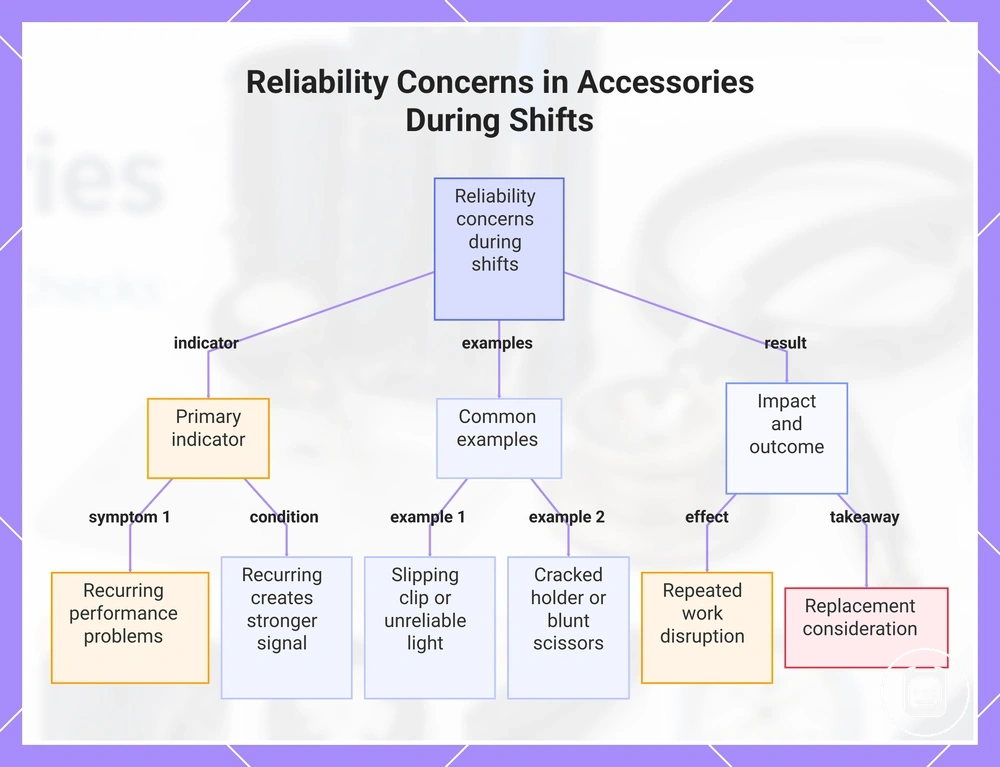
During shift use, an accessory may still seem usable while causing repeated interruptions during routine tasks. A dropped ID item, slipping clip, or unreliable light can interfere with repeated access, visibility, or handling even when the accessory has not completely failed. When the same work disruption occurs repeatedly, it may become a replacement consideration rather than a minor inconvenience.
Reliability concern signals are often easier to identify through recurring performance problems than through appearance alone. A slipping clip may reduce dependable use by affecting attachment, while an unreliable light can make visibility less consistent during shift use. A cracked holder may affect access or retention, and blunt scissors can reduce handling efficiency when repeated use is part of normal work rhythm. These conditions become stronger decision signals when they create a recurring issue instead of an isolated problem.
A safety concern does not necessarily come from a single failure event. For example, an accessory that repeatedly loses position, requires frequent adjustment, or interrupts repeated access can affect shift reliability through ongoing work disruption. When a recurring issue affects visibility, grip, handling, or work rhythm, it may indicate a reliability concern that merits closer evaluation. Similar examples are discussed in common accessory problems.
This chart shows the key indicators, common examples, and outcomes of accessory reliability concerns during shift work.
Accessory-specific replacement cues
Accessory-specific cues help identify when a nursing accessory may need replacement because different accessory types develop different condition signals. A replacement decision often depends on how a specific part or attribute affects function, hygiene, visibility, access, or reliability during use. The accessory type changes the cue because each item depends on different parts and conditions to remain usable.
Accessory-specific replacement cues are easier to compare when organized by accessory type, part, condition, and replacement decision. The table below maps item-specific signs to condition-based replacement cues while keeping the focus on replacement timing rather than product selection.
| Accessory type | Part or attribute | Condition cue | Effect or decision |
|---|---|---|---|
| Badge reel | Clip or tension mechanism | Reduced tension or unreliable attachment | Replacement may be considered when reliability affects repeated access. |
| ID holder | Holder body or attachment point | Cracking, loosening, or reduced retention | Replacement may be appropriate when secure display or access is affected. |
| Penlight | Battery contact or brightness output | Inconsistent operation or reduced brightness | Replacement may be considered when dependable visibility is affected. |
| Scissors | Edge | Dullness, wear, or rust | Replacement may be appropriate when practical use is reduced. |
| Shears | Cutting edge or hinge area | Wear that affects consistent operation | Replacement timing may depend on how the condition affects handling or performance. |
| Pouch | Closure or carrying component | Damage that affects retention or access | Replacement may be considered when reliable access is disrupted. |
| Washable item | Surface | Persistent odor, residue, or material breakdown | Replacement may be appropriate when cleaning response no longer restores practical condition. |
Badge reels, clips, and ID holders
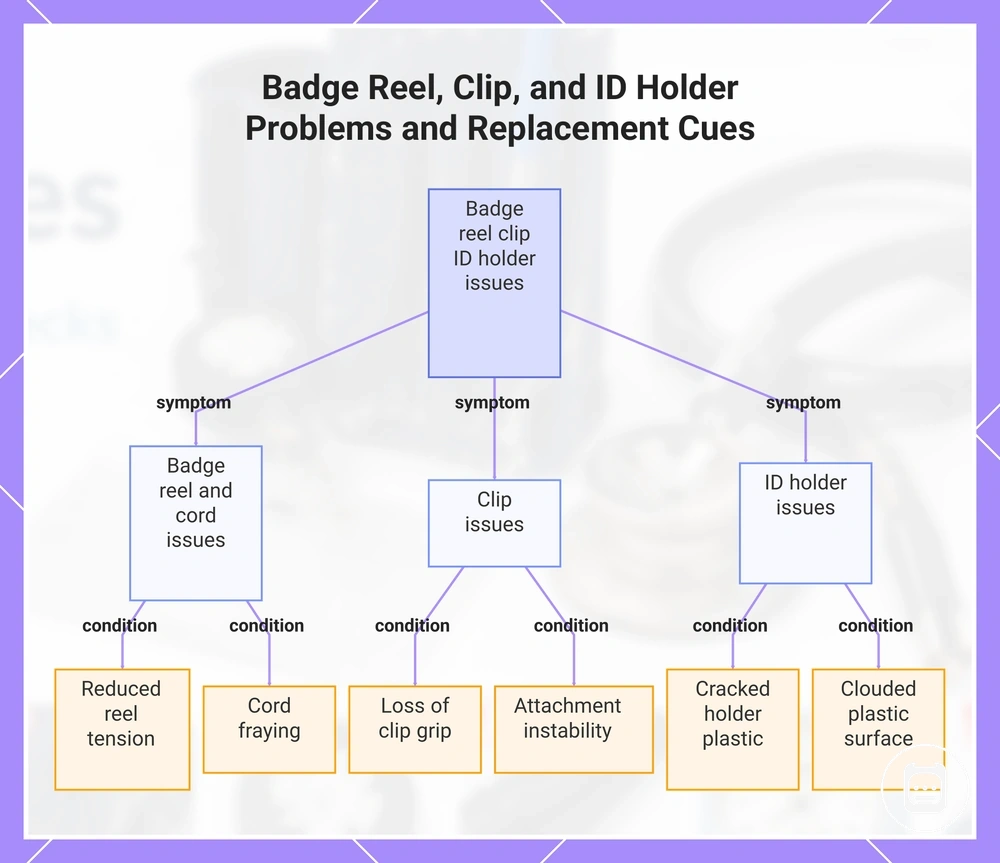
Badge reel, clip, and ID holder problems often appear as attachment, display, or retraction issues during daily use. A badge reel with reduced reel tension, a clip with weakened clip grip, or an ID holder with visible holder damage can reduce dependable use over time. When ID display visibility or attachment stability is consistently affected, replacement may be appropriate.
- Badge reel: Reduced reel tension or unreliable retracting can become a replacement cue when retraction reliability affects repeated access.
- Clip: Loss of clip grip or attachment instability can reduce attachment reliability and may justify replacement when secure carrying becomes less dependable.
- Cord: Cord fraying is a visible condition that can affect retraction reliability or long-term attachment stability.
- ID holder: A cracked holder or cracked plastic can create a display issue or attachment issue when holder damage affects practical use.
- ID holder surface: Clouded plastic can reduce display visibility and may become a replacement consideration when identification is less clear during normal use.
This chart shows common problems with badge reels, clips, cords, and ID holders that indicate when replacement may be appropriate.
Penlights and battery-powered tools
A penlight or battery-powered tool may become a replacement consideration when a persistent problem continues after batteries have been replaced and normal use remains inconsistent. Dim output, flickering, or inconsistent switch response are observable signs that can affect practical use. Replacing batteries addresses a power source issue, while replacing the accessory may be more appropriate when the persistent problem remains.
Light output, switch response, casing condition, and battery contact condition can provide useful replacement cues for small powered accessories.
- Dim output: Reduced light output that continues after a battery change may become a replacement cue when visibility remains inconsistent during daily use.
- Flickering: Repeated flickering is an observable symptom that may indicate a reliability issue when the condition persists.
- Switch response: Inconsistent switch response can reduce practical use when activation becomes less predictable during normal operation.
- Battery contact: Corrosion or an unreliable battery contact can affect power continuity and may become a replacement cue when reliability problems continue.
- Casing condition: A cracked casing or casing damage can affect handling or protection and may influence a practical replacement decision when use is affected.
Scissors, shears, pouches, and washable items
Scissors, shears, pouches, and washable items may need replacement when visible condition changes begin to affect cutting function, storage reliability, hygiene, or shape retention. Dullness, loose hinge movement, fabric damage, or persistent surface issues are practical maintenance checks that can help identify when continued use becomes less reliable. Replacement decisions often depend on how a material or part condition affects everyday use rather than the condition alone.
- Cutting tools
- Scissors with noticeable dullness may become less effective when cutting function is reduced during regular use.
- A loose hinge can affect alignment or control and may become a replacement cue when performance remains inconsistent.
- Rust on scissors or shears is an observable condition that can affect practical use depending on severity and location.
- Shears with joint wear may become a replacement consideration when consistent operation is affected.
- Storage items
- A pouch with a torn seam can reduce storage reliability when retention or containment is affected.
- A broken zipper is a visible closure failure that may reduce secure access or item containment.
- Fabric damage can affect normal carrying use and may influence replacement timing when storage function is disrupted.
- Washable items
- Odor retention that remains after normal cleaning can indicate a hygiene limit for the washable item.
- Persistent residue on a washable surface may become a replacement cue when acceptable condition is not restored.
- Shape loss can affect fit, handling, or intended use when the washable accessory no longer maintains its form.
How long nursing accessories usually stay reliable
Reliability depends on accessory type, use frequency, material, cleaning response, and handling rather than a fixed replacement schedule. Nursing accessories can remain dependable for different periods because wear rate and maintenance response vary across accessory categories. As a result, replacement timing is usually condition-based and reliability varies across nursing accessories.
Accessory type influences which durability factor has the greatest effect on dependable use. High-use items may experience a faster wear rate because repeated handling increases stress on parts and materials, while washable items may depend more heavily on cleaning response and surface condition. Material quality, maintenance response, and everyday handling can all influence practical lifespan and replacement timing.
How long nursing accessories usually stay reliable is best evaluated through conditional factors rather than fixed timelines. The table below organizes accessory category, durability factor, condition or use pattern, and reliability implication to support condition-based decisions without relying on universal schedules.
| Accessory category | Durability factor | Condition or use pattern | Reliability implication |
|---|---|---|---|
| ID and attachment accessories | Attachment components | Frequent clipping, carrying, or retraction use | Reliability may depend on continued attachment stability. |
| Battery-powered accessories | Power and contact condition | Persistent output or contact-related issues | Dependable use may decrease when function remains inconsistent. |
| Cutting tools | Edge and joint condition | Repeated use and visible wear | Replacement timing may depend on continued functional performance. |
| Storage accessories | Material and closure condition | Seam wear, closure wear, or carrying stress | Reliability may change when storage function is affected. |
| Washable accessories | Material and cleaning response | Persistent residue, odor retention, or shape loss | Practical lifespan may depend on hygiene and condition response. |
Condition, use frequency, and durability factors provide a more useful reliability framework than fixed expectations. For a related evaluation criterion, see price and value factors.
When cleaning, repair, or replacement is the safer choice
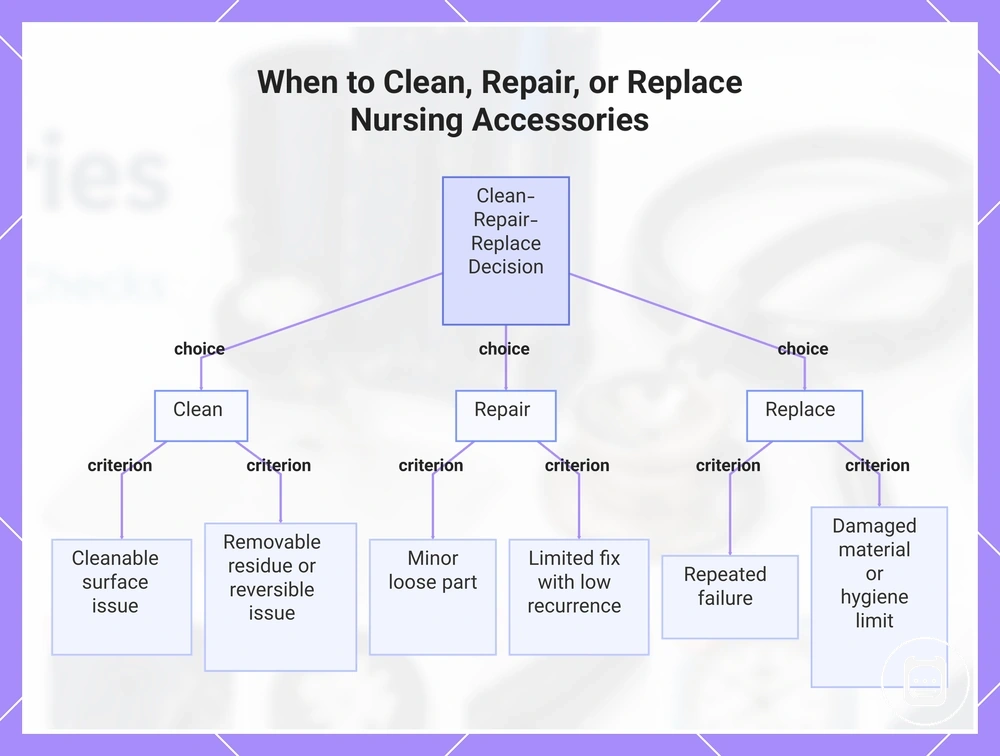
The safer choice depends on the severity, recurrence, condition, function, and hygiene response of the accessory problem. Cleaning may be appropriate for a cleanable surface issue, repair may suit a minor loose part, and replacement may be more appropriate when problems continue despite maintenance. The clean-repair-replace decision is usually based on whether the issue is reversible, recurring, or linked to a hygiene limit.
A cleanable surface, removable residue, or other reversible issue may support cleaning when the cleaning response restores acceptable condition and function. A minor loose part may support repair when the condition is limited and the problem does not repeatedly return. These maintenance options are generally most appropriate when a condition check suggests that the issue can be addressed without ongoing recurrence.
Repeated failure, damaged material, or a hygiene limit may indicate a replacement-level issue because the problem can continue even after cleaning or repair attempts. The safer choice often depends on whether function, condition, or hygiene response remains affected after maintenance. Guidance for cleaning nursing accessories focuses on maintenance methods, while the decision here focuses on choosing between cleaning, repair, and replacement.
When cleaning, repair, or replacement is the safer choice can be organized by severity and recurrence.
- Clean — Choose cleaning when a cleanable surface issue responds well to cleaning and acceptable condition is restored.
- Repair — Choose repair when a minor loose part or limited fix can address the problem and recurrence remains low.
- Replace — Choose replacement when repeated failure, damaged material, or a hygiene limit continues to affect function or condition.
This chart shows the three maintenance options and the specific conditions that make each the safer choice.
Choosing replacement accessories without overbuying
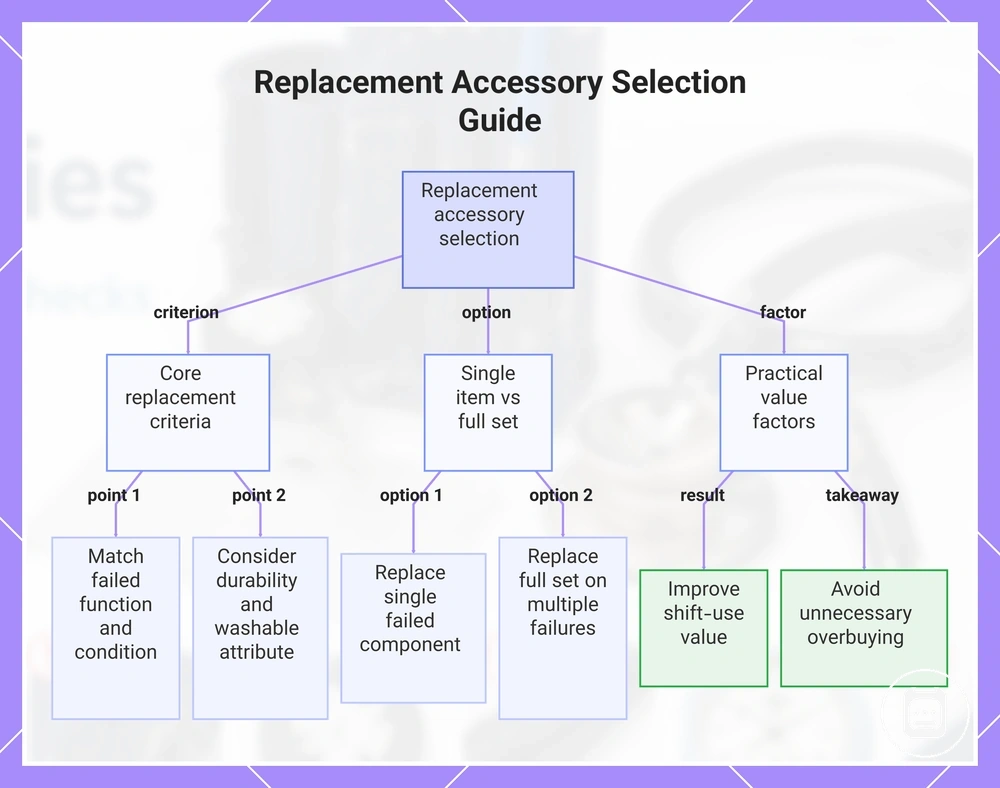
Choosing replacement accessories without overbuying depends on selecting a replacement option that addresses the failed function without replacing items that still meet current needs. A practical replacement should match the original condition issue, expected durability, and shift-use value. The goal is to solve the failed function while avoiding unnecessary replacement.
Durability, washable attribute, and cleaning needs can help determine whether replacement accessories provide practical value over time. A durable accessory may be appropriate when repeated wear contributed to the failed function, while a washable accessory may be more suitable when ongoing cleaning needs influence daily use. Related evaluation criteria are discussed in price and value factors.
Overbuying can often be avoided when only a single item has failed. If one clip, holder, reel, pouch, or similar component no longer performs its intended function, replacing the single item may address the condition need without rebuying a full set. A full set may be more practical when multiple items show similar wear, durability concerns, or recurring reliability issues.
Replacement criteria should connect the failed function, durability, washable attribute, cleaning needs, and shift-use value to a practical replacement decision. For broader maintenance and replacement context, see the nursing accessories hub.
The products below are useful examples for comparing available options. Before buying, check that the compatibility criteria, key features, and product details match your needs.
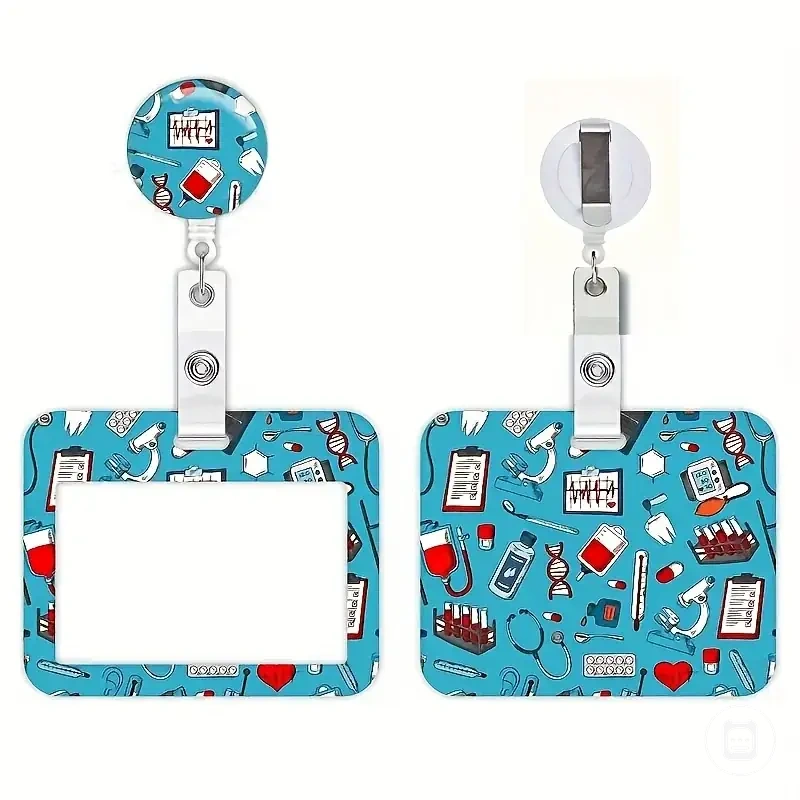
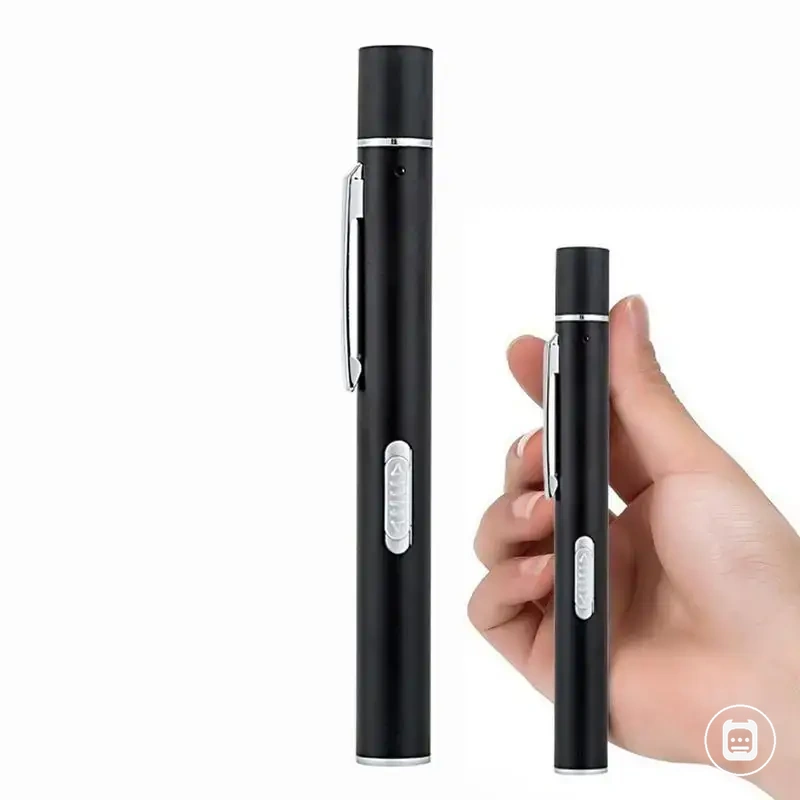
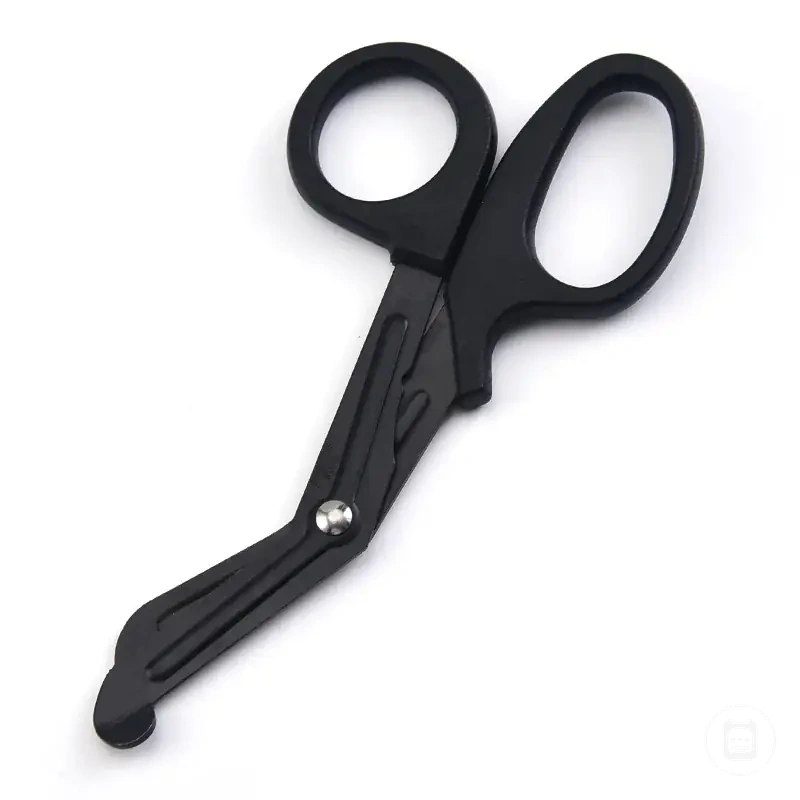
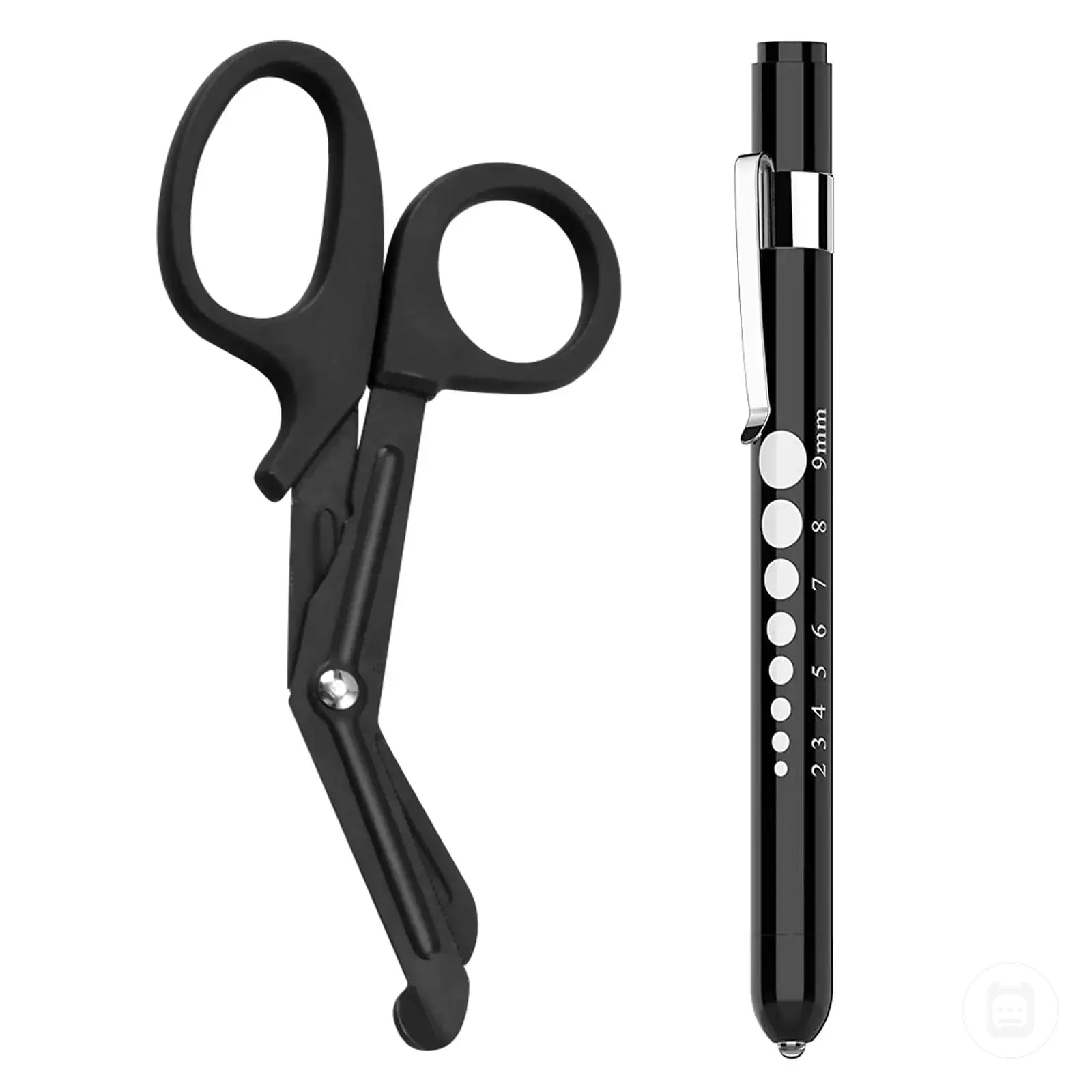
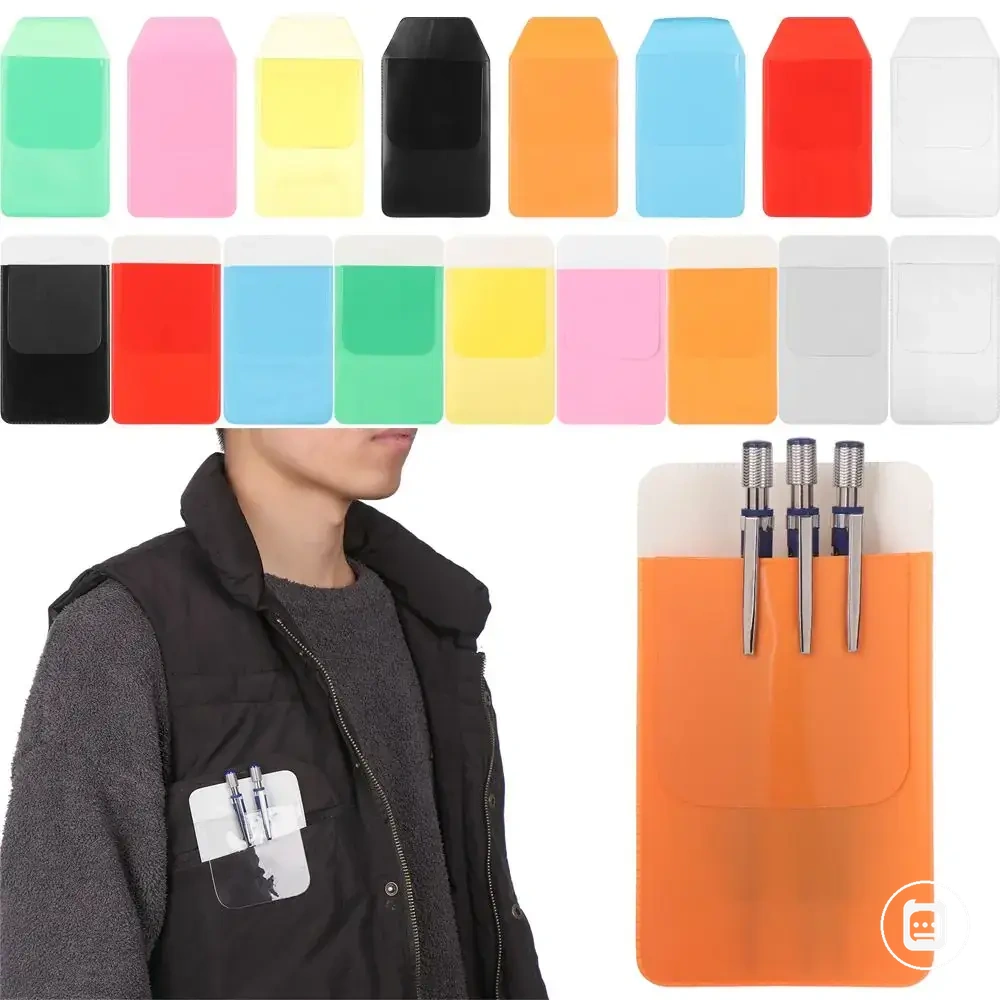
Choosing replacement accessories without overbuying can be supported by a short checklist that verifies practical replacement criteria.
- A replacement option with greater durability may help address a failed function linked to repeated wear.
- A washable attribute may add practical value when cleaning needs are part of regular use.
- A single item replacement may help avoid unnecessary full-set replacement when only one component has failed.
- A replacement option should align with the condition need that created the replacement decision.
- Shift-use value may improve when the replacement choice helps reduce the likelihood of repeat failure under similar conditions.
This chart outlines the criteria and decision factors for selecting a replacement accessory that solves the failed function without unnecessary overbuying.