Nursing Accessories Buying Criteria Before Price Checks
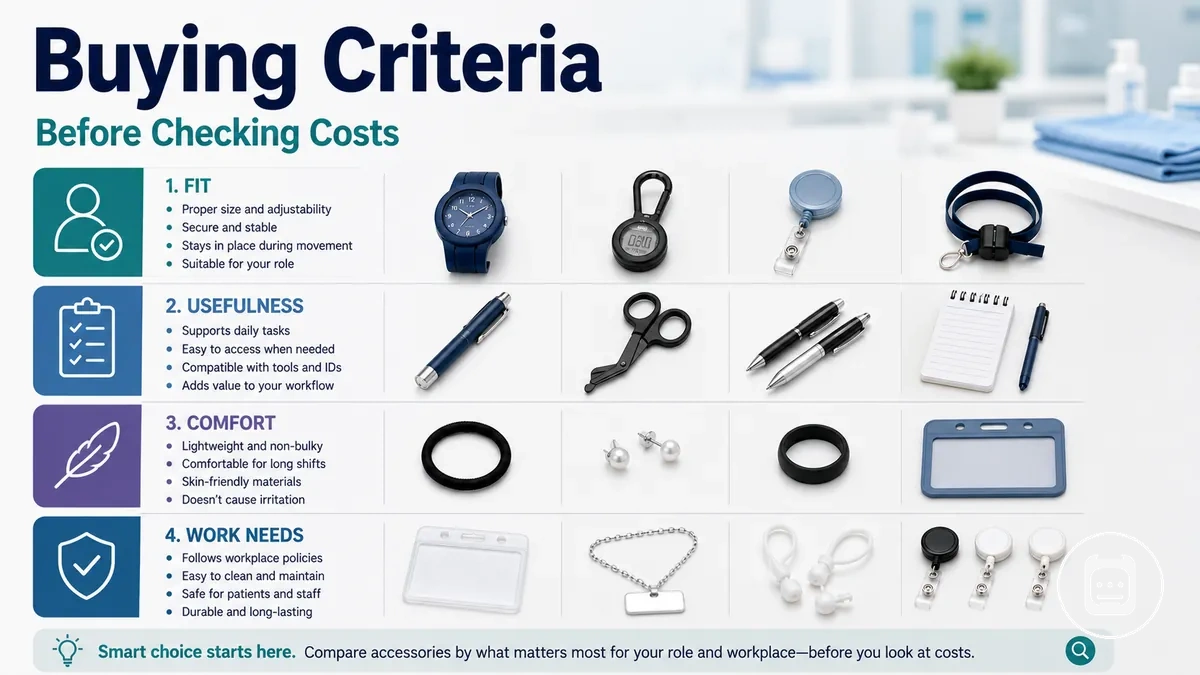
Nursing accessories should be filtered by buying criteria before price checks because useful choices depend on work context, durability, cleanability, comfort, organization, and value fit. Nursing accessories that appear suitable initially may perform differently depending on daily use, workplace expectations, and accessory materials. The purpose of this page is to organize selection filters before cost becomes a deciding factor. Price should follow criteria.
Directly evaluating nursing accessories through practical use helps separate decision factors from simple cost comparisons. Buying criteria often include durability for repeated handling, cleanability for routine use, comfort during wear, organization for easier access, and value fit for expected work needs. These criteria can help determine whether an accessory supports daily responsibilities or adds unnecessary complexity. The relative importance of each factor may vary based on shift context, workplace rules, accessory material, and personal fit.
Problematic buying decisions often occur when price checks replace selection filters too early. A lower-cost accessory set, accessory bundle, or individual accessory may offer less practical value when it does not align with work needs or daily use conditions. A criteria-first approach keeps nursing accessories aligned with practical requirements before moving into the first evaluation area.
Buying Criteria That Separate Useful Accessories From Extras
Buying criteria separate useful accessories from optional extras by focusing on repeated usefulness, acceptable conditions for daily use, and support for real work needs. Nursing accessories that consistently meet a practical criterion are more likely to justify consideration than items used only occasionally. This distinction should be made before price becomes the main selection filter.
Buying criteria are selection filters that connect nursing accessories to a practical criterion and an acceptable condition. A useful item supports a recurring work need, while an optional extra often provides convenience without affecting core use. The difference depends on how often the accessory is used and whether it continues to meet its intended purpose. For broader category context, see the nursing accessories hub.
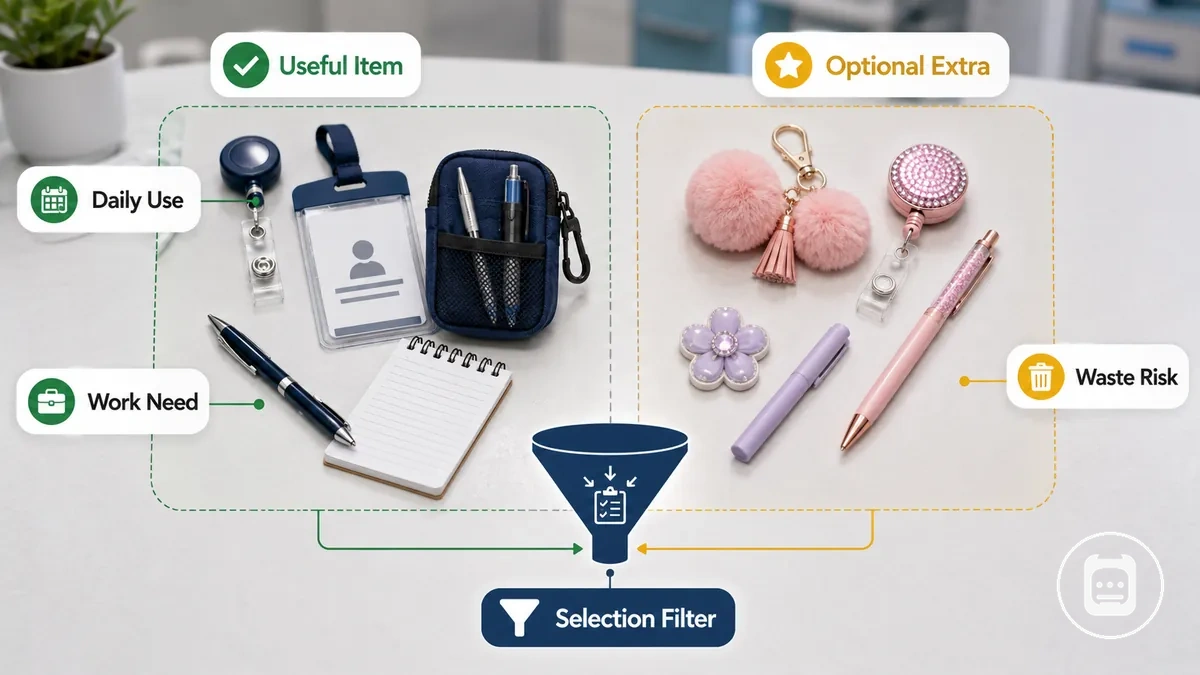
When selection decisions become unclear, applying entity-attribute-value logic can reduce waste risk. The nursing accessory is the entity, the practical criterion is the attribute, and the acceptable condition determines whether the attribute remains useful. If an accessory does not meet the condition tied to its intended use, its value may depend more on preference than necessity. This approach helps separate required usefulness, repeated usefulness, and convenience-only usefulness before reviewing the checklist.
When the goal is to evaluate usefulness rather than build a full inventory, the checklist below provides a clear selection boundary. It verifies whether nursing accessories meet defined criteria and conditions instead of assuming every item belongs in an essentials group. For a broader essentials-focused view, see the essential nursing accessories checklist.
Buying Criteria That Separate Useful Accessories From Extras can be reviewed through the checklist below, which verifies usefulness through selection criteria rather than price alone.
- Practical criterion: recurring work need → acceptable condition: used regularly during daily use → buying decision: supports useful accessory status.
- Practical criterion: organization support → acceptable condition: improves access when needed → buying decision: increases selection priority.
- Practical criterion: comfort benefit → acceptable condition: remains suitable for personal fit and use pattern → buying decision: supports continued use.
- Practical criterion: durability → acceptable condition: maintains function under expected use conditions → buying decision: lowers waste risk.
- Practical criterion: cleanability → acceptable condition: can be cleaned as needed for routine use → buying decision: improves long-term value.
- Practical criterion: convenience only → acceptable condition: occasional use without affecting core tasks → buying decision: classifies as an optional extra.
Daily Work Needs That Shape Accessory Choice
When a nursing role involves long shifts, frequent movement, or limited carrying space, accessory choice often changes to match those conditions. Daily work needs influence which nursing accessories deserve priority because work conditions affect access, handling frequency, and practical usefulness. An accessory that fits one nursing work context may become less useful in another. Accessory priority therefore depends on the specific combination of shift length, movement, pocket space, and workplace constraints.
Daily work needs act as selection variables that help determine accessory choice. Shift length can increase the importance of comfort and repeated-use suitability, while movement may increase the value of easy access and carry convenience. Pocket space can limit how many items remain practical during daily use, and access speed may become more important when items are handled frequently. The effect of each variable depends on role requirements, workplace constraints, and individual work conditions.
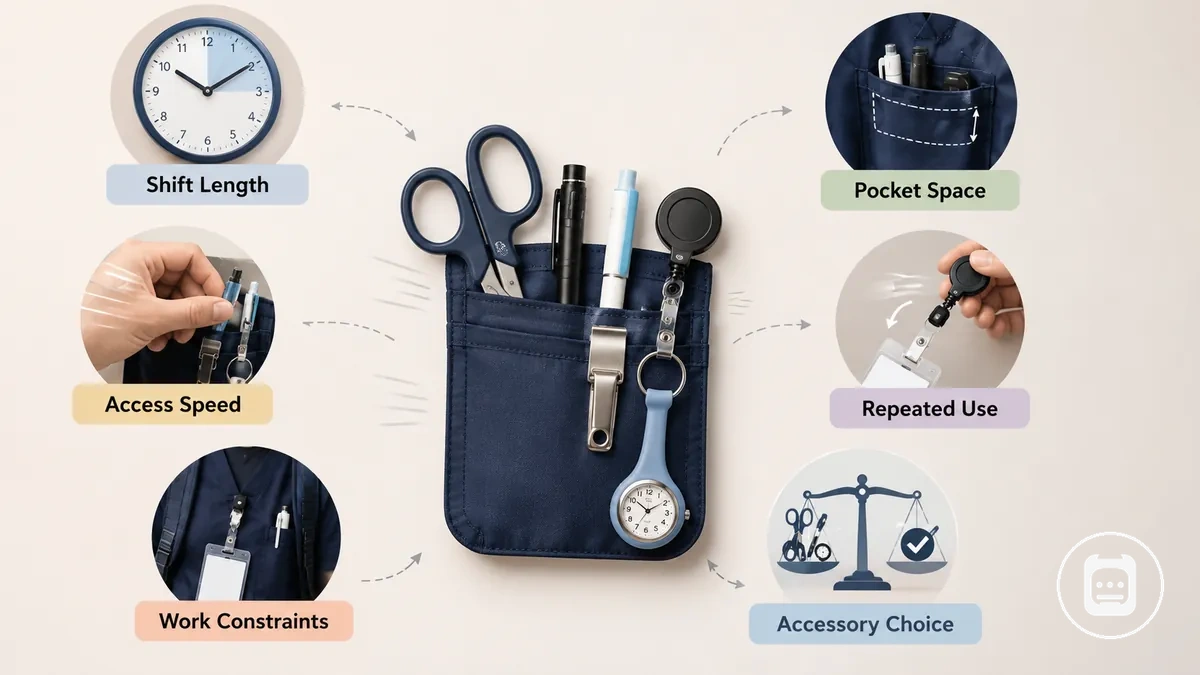
When repeated handling reduces access efficiency or creates unnecessary carry pressure, selection decisions can become less practical. Focusing on access speed, handling frequency, cleaning exposure, and available space helps align nursing accessories with real use conditions. For a broader decision framework that connects work variables with selection planning, see how to choose nursing accessories.
Daily Work Needs That Shape Accessory Choice can be compared through common work conditions that change accessory priority. The comparison below highlights how different scenarios influence selection implications.
| Work condition | Accessory pressure | Selection implication |
|---|---|---|
| Light daily use | Lower handling frequency and fewer access demands | Organization and convenience may receive balanced priority |
| Frequent shift use | Repeated handling, movement, and access needs | Access speed, durability, and carry conditions may receive higher priority |
| Constrained-pocket use | Limited pocket space and carrying capacity | Compact organization and efficient access may become more important |
Shift frequency and repeated-use pressure
Shift frequency creates repeated-use pressure because nursing accessories experience more handling, contact, and movement during daily shifts. Frequent shifts can increase durability pressure on handling surfaces and fastening points, especially when an accessory is used repeatedly throughout the day. Whether this pressure becomes a concern depends on the accessory condition and the level of repeated handling.
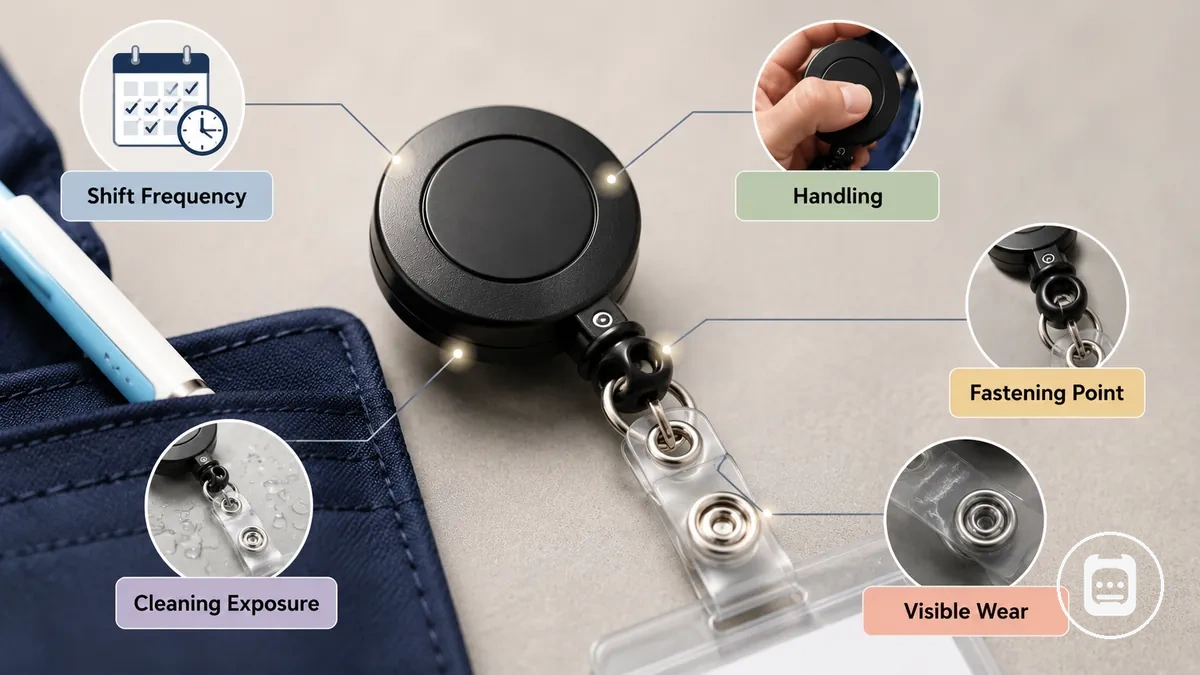
Shift frequency and repeated-use pressure can be evaluated through local checks that highlight where durability pressure may appear during daily shifts.
- Shift frequency: frequent shifts can increase handling pressure on regularly touched surfaces.
- Repeated handling: higher handling frequency may make visible wear easier to notice over time.
- Fastening points: clips and attachment areas can experience additional pressure during daily use.
- Cleaning exposure: repeated cleaning may influence material and surface condition depending on use patterns.
- Visible wear: marks, loosening, or surface changes can help indicate how repeated-use pressure is affecting durability.
Storage, access, and carry conditions
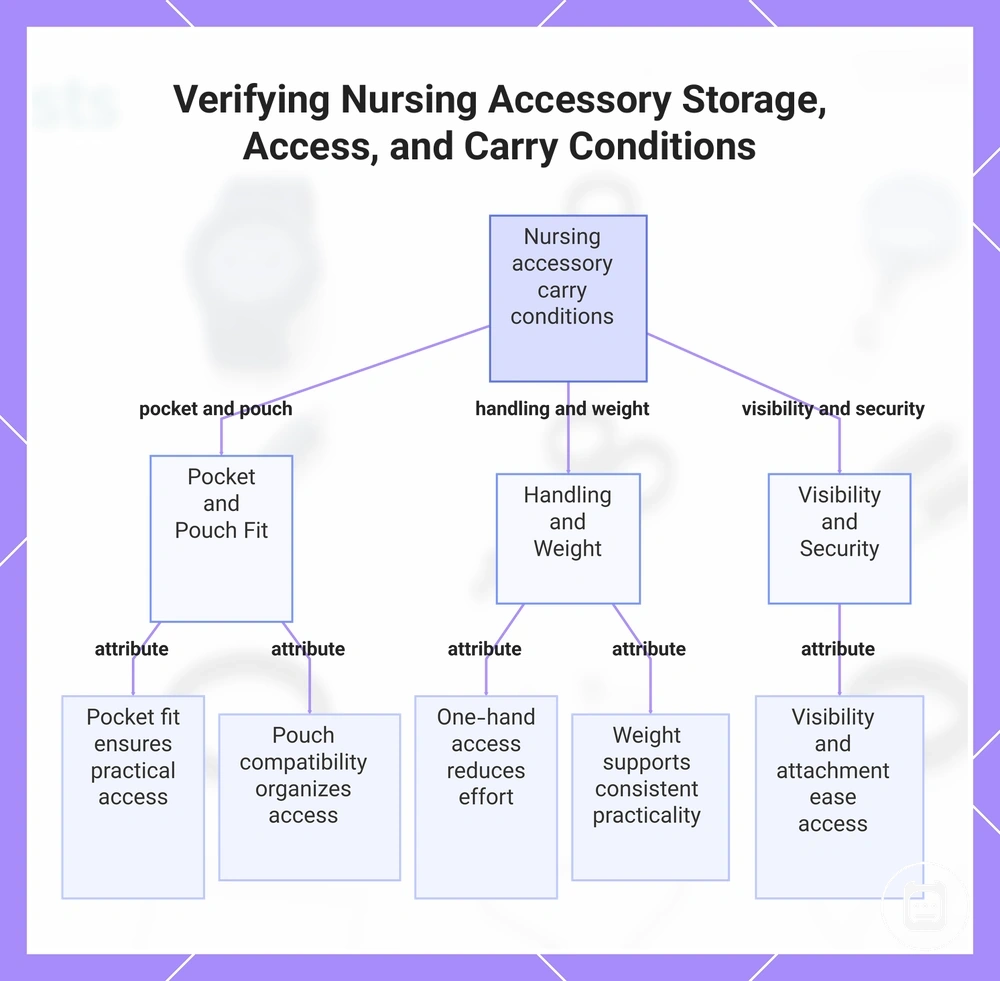
When a nursing accessory must be reached during work, storage, access, and carry conditions determine whether it remains practical to use. Poor carry conditions reduce practicality because pocket fit, pouch compatibility, visibility, and secure attachment influence how easily an accessory can be accessed. The access decision depends on whether the carry setup supports reliable use in daily work conditions.
When access becomes slower or less predictable, reviewing carrying attributes can help identify the cause. Nursing accessories may remain easier to use when pocket fit supports access, pouch compatibility suits the carry setup, and secure attachment reduces movement-related loss risk. Weight and visibility can also influence practicality by affecting how easily an accessory can be located and handled. The checklist below verifies these carry conditions through attribute-to-outcome relationships.
Storage, access, and carry conditions can be verified using the following checklist.
- Nursing accessory → pocket fit → condition: fits available carry space → outcome: access may remain practical during use.
- Nursing accessory → pouch compatibility → condition: suits the existing carry setup → outcome: access can become more organized.
- Nursing accessory → one-hand access → condition: reachable without complex handling → outcome: retrieval may require less effort.
- Nursing accessory → weight → condition: suitable for the intended carry method → outcome: practicality may remain more consistent during shifts.
- Nursing accessory → visibility and secure attachment → condition: remains visible and attached during movement → outcome: access can become easier with lower loss risk.
This chart shows the key carry attributes and their outcomes that determine whether a nursing accessory remains practical to use.
Accessory Function Groups Before Comparing Options
Accessory function groups should be compared within the same purpose because similar functions provide a clearer basis for comparing options and evaluating value. Comparing options across unrelated functions can lead to weaker conclusions because each group supports a different need. Accessory Function Groups Before Comparing Options helps keep comparisons focused on like-with-like evaluation.
Accessory function groups are broad function categories that organize nursing accessories by what they support during use. Clinical tools support task-related activities, organization items support storage and retrieval, comfort supports relate to wearer comfort, identification accessories support recognition, and daily-use support items assist routine work needs. Which function group matters most depends on role requirements and work context. The table below organizes these groups for like-with-like comparison.
| Function group | What it supports | Main comparison criterion | When it matters |
|---|---|---|---|
| Clinical tools | Task-related use | Access and usability | When tools are used regularly during work |
| Organization items | Storage and retrieval | Carry and access conditions | When item organization affects retrieval |
| Comfort supports | Wearer comfort | Fit and comfort characteristics | When accessories are worn for extended periods |
| Identification accessories | Recognition and visibility | Visibility and attachment method | When identification needs to remain accessible |
| Daily-use support items | Routine work assistance | Practical usefulness | When recurring tasks benefit from support items |
When value judgments become unclear, grouping options by function can help create a more relevant comparison. Comparing clinical tools with other clinical tools or organization items with other organization items keeps the evaluation tied to purpose and use case. Function-based comparison provides a stronger basis for value assessment than comparing options that serve different functions.
Clinical tools, organization items, and comfort accessories
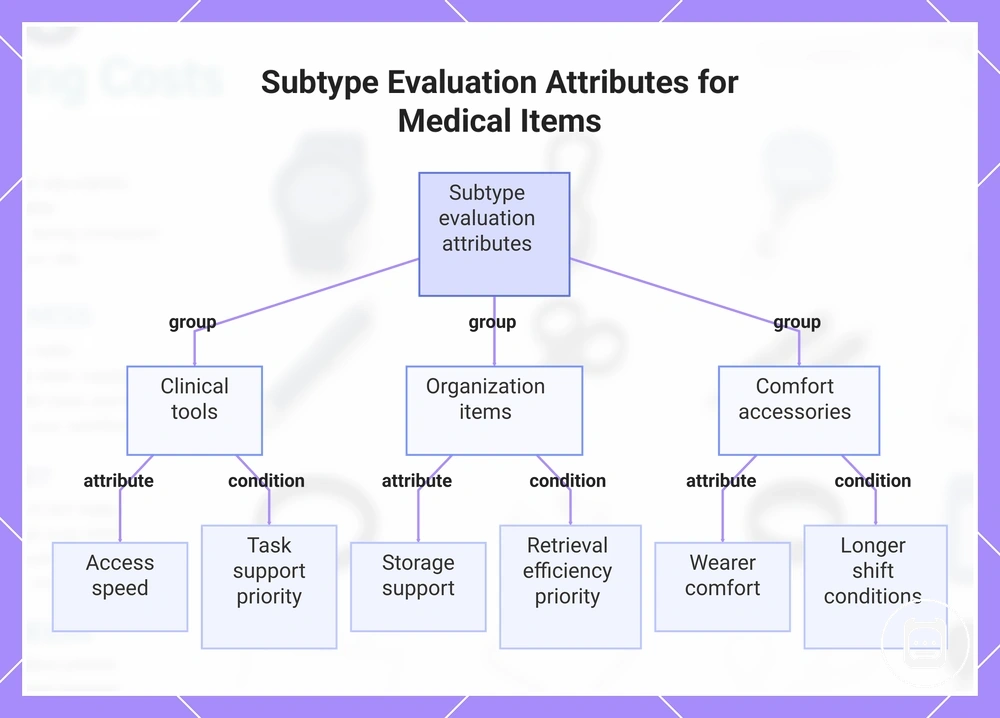
Clinical tools, organization items, and comfort accessories are distinct subtype groups because each group uses different selection criteria. Clinical tools are primarily evaluated through access speed and task support, organization items through storage support and retrieval, and comfort accessories through wearer comfort. These group distinctions connect each subtype to a specific evaluation attribute.
Selection criteria become clearer when each group is assessed according to its primary attribute. If work demands emphasize task support, access speed may receive greater attention; if retrieval and carry efficiency are more important, storage support may matter more. The bullets below separate the groups and their evaluation attributes.
- Clinical tools → main attribute: access speed → affects selection when task support depends on timely access.
- Organization items → main attribute: storage support → affects selection when retrieval and organization influence use.
- Comfort accessories → main attribute: wearer comfort → affects selection when comfort across longer shift length conditions becomes more relevant.
This chart shows the three medical item subtype groups, their primary evaluation attributes, and the conditions under which each attribute affects selection.
Required-use accessories versus optional support items
Required-use accessories versus optional support items depends on the decision threshold used for selection. Required-use accessories support role readiness because a workplace requirement, repeated frequency of use, or a meaningful consequence of absence can increase their priority. Whether an item belongs in a required-use group depends on workplace conditions, role expectations, and training context.
Myth: optional support items are unnecessary. Truth: optional support items can provide convenience, comfort benefit, or repeated-use advantages even when they are not tied directly to role readiness. Their value depends on frequency of use and whether they improve day-to-day work conditions, while the distinction between required and optional remains context dependent.
Required-use accessories versus optional support items becomes clearer when the selection conditions are separated through a simple contrast.
| Required-use signal | Optional-support signal |
|---|---|
| Linked to a workplace requirement or role-readiness condition | Primarily improves convenience during use |
| High frequency of use increases priority | Used when additional support is preferred |
| Consequence of absence may affect readiness or task completion | Absence may reduce comfort benefit rather than readiness |
| Often selected because the role depends on it | Often selected because repeated use improves convenience or support |
Durability, Cleanability, and Material Suitability
Durability, cleanability, and material suitability are core buying filters because material and cleaning conditions affect long-term usefulness. Nursing accessories exposed to repeated handling, moisture exposure, or routine storage may perform differently depending on material type, construction, and cleaning tolerance. Evaluating these attributes before comparing value helps reduce replacement risk and supports more informed selection decisions. The effect of each attribute depends on use conditions and exposure patterns.
Material suitability is the relationship between material type, surface texture, and expected use conditions. Surface texture can influence cleaning tolerance, while material type may affect how an accessory responds to repeated use and environmental exposure. Fastening strength influences whether parts remain secure during handling, and washable parts can affect cleaning suitability. Durability, Cleanability, and Material Suitability become clearer when material and construction conditions are connected directly to buying decisions through the table below.
| Accessory/part | Attribute/criterion | Value/condition | Effect/risk/decision |
|---|---|---|---|
| Outer material | Material suitability | Material type matches expected use conditions | May support long-term usefulness with lower replacement risk |
| Surface area | Surface texture | Smoother or easier-to-maintain texture | May improve cleaning tolerance during routine use |
| Fastening point | Fastening strength | Remains secure during repeated handling | Can reduce failure risk related to attachment wear |
| Removable component | Washable parts | Parts can be cleaned when needed | May improve cleaning suitability depending on exposure conditions |
| Material surface | Moisture exposure | Regular contact with moisture or damp storage conditions | May influence material condition and maintenance needs |
| Construction material | Cleaning tolerance | Tolerates repeated cleaning under intended conditions | Can support continued use when cleaning frequency is higher |
Problematic material-condition combinations can become more noticeable when accessories face frequent handling, moisture exposure, or repeated bag storage. Reviewing surface texture, fastening strength, washable parts, and cleaning tolerance helps identify whether material fit remains suitable for the intended environment. Cleanable does not mean universally safe for every workplace or exposure condition, so material-condition fit should remain part of the final selection decision.
Comfort and Fit as Selection Filters
Comfort and fit are selection filters because nursing accessories that appear useful can become less practical when body contact, movement, or shift length create wearability issues. A nursing accessory may support a work need yet still be a weak choice if weight distribution, clip position, or material feel interfere with daily use. Comfort and fit help determine whether an accessory remains usable beyond its basic function. The final decision depends on personal fit preferences, work conditions, and accessory placement.
When a nursing accessory is worn or carried during frequent movement, body-contact conditions often become easier to notice. Weight can influence wearer comfort during extended use, while pressure points may develop when clips, edges, or attachment areas rest against the same location repeatedly. Adjustability can affect how well an accessory adapts to different carrying positions, and material feel may matter more for users with higher sensitivity to prolonged contact. Uniform and PPE use can also influence fit by changing available attachment points and carrying space. Comfort and Fit as Selection Filters becomes easier to evaluate through a simple fit check.
Problems often appear when a nursing accessory supports its intended function but does not fit the user's carrying conditions. Reviewing pressure points, clip position, adjustability, and interaction with a uniform or PPE can help identify potential fit failures before selection. Small fit differences may affect daily usability when movement and body contact are frequent.
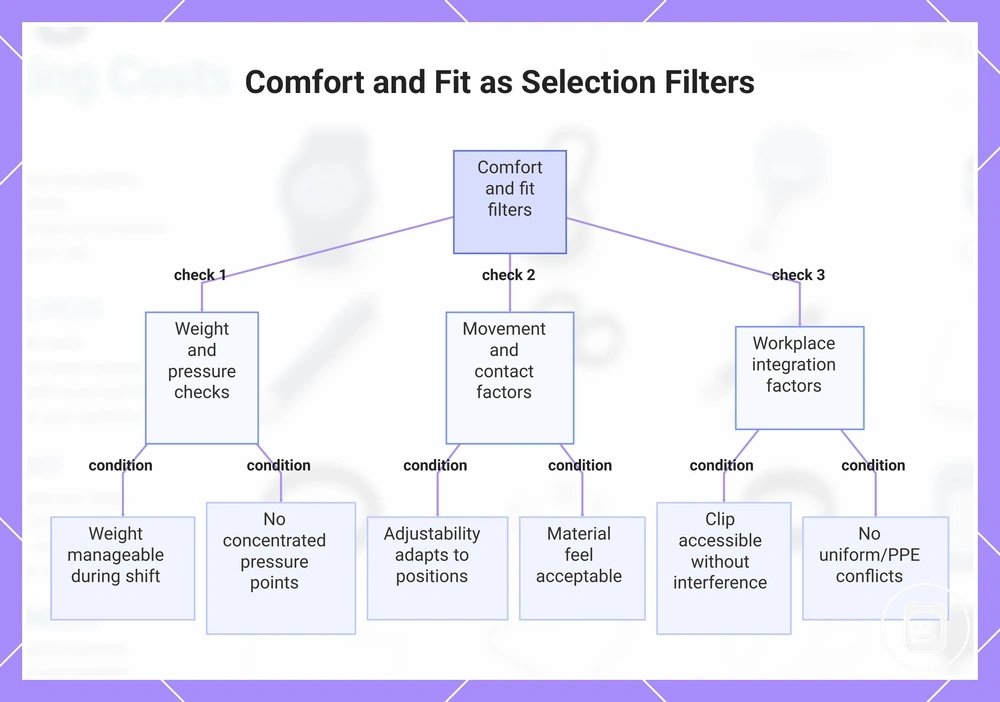
Comfort and Fit as Selection Filters can be verified through the checklist below, which connects fit attributes to conditions and selection outcomes.
- Weight → condition: feels manageable during the expected shift length → decision effect: may support more consistent wearer comfort.
- Pressure points → condition: no obvious concentrated contact areas during movement → decision effect: may reduce fit-related concerns.
- Adjustability → condition: adapts to different carrying positions → decision effect: can improve fit flexibility.
- Material feel → condition: remains acceptable during body contact → decision effect: may support continued use based on personal sensitivity.
- Clip position → condition: stays accessible without creating interference → decision effect: can improve practical fit.
- Uniform and PPE interaction → condition: does not create avoidable carrying conflicts → decision effect: may improve accessory suitability for the work setup.
For readers who want a deeper evaluation of wearability factors, comfort-focused choices provides additional context beyond the fit-check threshold used for accessory selection.
This chart organizes the comfort and fit attributes that act as selection filters for nursing accessories, grouped into three fit check categories.
Bundle, Set, and Individual Accessory Trade-Offs
Bundle, set, and individual accessory options are different buying paths with different trade-offs rather than ranked choices. A bundle may include multiple items in one package, a set may group related accessories, and an individual accessory focuses on a single selection need. The most suitable path depends on how closely the included items match real work needs. The trade-off is between broader inclusion and greater selection control.
When an accessory bundle or nurse accessories set contains items that are likely to be used regularly, the overall value may appear stronger. However, duplicate risk can increase when included items overlap with existing accessories or remain unused. Quality consistency may also vary across grouped items, while fit flexibility depends on whether each included item suits the intended user and work context. Bundle, Set, and Individual Accessory Trade-Offs become easier to evaluate when the comparison focuses on decision variables rather than item counts, as shown below.
| Buying path | Main advantage | Main risk | Best-fit condition |
|---|---|---|---|
| Bundle | Multiple included items in one selection | Duplicate risk and unused-item waste | When most included items match real work needs |
| Set | Related accessories grouped together | Quality consistency may vary across items | When a coordinated group of accessories is preferred |
| Individual accessory | Higher fit flexibility and targeted selection | May require separate decisions for each item | When specific preferences or requirements matter most |
When duplicate items, material preferences, or changing requirements create selection problems, an individual accessory can provide a more focused solution. Replacement ease may also be simpler because a separate item can be evaluated on its own rather than as part of a larger group. This buying path often provides greater fit flexibility when needs differ across accessories.
Myth: a bundle automatically provides better value than other buying paths. Truth: bundle value depends on how many included items support actual work needs, while individual-fit control may matter more in other situations. The decision is usually stronger when trade-offs are evaluated before a price check.
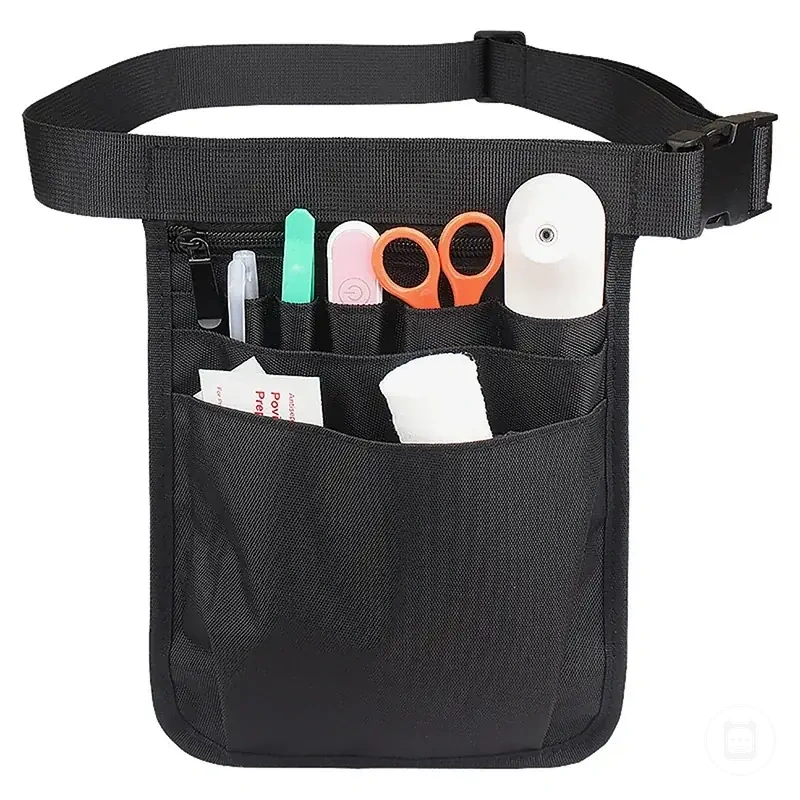
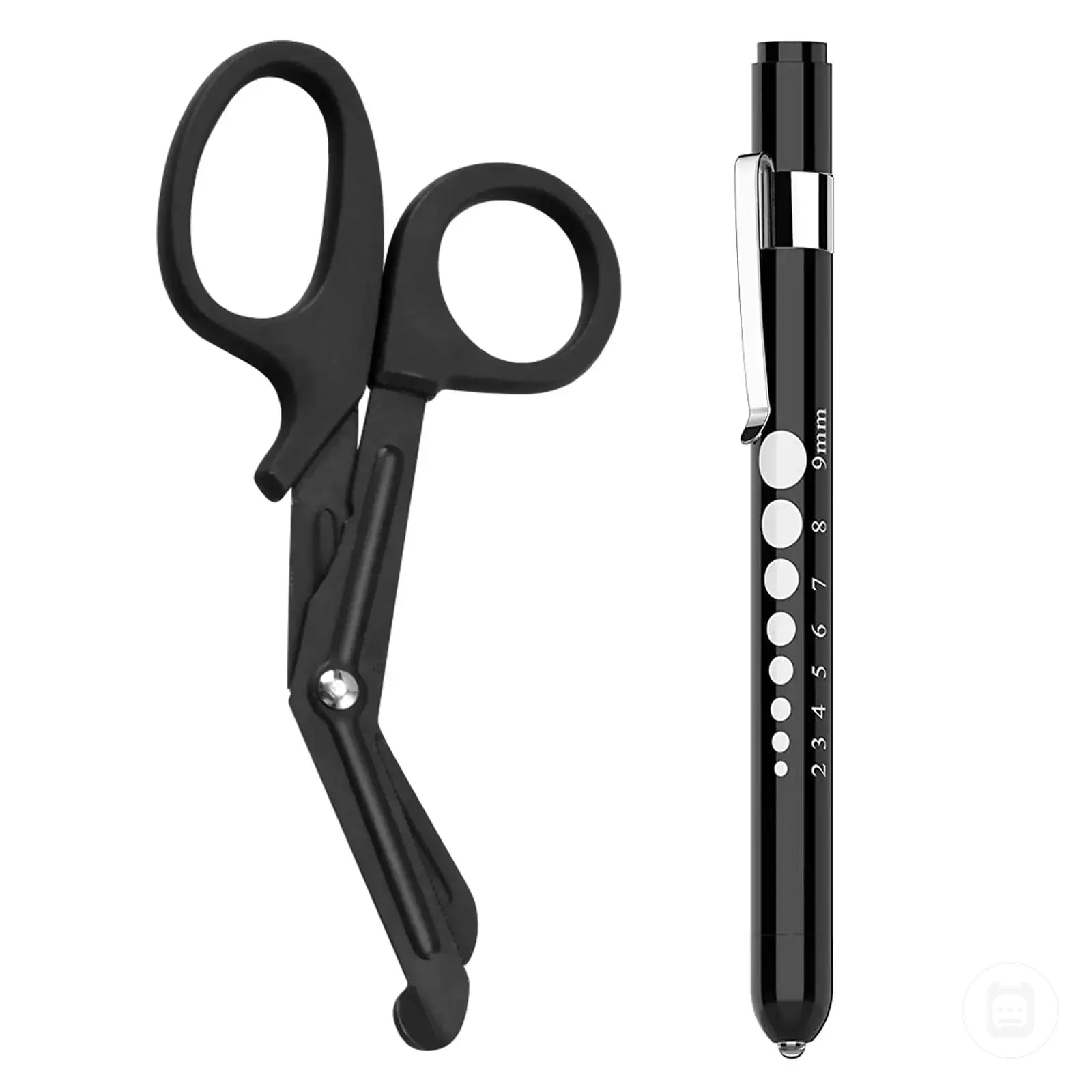
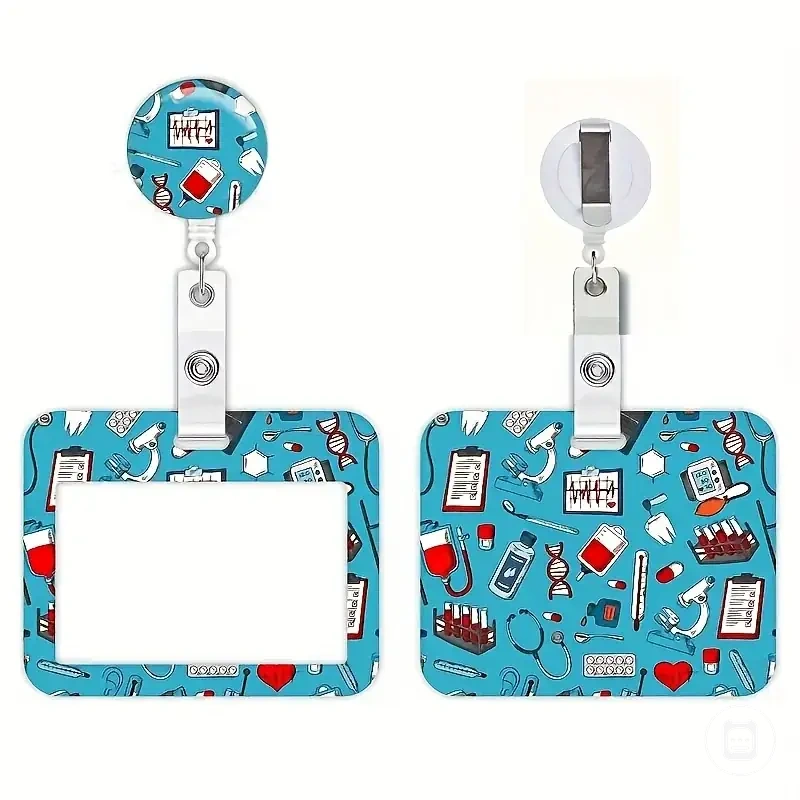
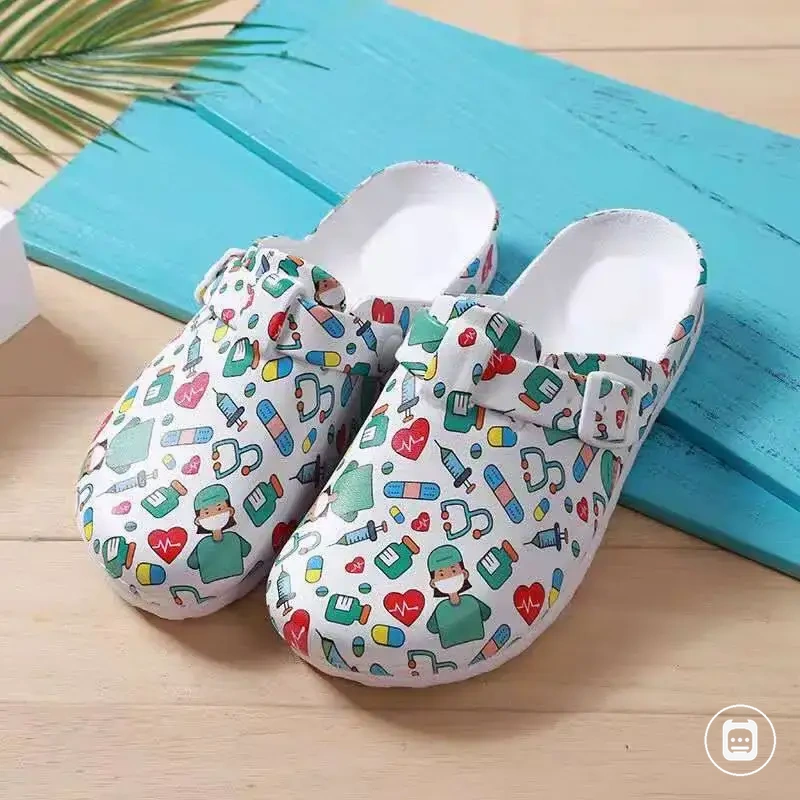
The products below are useful examples for comparing available options. Before buying, check that the compatibility criteria, key features, and product details match your needs.

When a bundle supports daily readiness
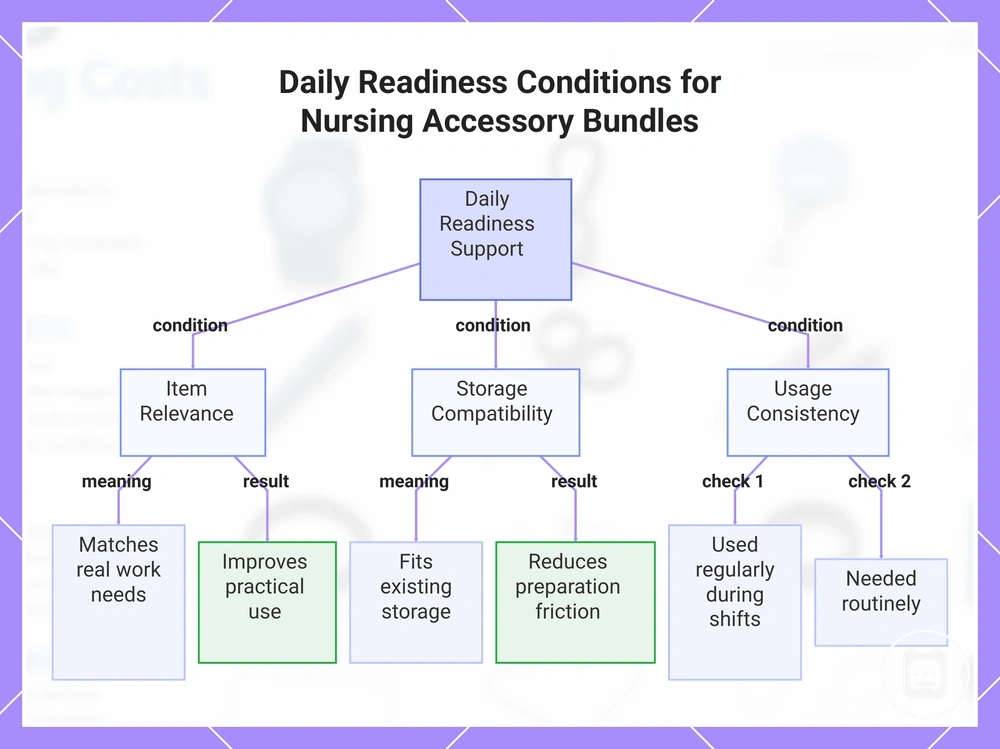
A nursing accessory bundle supports daily readiness when the included items match repeated shift needs and are used often enough to remain relevant. An accessory bundle can reduce preparation friction when the grouped items align with daily-use frequency and routine work conditions. The readiness benefit depends on item relevance and storage compatibility.
When the same accessories are gathered before most shifts, the readiness checks below can help determine whether a bundle supports consistent use.
- Item relevance → included items match real work needs → daily readiness may improve through more practical use.
- Daily-use frequency → accessories are used regularly during shifts → bundle usefulness may remain more consistent.
- Storage compatibility → grouped items fit existing storage space or carry methods → preparation friction can be reduced.
- Repeated shift needs → the same accessories are needed routinely → a ready kit may support daily readiness when those conditions remain similar.
This chart shows the key factors that determine whether a nursing accessory bundle supports daily readiness.
When individual accessories preserve better fit
Individual accessories preserve better fit when fit sensitivity, material preference, or quality requirements differ from one item to another. Compared with set-based buying, individual accessories allow each selection decision to match a specific condition or need. This approach can improve fit control when different accessories require different attributes.
Problem: a set may include items that do not align with replacement timing, workplace rules, or personal preferences. Solution: individual choice allows separate accessories to be selected or replaced according to current needs, which may help maintain quality and avoid low-use extras. When individual accessories preserve better fit, the checklist below verifies the key decision conditions.
- Fit sensitivity → individual accessory selection may provide more precise fit control than a set.
- Material preference → separate accessories can be chosen according to preferred materials or intended use conditions.
- Replacement timing → a single item may be replaced when needed without changing other accessories.
- Workplace rules → individual choice may help align accessory selection with local requirements or restrictions.
- Low-use extras → avoiding unnecessary included items can reduce waste risk when certain accessories are rarely needed.
Price Checks After Selection Criteria Are Clear
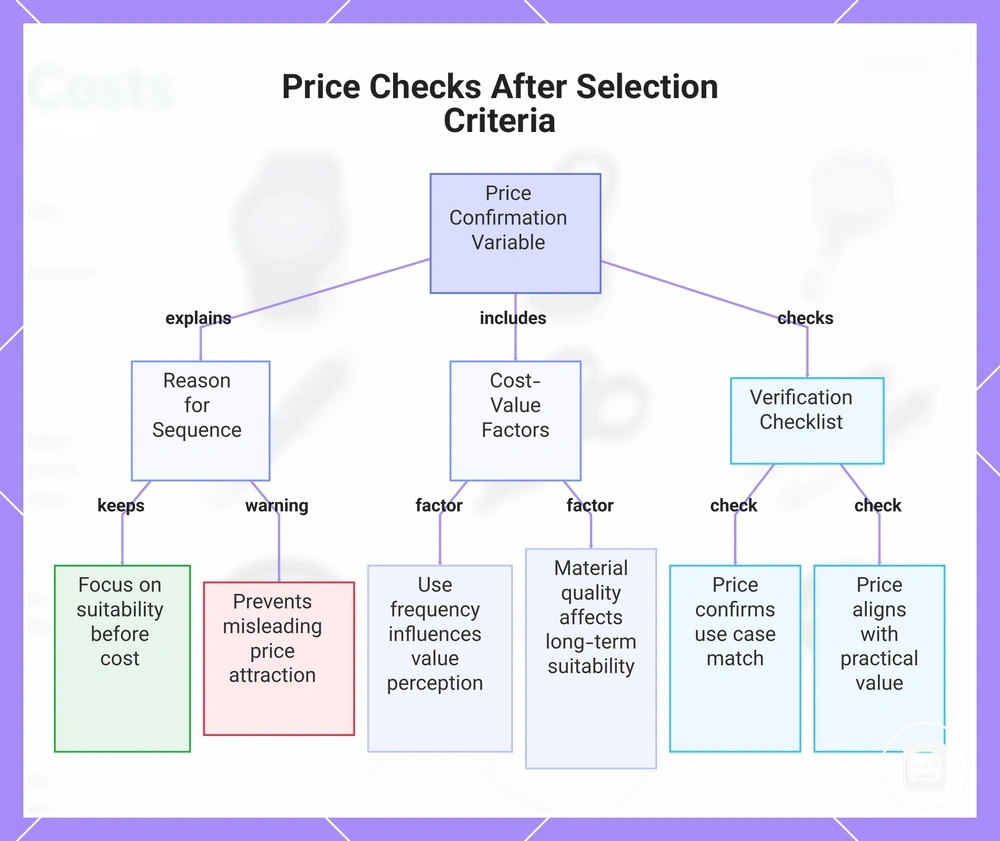
Price checks should happen only after selection criteria are clear because price is most useful as a confirmation variable, not a replacement for a decision. Once nursing accessories have been filtered by use case, durability, comfort, and bundle fit, price checks can help compare options that already meet the intended requirements. This sequence keeps the focus on suitability before cost and reinforces a criteria-before-price decision process.
Problem: a lower price may appear attractive even when expected use frequency, replacement risk, material quality, or included accessories do not align with the intended use case. Solution: evaluate these cost-value variables together so price reflects practical value rather than a single comparison point. Expected use frequency can influence how value is perceived, while replacement risk and material quality may affect long-term suitability. Included accessories may add value when they support actual needs, but unused items can reduce that value. For a broader evaluation approach, see the price and value guide.
When two nursing accessories pass the same selection criteria, Price Checks After Selection Criteria Are Clear can confirm which option better supports practical value. The checklist below verifies whether price supports the original decision instead of replacing it.
The products below are useful examples for comparing available options. Before buying, check that the compatibility criteria, key features, and product details match your needs.
- Price → selection criterion: confirmed use case match → decision effect: helps compare already suitable options.
- Expected use frequency → selection criterion: regular or occasional use → decision effect: may influence practical value.
- Replacement risk → selection criterion: durability expectations → decision effect: may affect long-term cost-value perception.
- Included accessories → selection criterion: bundle fit and item relevance → decision effect: can influence value when included items are used.
- Material quality → selection criterion: intended use conditions → decision effect: may support suitability beyond initial price comparison.
- Practical value → selection criterion: comfort, durability, and function needs → decision effect: helps confirm whether price aligns with the overall decision.
This chart shows why price checks should occur only after selection criteria are clear, the key cost-value factors to evaluate, and the verification checks to confirm price supports the original decision.