
Posture support accessories price, value, and selection criteria
Posture support accessories should be evaluated by how well they match the user need, not by price alone. A higher price can reflect different materials, adjustability, support features, or construction, but it does not automatically create higher value. The most useful value comparison usually starts with fit and the intended use case.
Posture support accessories are a broad group of support accessories that may include wearable support, lumbar support, seat support, and other posture aids designed for different daily-use situations. Their role is not identical because each support type addresses a different comfort, positioning, or support preference. For that reason, support type and price should be considered separately before making a value judgment.
A person who spends long periods seated may prioritize a chair-based support differently than someone looking for a wearable support during short periods of use. Another user may place more value on adjustability, while someone else may focus on comfort, portability, or durability for repeated daily use. These differences create a practical tradeoff between cost factors and expected benefits. This distinction naturally leads to a closer comparison of support types as part of the selection criteria.
Comfort, adjustability, and durability can influence long-term satisfaction, but their value often depends on individual preferences, body position, wear tolerance, and daily-use conditions. A feature that improves fit for one user may offer less benefit for another. Posture support value is use-case dependent and should not be treated as proof of a medical outcome.
How posture support accessory prices vary by support type
Price variation in posture support accessories is driven mainly by support type because different accessory categories address different support and comfort needs. Support type often influences material choice, adjustability, construction, and support level, which can contribute to price differences. Exact prices can change over time, so comparisons are most useful when viewed through the lens of support type.
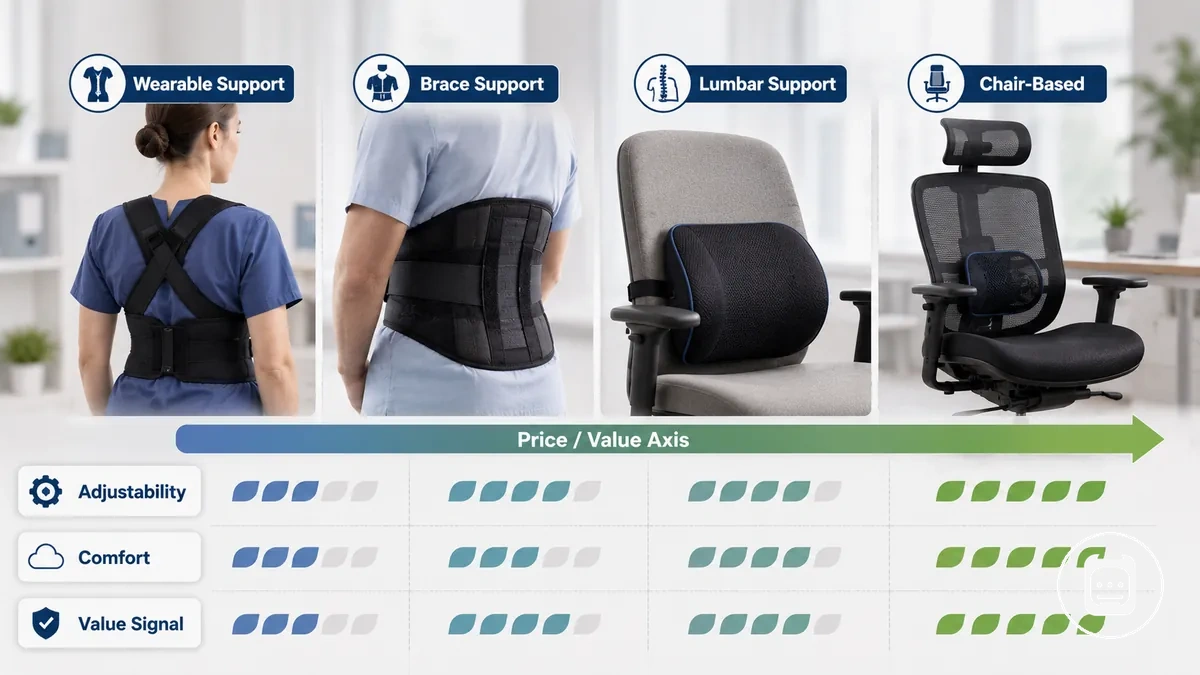
Support type is the primary way to group posture support accessories into practical categories. Wearable support and brace-style support are typically associated with fit and adjustability, while lumbar support, seat support, and chair-based support focus more on seated comfort and positioning. Each support category can emphasize a different value signal, such as durability, support consistency, material quality, or adjustment features. These distinctions create a useful framework for the more detailed support-type comparisons that follow.
How posture support accessory prices vary by support type is easier to understand when broad categories are organized by typical value signal rather than by exact price. The image and table below compare major support categories using common tradeoffs and use cases instead of fixed price thresholds.
| Support type | Typical value signal | Common tradeoff | Best-fit use case |
|---|---|---|---|
| Wearable support | Fit and adjustability | Comfort may vary with wear duration | Body-worn support during daily activities |
| Brace-style support | Structured support level | Movement flexibility may vary by design | Users prioritizing guided support |
| Lumbar support | Targeted lower-back comfort | Results can depend on seating conditions | Seated daily use |
| Seat support | Comfort and pressure distribution | Support focus may be more localized | Extended sitting periods |
| Chair-based support | Support consistency and durability | Usually less portable than wearable options | Desk and workstation environments |
Wearable posture supports and brace-style accessories
Wearable posture supports and brace-style accessories provide the most value when fit, comfort, and adjustability match the intended wear time. Wearable posture supports often depend on straps, material feel, and adjustment points to balance support consistency with everyday comfort. Perceived value can vary when fit does not align with the user’s body shape, wear tolerance, or intended use.
Wearable posture supports and brace-style accessories can be compared more clearly by focusing on fit and adjustability cues rather than assuming the same experience for every user. The image below highlights common fit areas, straps, and adjustment points that may influence comfort and support consistency.
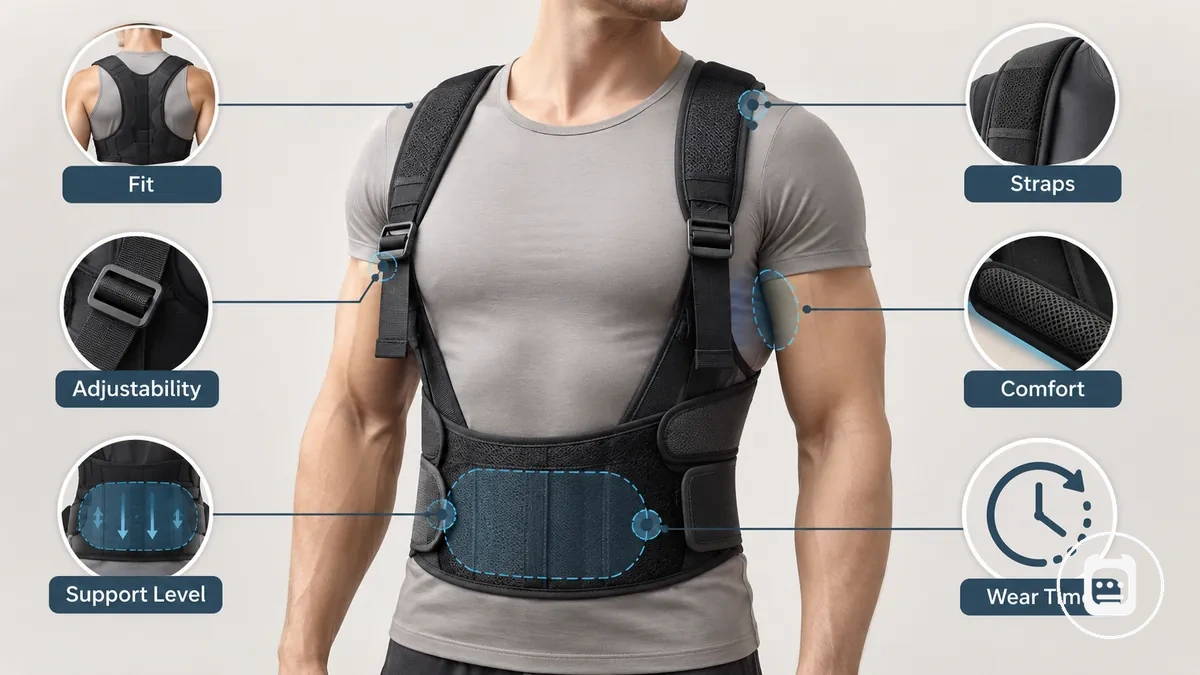
- Fit: A closer fit may improve support consistency, while a poor fit can reduce comfort during daily use.
- Comfort: Short wear sessions may tolerate firmer strap pressure, whereas extended wear time may place greater importance on material feel and pressure distribution.
- Support level: Brace-style accessories may provide a more structured support experience, but user tolerance and adjustability can influence perceived value.
- Wear-time tradeoff: Longer wear time often increases the importance of comfort, while shorter use periods may place more emphasis on support level and positioning cues.
During short-use situations, a posture brace with firmer straps may feel acceptable when support is the primary goal. During longer wear periods, comfort, adjustability, and material softness can become more important considerations. Wearable posture supports and brace-style accessories may perform differently depending on user tolerance, pressure points, and daily-use conditions. The main tradeoff is often between support consistency and long-term comfort.
Seat, lumbar, and chair-based posture support accessories
Seat support and lumbar support usually create the most value when they match the chair and the user’s sitting routine. Seat support, lumbar support, and chair-based support can differ in firmness, placement, and portability, which may influence comfort during daily sitting. Value depends on chair compatibility because the same accessory may fit one seating condition better than another.
Seat, lumbar, and chair-based posture support accessories can be compared more effectively by focusing on placement and compatibility cues rather than assuming the same result across all seating conditions. The image below highlights common chair-fit, placement, and portability considerations.
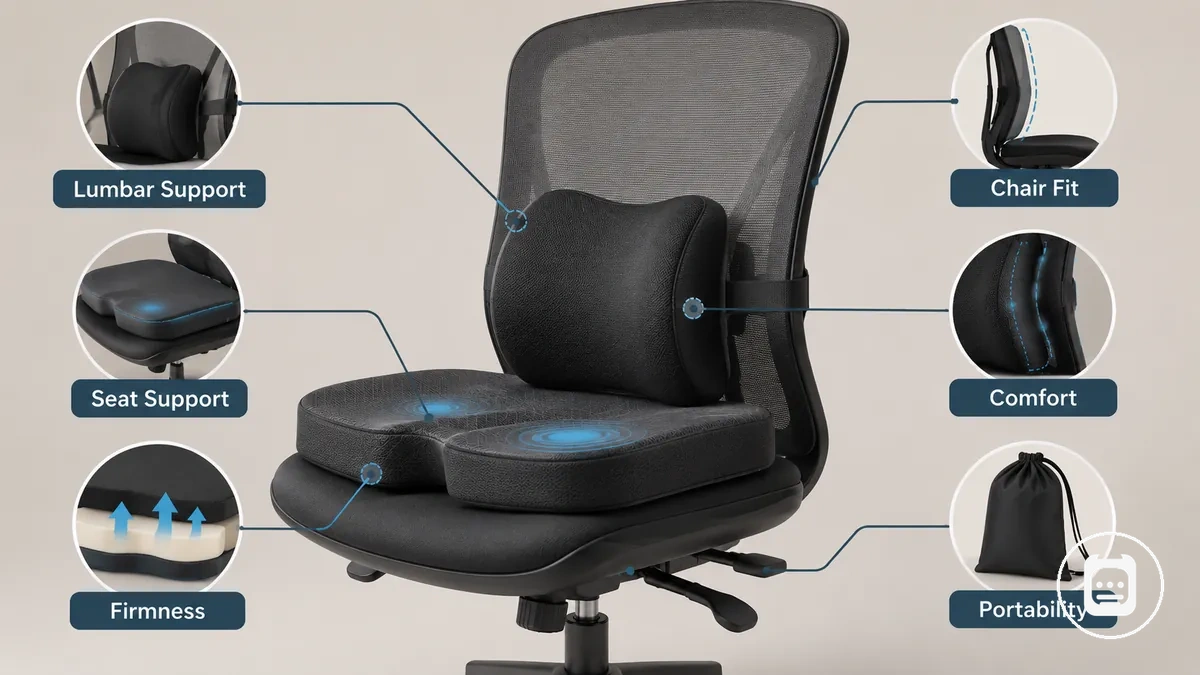
- Chair fit: Chair shape and support placement can influence how well a seat cushion, lumbar cushion, or chair support aligns with the sitting position.
- Firmness: A firmer support level may feel more supportive for some users, while others may prefer a softer balance between support and comfort.
- Portability: Lightweight seat support and lumbar support accessories may be easier to move between desk use, travel use, and shared-chair environments.
- Material comfort: Cushion material can influence perceived comfort during longer sitting periods and may affect overall value.
- Durability and care: Material quality and cleaning needs may influence long-term usability depending on daily sitting conditions.
During desk use, a lumbar support or back support cushion may remain in a consistent position that suits a regular sitting routine. During travel use or shared-chair situations, portability and ease of repositioning can become more important selection factors. Chair-based support may provide a more stable placement approach, while portable seat support options may suit changing seating conditions. The main tradeoff is often between support, portability, and comfort.
Cost factors that change posture support value
Cost factors change posture support value when they improve practical use rather than simply increasing price. Fit, adjustability, materials, comfort, durability, support consistency, and daily use suitability are key value drivers because they influence how well an accessory matches a user need. Posture support value depends on how these criteria align with the intended use case.
Weak fit or limited comfort can reduce practical value even when an accessory includes additional features. An adjustment system may add value when it helps accommodate different body positions or wear preferences, while durable materials may be more worthwhile when the accessory is used frequently. By contrast, a feature that does not improve comfort, support consistency, or daily use may provide a weaker value signal. The strongest criteria are usually fit, adjustability, comfort, durability, and support consistency.
Cost factors that change posture support value can be compared more clearly when each factor is connected to its practical effect and potential limitation. The table below organizes those relationships and highlights the tradeoff between value drivers and weaker value signals.
| Cost factor | Value condition | Risk if weak | Decision effect |
|---|---|---|---|
| Fit | Matches user needs and intended use | Reduced comfort or support usefulness | Strong influence on practical value |
| Adjustability | Allows better positioning and customization | Limited flexibility for different preferences | May improve long-term usability |
| Materials | Support comfort and repeated daily use | Faster wear or reduced comfort | Can affect durability and satisfaction |
| Comfort | Supports intended wear time or sitting routine | Lower user acceptance | Often influences perceived value |
| Durability | Maintains condition during regular use | Higher replacement risk | May affect long-term cost-value balance |
| Support consistency | Provides a stable support experience | Variable user experience | Can influence selection confidence |
Fit, adjustability, and support consistency
Fit and adjustability matter when they help maintain support consistency without creating unnecessary discomfort. Fit, adjustability, and support consistency work together because support position can change during wear time if the accessory does not match the user’s body shape or use context. The usefulness of any adjustment feature depends on how well it accommodates individual fit needs.
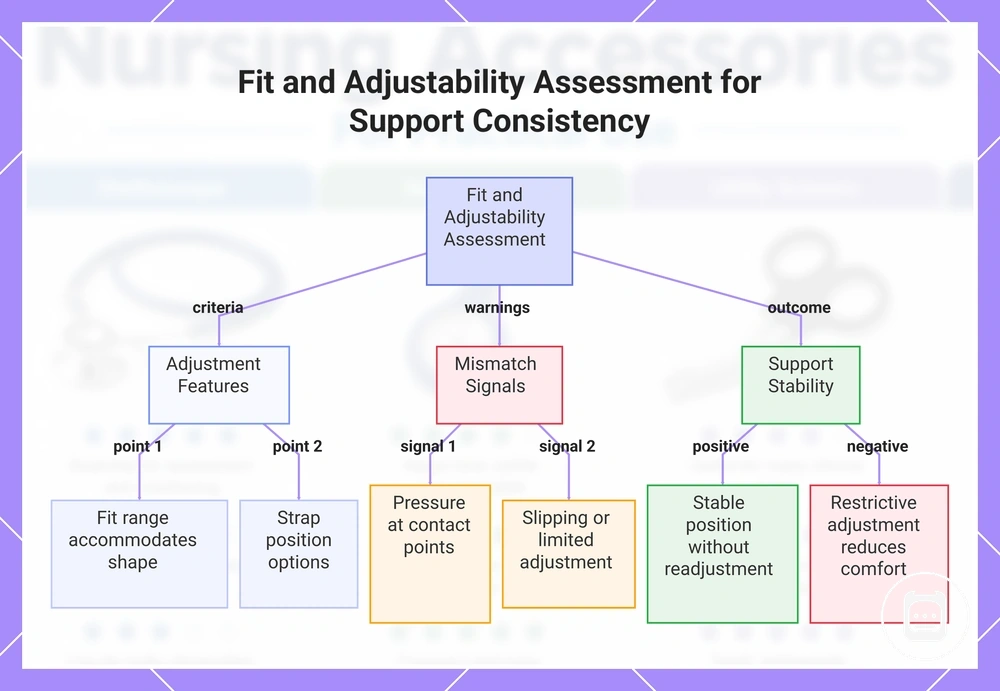
Common mismatch signals may include pressure at specific contact points, slipping during use, or limited adjustment that makes stable support difficult to maintain. A stable support position may feel more comfortable over time, while restrictive adjustment can reduce comfort even when additional features are present. The criteria below can help assess whether fit and adjustment quality support consistent use.
- Fit range: The adjustable fit should accommodate differences in body shape and intended use context.
- Adjustment points: Strap position and adjustment options may influence how easily support position can be refined.
- Pressure signals: Concentrated pressure or discomfort can indicate that the fit range or adjustment is not well matched.
- Stable support: Support consistency is often stronger when the accessory remains in position without frequent readjustment.
This chart shows the key criteria and signals to evaluate whether fit and adjustability support consistent use, including adjustment features, mismatch warnings, and support stability outcomes.
Materials, comfort, and expected durability
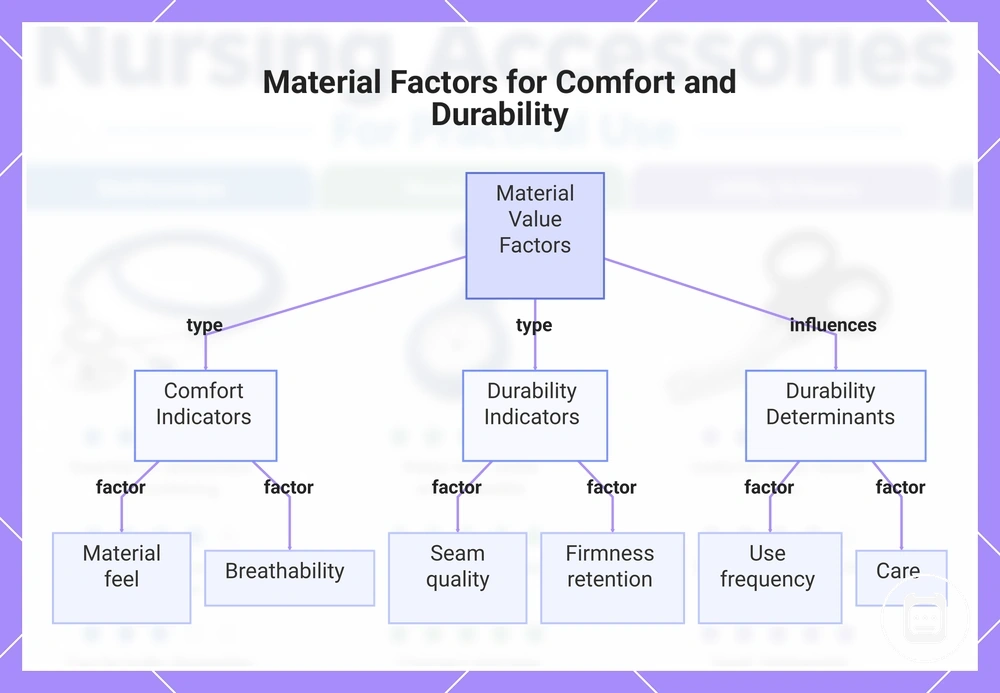
Materials create value when they support comfort during use and remain suitable for repeated use over time. Materials, comfort, and expected durability are connected because material feel, breathability, firmness, seams, and build quality can influence the day-to-day experience of using a posture support accessory. Expected durability depends on use frequency, care, and how well the materials tolerate repeated use.
During light daily use, materials with a comfortable feel, adequate breathability, and a washable surface may remain satisfactory for longer periods when properly maintained. During heavier repeated use, firmness retention, seam condition, and overall build quality can become more important because wear may appear sooner under higher use frequency. The criteria below separate comfort signals from durability signals and help identify potential replacement risk.
- Material feel: Fabric quality and surface texture may influence comfort during wear time.
- Breathability: Breathability can affect comfort when the accessory is used repeatedly or for longer periods.
- Seams: Seam quality may influence how well the accessory tolerates repeated use.
- Washable surface: A washable surface can support cleaning needs and may help maintain long-term usability.
- Replacement risk: Signs of wear, reduced firmness, or seam deterioration may increase replacement risk over time.
This chart shows the main criteria that determine the value of materials for posture support accessories, grouped into comfort indicators, durability indicators, and key determinants of material longevity.
Support level and daily-use practicality
Support level creates value only when it can be used consistently and comfortably in everyday use. Support level and daily-use practicality are closely connected because comfort, mobility, visibility, storage needs, and wear tolerance can influence whether an accessory remains realistic to use over time. The most useful support level depends on the intended use case rather than support strength alone.
A common assumption is that more support automatically creates more value, but stronger support is not always the better choice. Higher support intensity may reduce mobility, increase visibility, create storage limitations, or affect wear tolerance for some users, while a more usable support level may fit daily routines more easily. Support level and daily-use practicality should therefore be evaluated together before making a practical-use decision.
Support level and daily-use practicality can be separated with a simple contrast:
| Stronger support signal | Practical-use risk | Better-fit condition |
|---|---|---|
| Higher support strength | May reduce comfort, mobility, or wear tolerance for some users | When the use case benefits from added support and the accessory remains comfortable to use |
| More usable support | May provide less support intensity | When comfort, visibility, storage, portability, and routine use are important parts of the value decision |
Price ranges and the tradeoffs they usually signal
Price ranges usually signal tradeoffs, but they do not guarantee value on their own. Budget options, mid-range options, and higher-priced options may differ in adjustability, materials, comfort, support level, and durability, yet those differences depend on the specific design and use case. Pricing can change over time, so any cost range should be treated as a flexible signal rather than a fixed rule.
Judging a posture support accessory by price alone can be misleading because two options in the same price tier may emphasize different attributes. Budget options may focus on affordability and useful support, while mid-range options may place more emphasis on adjustability and everyday comfort. Higher-priced options may include different materials or durability-focused construction, but a higher price does not automatically create higher value. The most useful comparison is usually based on adjustability, materials, comfort, support level, and durability rather than the price tier alone.
The table below shows how price ranges and the tradeoffs they usually signal can be interpreted without treating any tier as universally better.
| Price range | Common value signal | Common tradeoff | When it may make sense |
|---|---|---|---|
| Budget options | Affordability and basic support features | May offer fewer adjustment features or simpler materials | When basic support and cost control are the main priorities |
| Mid-range options | Balance of adjustability, comfort, and value | May not emphasize any single attribute as strongly | When everyday use and balanced features are important |
| Higher-priced options | Potential focus on materials, support level, or durability | Additional cost may not benefit every use case | When specific material, comfort, or durability attributes matter |
Budget options with limited but useful support
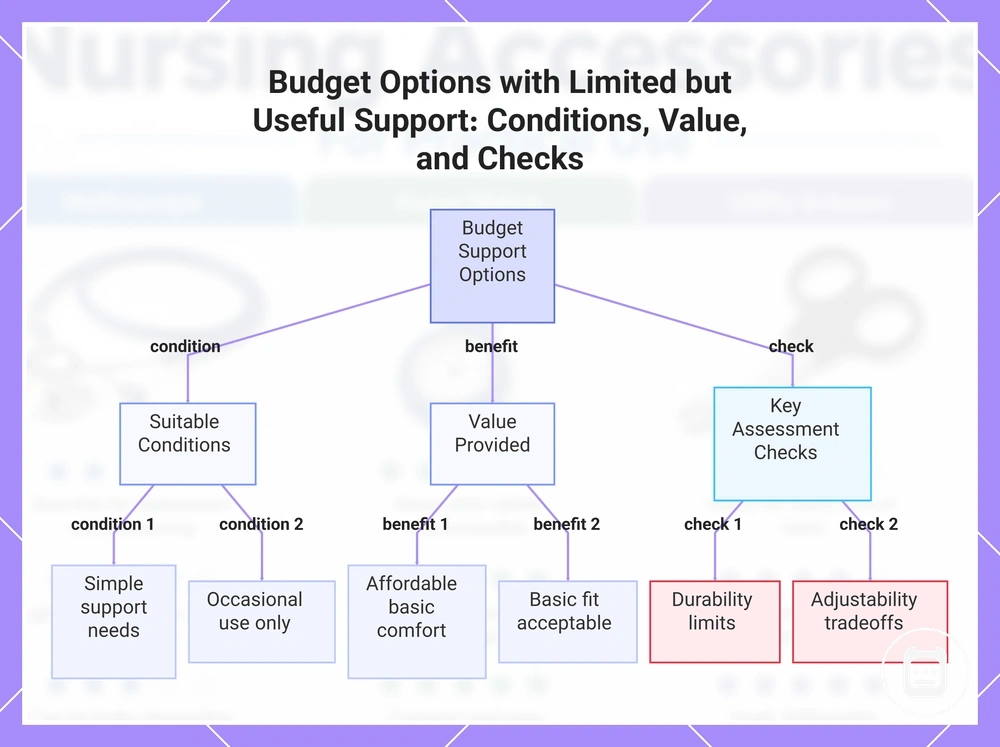
Budget options can be enough when support needs are simple and basic fit is acceptable. Affordability can provide value when the goal is useful support, basic comfort, and occasional use rather than extensive features. Budget options are most likely to meet a need when the use case does not require advanced adjustability or higher support levels.
For occasional use or lower-intensity routines, budget options may provide useful support without requiring a larger investment. Limited support does not automatically mean poor value because comfort and basic fit can still satisfy a simple need in the right conditions. Budget options should still be assessed for durability limits and adjustability tradeoffs before making a decision.
Caution: Budget options with limited but useful support can offer value, but fit, durability limits, and adjustment needs remain important selection criteria.
This chart explains when budget support options with limited support are sufficient, what value they provide, and what to check before deciding.
Mid-range options with stronger everyday value
Mid-range options may provide stronger everyday value when added features improve repeated use. Better adjustability, comfort, materials, or durability can make daily use more practical when those improvements address a real need. Mid-range options may create more value when fit and use requirements justify the additional cost.
When repeated use highlights comfort issues, limited adjustment, or faster wear, mid-range options may help address those concerns through improved fit flexibility or materials. The practical value depends on whether adjustability, comfort, support consistency, or durability improves the user experience often enough to matter. The final decision should still consider the tradeoff between added features and the value they provide for the intended use case.
The following criteria often explain why mid-range options may create stronger everyday value during repeated use:
- Adjustability: May help refine fit and support position during repeated use.
- Comfort: Can improve everyday value when the accessory is used regularly.
- Materials: Material quality may influence long-term comfort and usability.
- Durability: Greater durability may become more valuable when repeated use increases wear over time.
Higher-priced options where value depends on use case
Higher-priced options create value only when their added features match a real use case. Added features such as adjustability, materials, support level, construction, or comfort may justify a higher cost when they address a specific need during use. Higher-priced options are most valuable when the feature upgrade aligns with fit requirements, wear tolerance, or support preferences.
A common assumption is that a higher price automatically means better support, but higher price alone is not a measure of value. Improved materials, stronger construction, greater adjustability, or specialized support may matter in certain situations, while the same added features may offer limited value when the use case does not require them. The final decision should compare each added feature against the actual use case before accepting the price premium.
The comparison below highlights how added-cost signals may matter only under specific conditions:
| Added-cost signal | When it may matter |
|---|---|
| Adjustability | When fit needs vary and support position requires refinement |
| Materials | When comfort or wear tolerance is important during extended use |
| Support level | When a specific support preference benefits from additional structure |
| Construction | When repeated use places greater demands on durability and stability |
Features worth paying for in posture support accessories
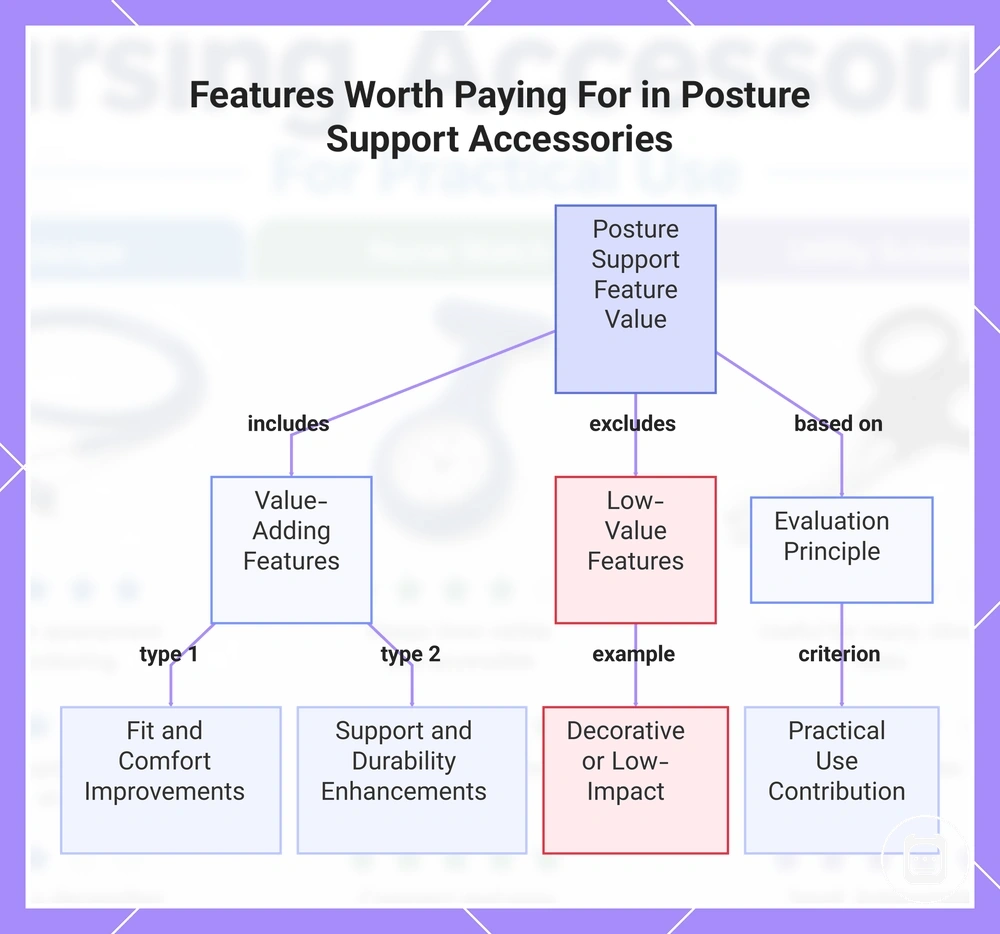
Features worth paying for in posture support accessories depend on whether they improve fit, comfort, support consistency, durability, or realistic daily use. Useful features create value when they reduce fit problems, support repeated use, or help maintain a more consistent support experience over time. A feature is worth paying for only when it contributes to practical use rather than adding cost without a clear benefit.
Weak feature fit can create wasted spend because added features do not automatically improve the user experience. Adjustability may have limited value when fit is already suitable, while material quality may matter more when comfort or durability affects daily use. Decorative features and low-impact features can appear attractive yet contribute little to support consistency or long-term usability. Feature priority should be based on practical effect and use case rather than feature quantity.
Features worth paying for in posture support accessories can be filtered using the checklist below. The checklist helps verify whether a feature is likely to improve value for the intended use case.
- Adjustability: May add value when fit needs vary and support position requires refinement.
- Comfort features: Can be more useful when the accessory is used regularly or for longer periods.
- Support consistency: May justify added cost when stable positioning is important during daily use.
- Material quality: Can matter when repeated use increases concerns about comfort or replacement risk.
- Durability: Often becomes more relevant when frequent use places greater demands on construction.
- Fit-focused design: May improve value when standard fit options do not align well with user needs.
- Decorative or low-impact features: Usually provide less value when they do not improve fit, comfort, support consistency, durability, or daily use.
This chart shows how to distinguish valuable features from low-impact features in posture support accessories based on practical use criteria.
Selection criteria for comparing value before checking price
Selection criteria should guide comparing value before checking price because value depends on need fit, support type, adjustability, comfort, durability, daily use requirements, and replacement risk. Price alone does not indicate whether a posture support accessory suits the intended use case. The most useful comparison starts with need fit, support type, adjustability, comfort, durability, daily use, and replacement risk.
Price-only comparison can lead to weak decisions because cost does not explain how well an accessory meets practical needs. A lower-priced option may be sufficient when the use case is simple, while a higher-priced option may create more value only when its attributes support the intended routine. Comparing criteria first helps identify meaningful tradeoffs before cost becomes a deciding factor. A practical decision sequence is to compare criteria first and perform the price check afterward.
Selection criteria for comparing value before checking price become easier to apply when each criterion is linked to a specific evaluation outcome. The table below provides a structured comparison method.
| Criterion | What to check | Good value condition | Decision effect |
|---|---|---|---|
| Need fit | Alignment with the intended use case | Supports the primary need | Helps determine overall suitability |
| Support type | Type and support level provided | Matches support preferences and conditions | Influences value comparison |
| Adjustability | Available fit and positioning options | Can adapt to user requirements | May improve usability over time |
| Comfort | Tolerance during daily use | Remains suitable for the intended routine | Can affect continued use |
| Durability | Resistance to repeated use | Matches expected usage frequency | May reduce replacement risk |
| Replacement risk | Likelihood of earlier wear or reduced usefulness | Lower risk for the intended use pattern | Can influence long-term cost considerations |
When an affordable posture support accessory is enough
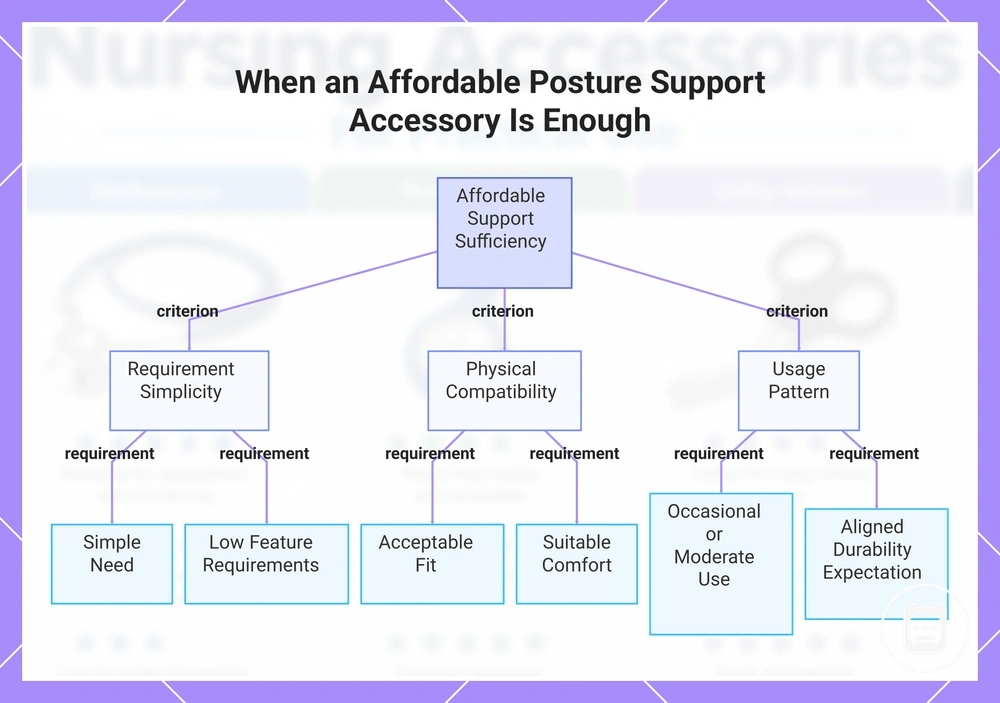
An affordable posture support accessory may be enough when it matches the intended use case, provides basic support, and offers acceptable fit and comfort. An affordable option can provide value when support needs are simple, use frequency is occasional or moderate, and low feature requirements are acceptable. The decision depends on whether the accessory meets the basic support need without creating fit or comfort concerns.
For a simple need, an affordable posture support accessory may provide sufficient support without requiring additional features. For trial use, a low-cost option can help determine whether a support type suits personal preferences before considering more advanced alternatives. For backup use, budget support may be reasonable when the accessory is not expected to handle frequent daily demands. When an affordable posture support accessory is enough can often be assessed through the checklist below, but fit and durability should still be reviewed before making a decision.
- Simple need: The accessory addresses a basic support requirement rather than a specialized preference.
- Fit: The fit remains acceptable for the intended support position and use condition.
- Comfort: Comfort is suitable for the expected wear time or occasional use pattern.
- Use frequency: Occasional use or moderate use does not place excessive demands on the accessory.
- Durability expectation: The expected lifespan aligns with the planned level of use.
- Feature requirements: Low feature requirements mean advanced adjustability or construction features may not be necessary.
This chart shows the key conditions that determine whether an affordable posture support accessory provides sufficient support.
When paying more may not improve posture support value
Paying more may not improve posture support value when the added cost does not improve fit, comfort, support consistency, or durability for the intended use case. Added cost does not guarantee value gain because a feature creates value only when it addresses a real user need. Paying more may be reasonable in one use case and unnecessary in another, depending on the benefit provided by the upgrade.
A common myth is that a higher price automatically improves support, but posture support value depends on need match rather than price alone. Meaningful upgrades may create value gain when they improve fit, comfort, support consistency, or durability in a noticeable way. Low-impact features can create a cost-value mismatch when the upgrade cost adds little practical benefit during use. The most reliable decision compares the tradeoff between added features and the specific support type, need match, and use case requirements.
When paying more may not improve posture support value is often easier to assess by comparing added-cost signals with their potential effect on daily use. The contrast below focuses on feature-related cost signals rather than products.
| Added-cost signal | Why value may not improve |
|---|---|
| Extra features | Value may not increase when the features do not address the user's simple need or use case. |
| Higher material cost | Added cost may provide limited value when comfort or durability expectations are already satisfied. |
| Additional adjustability | Value gain may be limited when the existing fit is already acceptable. |
| Upgrade cost for advanced support options | Support consistency may not improve if the support type does not match user preferences. |
| Premium construction features | Durability-related value may be limited when use frequency is low or occasional. |