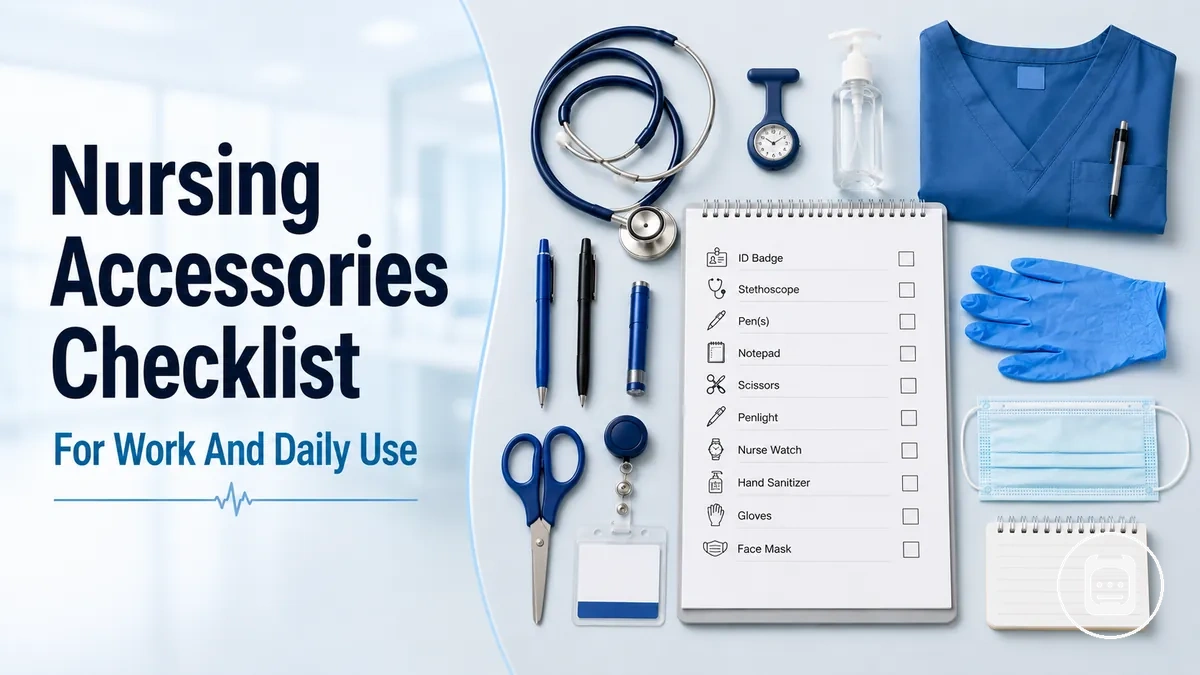
Essential nursing accessories checklist for daily nursing work
Essential nursing accessories should be chosen based on daily tasks, access needs, shift conditions, and workplace rules rather than carried as a fixed list for every nurse. A practical nursing accessories checklist helps nurses decide what is necessary to keep available for quick access, comfort, hygiene, and portability during routine work. The main goal is to support daily nursing work through better shift readiness.
Essential nursing accessories are the items that regularly support work routines, organization, information access, identification, comfort, or hygiene during a shift. In this page context, a nursing accessories checklist focuses on selection criteria and carry decisions rather than product promotion or item counts. For broader context around accessories for nurses, see this nursing accessories guide. The following sections explain how to evaluate a nurse essentials kit before deciding what belongs in daily use.
Role responsibilities, shift length, access limits, and workplace rules can all influence what belongs in an essentials kit. A nurse with reliable supply access may choose different daily nursing accessories than someone working longer shifts or moving frequently between work areas. Quick access may be a higher priority in one setting, while comfort, hygiene, or portability may matter more in another. As a result, nursing shift essentials can vary by role, workflow, and workplace conditions.
Product examples may appear later as supporting references, but decision logic comes first. Establishing selection criteria before reviewing product examples helps keep carry decisions aligned with actual work needs and any future price-check path.
What qualifies as an essential nursing accessory
An essential nursing accessory depends on whether it supports frequent work tasks, quick access, hygiene, safety, comfort, or shift continuity during daily nursing work. An item is more likely to qualify as a nurse essential when it contributes to routine readiness rather than occasional convenience. The carry decision should be based on usefulness, frequency, and role fit.
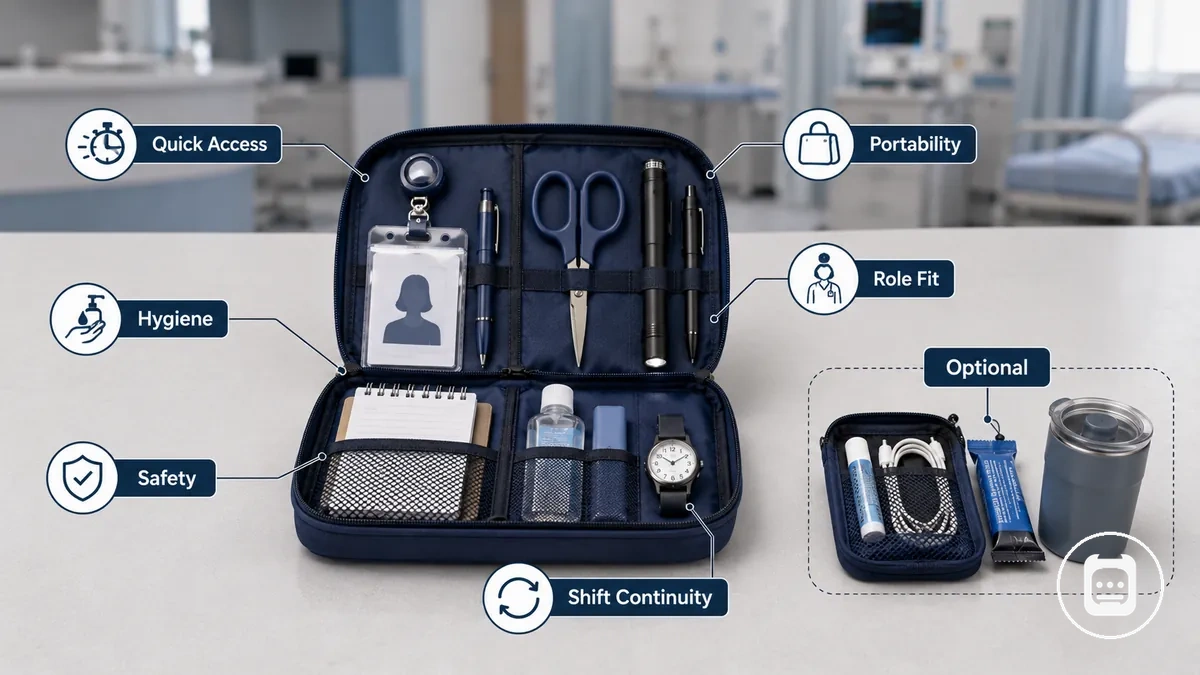
An essential nursing accessory is judged by practical selection criteria rather than preference alone. Frequency of use, workplace permission, portability, cleanability, durability, and role fit can all influence whether an accessory deserves space in a nurse essentials kit. Items that remain easy to carry and support routine work conditions often provide greater shift continuity. The mini-checklist below helps separate daily-use accessories from lower-priority items.
- Essential if: The accessory supports frequent work tasks and improves quick access during routine shifts.
- Essential if: The accessory aligns with workplace permission requirements and supports hygiene or safety needs.
- Essential if: The accessory offers portability and durability suitable for regular daily use.
- Essential if: The accessory matches role fit and provides backup value when access to supplies may vary.
- Optional if: The item mainly adds convenience and is used with lower frequency.
- Leave out if: The item creates clutter, reduces portability, or is not permitted in the work environment.
A useful accessory does not automatically qualify as an essential nursing accessory. An optional item may improve comfort, but a daily-use accessory is usually considered essential only when it consistently supports readiness, access, hygiene, safety, or shift continuity during routine work.
Daily-use nursing tools to keep in the essentials kit
Daily-use nursing tools belong in an essentials kit when they support repeated work tasks and contribute to efficient shift workflow. Include decisions are usually strongest when a tool provides clinical utility, documentation support, or quick access during routine work activities.
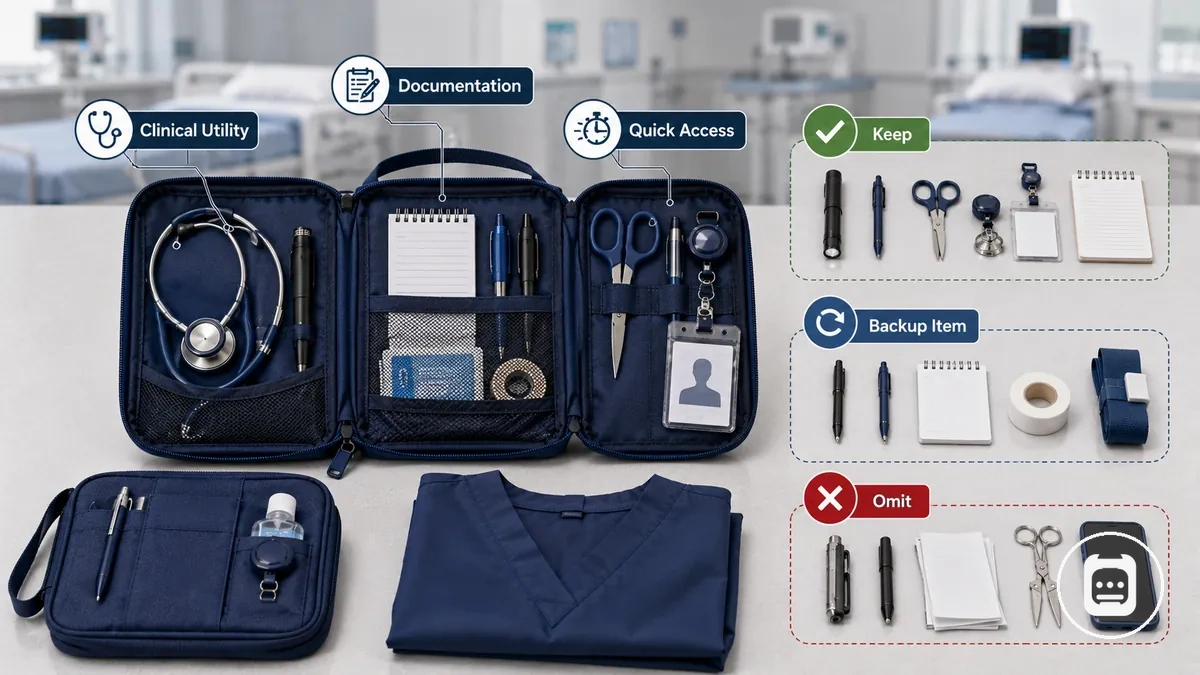
Carry space and role needs can influence which nursing work tools deserve a place in pocket carry. A tool that supports repeated tasks may justify inclusion, while a backup item may only be useful when access to shared resources can vary. Tools used infrequently may lead to an omit decision if they add bulk without supporting routine workflow. For a broader classification of accessory categories, see types of nursing accessories. The grouped checklist below focuses on selection logic rather than a full accessory taxonomy.
Clinical Utility
- Keep: Nurse tools that support repeated work tasks and routine observations.
- Keep: Tools that improve quick access to commonly needed actions or information.
- Backup item: Tools that may help when shared resources are less accessible.
- Omit decision: Tools with limited role fit or low use frequency during routine shifts.
Documentation Support
- Keep: Tools that support note-taking, quick reference, or workflow tracking.
- Keep: Items that can help maintain consistency during repeated documentation tasks.
- Backup item: Secondary documentation tools when access needs may vary.
- Omit decision: Items that duplicate existing systems without adding practical usefulness.
Quick Access
- Keep: Core tools that are easy to reach through pocket carry or organized storage.
- Keep: Items that reduce time spent searching during routine work activities.
- Backup item: Small secondary tools when quick access supports shift continuity.
- Omit decision: Bulky items that reduce portability or create unnecessary clutter.
Assessment and clinical utility tools
When repeated local work needs require quick access, assessment tools and clinical utility tools may earn a place in a daily-use kit. These compact tools are often selected based on work function, access need, and role setting, while others may be better suited as a backup decision. The bullets below focus on compact nursing tools that support routine task access.
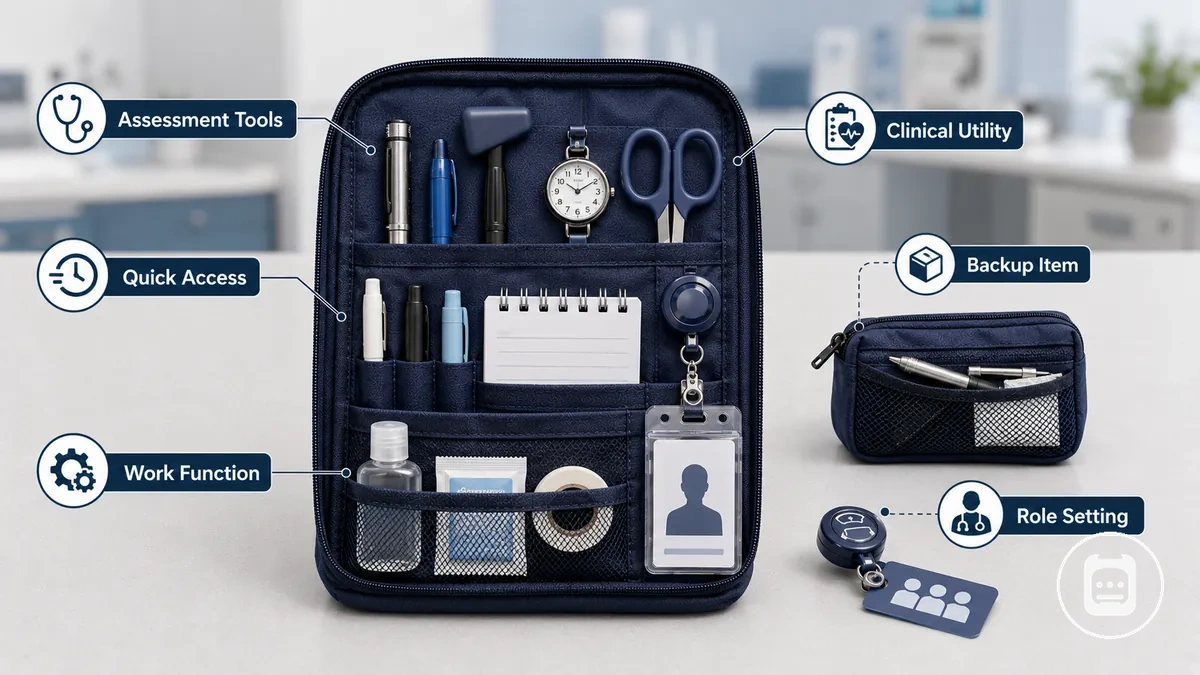
- Assessment support tools: May support routine observations in certain role settings when quick access is useful; the include decision depends on repeated use.
- Reference utility items: Can help with quick information checks when immediate access supports the work function; often carried when pocket access is preferred.
- Documentation-related compact tools: May support note-taking or task tracking when documentation is part of daily responsibilities; the include decision varies by role setting.
- Backup assessment tools: Can serve as a backup decision when shared resources are not always nearby; usefulness depends on local access needs.
- Task-support tools: May support a repeated work function when compact carry is practical; an omit decision may apply when use is infrequent.
- Secondary utility items: Can remain backup items when they add convenience without requiring constant access; the include decision depends on available carry space and work needs.
Documentation and quick-reference items
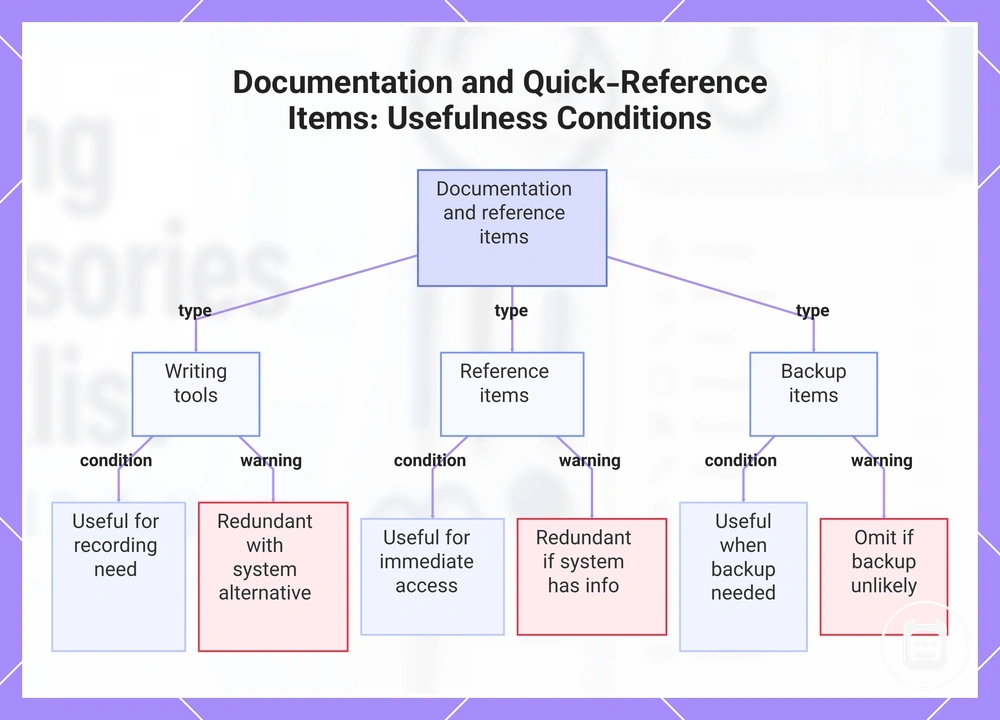
When recording needs arise during normal work routines, documentation support and quick-reference items may help keep information accessible without adding unnecessary carry items. Their usefulness often depends on shift notes, access needs, and the workplace system already in use. The checklist below separates writing tools, reference items, and backup items.
- Writing tools: May support quick shift notes when a recording need occurs; they can become redundant when the workplace system already provides a practical alternative.
- Reference card: Can serve as a quick-reference item when immediate access to information is useful; usefulness may decrease when equivalent information is readily available through the workplace system.
- Note-taking items: May support temporary information capture during a shift condition that involves reminders or task tracking; they can become redundant when recording needs are handled through other documentation items.
- Backup item: A secondary writing tool may be useful when a practical backup is needed during a shift; an omit decision may make sense when backup use is unlikely.
- Reference tools: May provide quick access to commonly used information during routine work conditions; redundancy can occur when the same information is consistently available through existing workplace systems.
This chart shows the conditions under which writing tools, reference items, and backup items are useful or become redundant in a workplace setting.
Badge, watch, and quick-access items
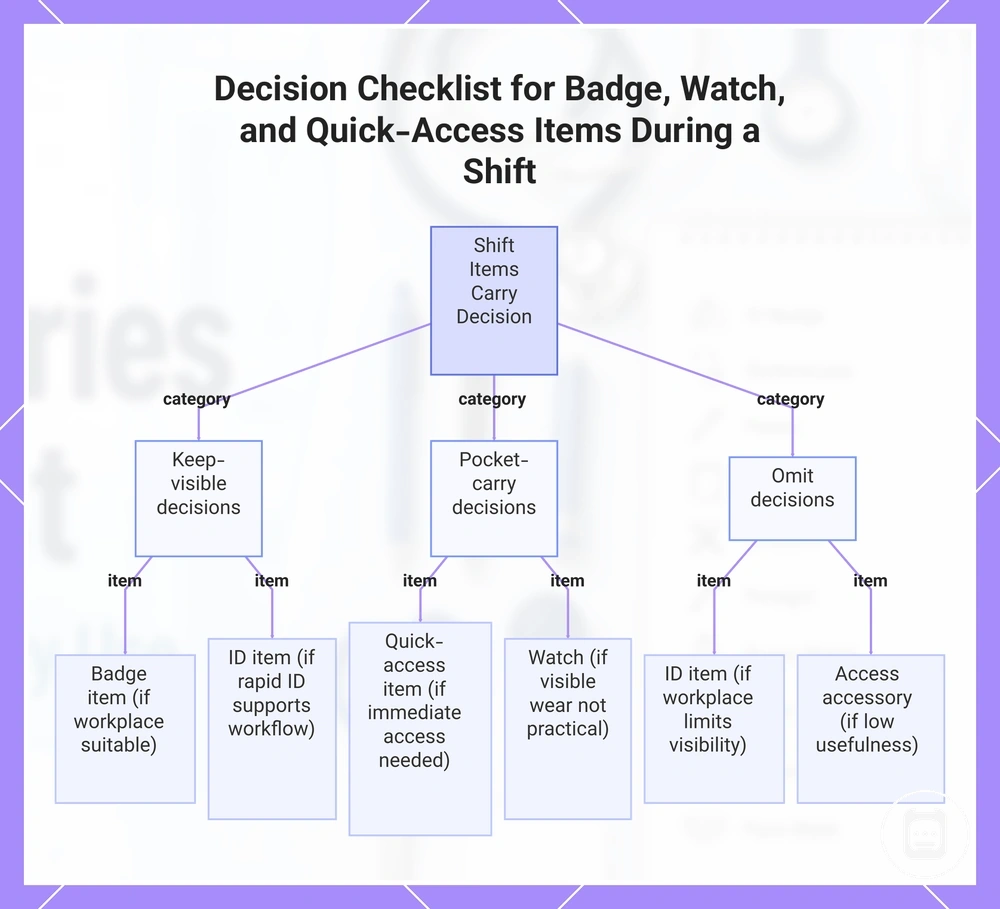
When repeated retrieval needs occur during a shift, badge items, watches, and other quick-access items may support faster access to frequently used information or functions. Their usefulness often depends on visibility, timing, and workplace suitability. The checklist below separates keep-visible, pocket-carry, and omit decisions.
- Badge item: May improve visibility and repeated retrieval when identification needs are part of the work condition; a keep-visible decision depends on workplace suitability.
- Watch: Can support timing-related tasks when quick time checks are useful; the carry decision depends on the work condition and whether visible wear is practical.
- Quick-access item: May help with repeated retrieval when immediate access is more useful than stored access; a pocket-carry decision can make sense when visibility is not required.
- ID item: Can remain keep-visible when rapid identification supports routine workflow; an omit decision may apply when workplace conditions limit visibility.
- Access accessory: May support repeated retrieval in specific role settings; a pocket-carry or omit decision depends on usefulness, visibility needs, and workplace suitability.
This chart shows the three decision outcomes for badge, watch, quick-access, ID, and access accessory items, along with the key conditions for each outcome.
Carry and organization essentials for daily access
When accessories are difficult to locate, daily access can slow down and clutter may increase during a shift. Organization essentials work best when the carry method matches how often an item is needed, helping support readiness, comfort, and reduced clutter.
When an item requires immediate retrieval, pocket carry may provide the most direct access. Pouch carry can help group related tools under one access system when multiple items are used together. Bag carry may suit backup or less-frequently used items, although overpacking risk can increase when too many accessories are stored off-body. The table below compares each carry method by access level and storage attribute.
| Carry Method | Access Level | Storage Attribute | Work Condition and Outcome |
|---|---|---|---|
| Pocket carry | High | Immediate-access storage method | May support faster retrieval when an item type is used repeatedly during daily work |
| Pouch carry | Moderate | Grouped organizer for related items | Can help reduce clutter when multiple tools need organized access during a shift |
| Bag carry | Lower | Off-body storage for backup items | May support readiness for less-used accessories but can increase overpacking risk |
Comfort, hydration, and hygiene items for long shifts
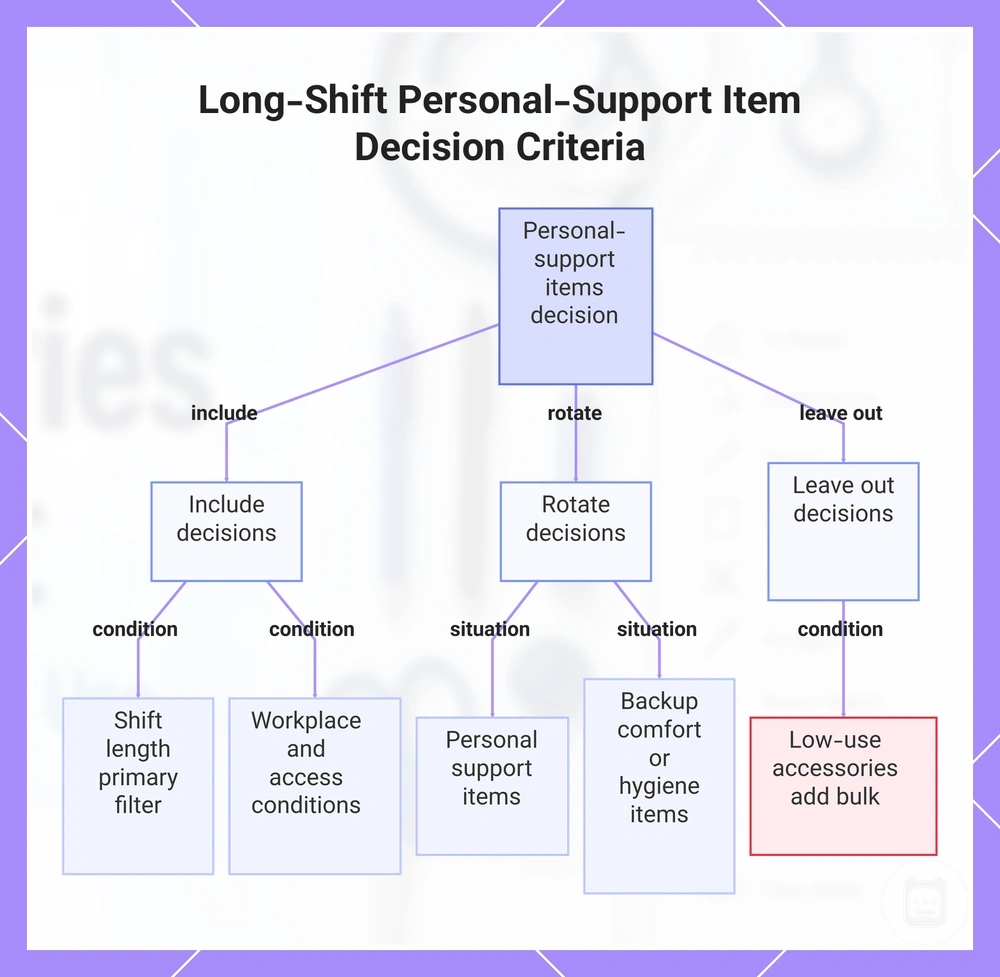
Long shifts can make comfort items, hydration items, and hygiene items more important, but the include decision still depends on work conditions and personal needs. Personal-support accessories are most useful when they address a repeated need without adding unnecessary bulk. In most cases, shift length is the primary filter for carry priority.
When break timing is limited, hydration items may move higher on the include decision list. When movement, heat, or storage limits affect a shift, comfort items and hygiene items may become more relevant depending on workplace suitability and available space. Personal support items can improve readiness when matched to actual conditions, but unnecessary extras may increase overpacking. The checklist below helps separate include, rotate, and leave out decisions.
- Comfort items: Include when long shifts and movement increase the need for personal support and the item fits the work condition.
- Hydration items: Include when break timing, storage limits, or access conditions make hydration planning more important for readiness.
- Hygiene items: Include when workplace suitability and cleanability support regular use during a shift.
- Personal support items: Rotate when they are useful in certain situations but are not needed every shift.
- Long-shift essentials: Include when shift length increases comfort, hydration, or hygiene needs beyond routine conditions.
- Backup comfort or hygiene items: Rotate when they provide occasional support but are not part of daily access needs.
- Low-use accessories: Leave out when they add bulk and contribute more to overpacking than readiness.
This chart shows the three decision outcomes (include, rotate, leave out) and the key conditions that determine whether an item should be carried during long shifts.
Wearable support and personal care items
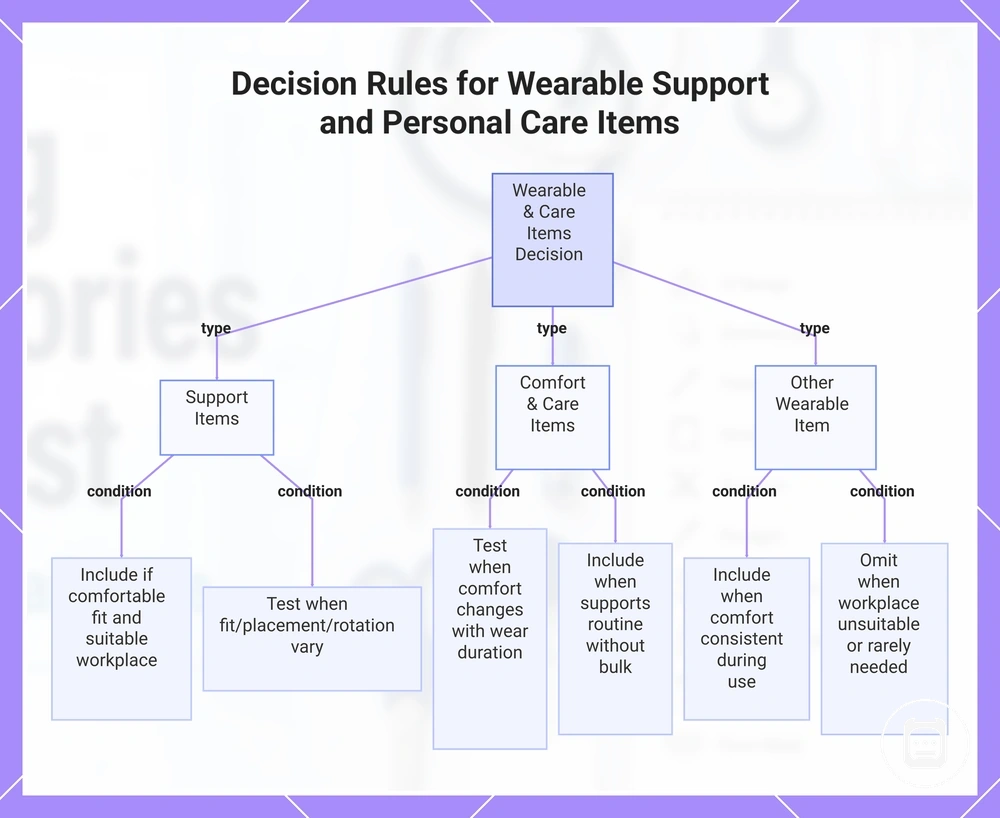
When wearable support or personal care items are used for long-shift support, the include decision depends on fit, comfort, and workplace suitability. A wearable item may be worth carrying when it remains comfortable under the expected shift condition, while other items may benefit from a test-before-shift check. Fit and workplace suitability are often the deciding factors.
- Wearable support item: Include when fit remains comfortable during the expected shift condition and workplace suitability is appropriate.
- Comfort accessory: Use a test-before-shift decision when comfort may change with extended wear, movement, or shift duration.
- Personal care item: Include when it supports routine long-shift support without adding unnecessary bulk to the carry setup.
- Personal support item: Use a test-before-shift approach when fit, placement, or rotation needs may vary between shifts.
- Wearable item: Include when comfort remains consistent during use; an omit decision may make sense when workplace suitability is limited or the item is rarely needed.
This chart shows the decision logic for including or testing wearable support and personal care items before a shift based on fit, comfort, and workplace suitability.
Water, snacks, and backup shift items
When breaks, timing, or supply access are uncertain, backup shift items can support shift continuity with minimal extra carry. Water, snacks, and other backup items may be useful when access conditions vary during a shift. The checklist below focuses on carry, store, or omit decisions.
- Water: Carry when access may be limited during parts of the shift and storage conditions support readiness.
- Snacks: Carry when break timing may be uncertain and workplace rules allow personal backup items.
- Backup shift items: Store when they may support shift continuity but are not expected to be needed frequently.
- Shift backup: Carry when uncertain breaks or supply access may interrupt routine workflow.
- Small essentials: Use an omit decision when they add unnecessary bulk or when reliable access is already available throughout the shift.
Shift-based priorities for choosing what to carry
Shift-based priorities depend on shift type, role demand, and access constraints rather than a fixed checklist. Carry priorities can change as work-shift needs, supply access, or task frequency change, making each accessory an include, upgrade, or defer decision.
When routine conditions remain predictable, minimal daily carry may be enough for common tasks. During a long shift or night shift, a backup item may move from optional to more important when access constraints increase. A new nurse may prefer simpler shift essentials that support workplace rules and confidence while avoiding unnecessary carry. For broader role-specific context, see work nursing accessories. The table below compares common decision paths.
| Shift Context | Priority Criterion | Item Condition | Decision |
|---|---|---|---|
| Minimal daily carry | Routine condition with reliable access | Accessory is used regularly during normal tasks | Include |
| Long shift | Extended work period and higher access constraints | Backup item may support shift continuity | Upgrade |
| Night shift | Timing changes and variable supply access | Accessory may become more useful than during routine conditions | Upgrade |
| New nurse | Workplace rules and confidence support | Item adds clarity without increasing complexity | Include |
| Any shift type | Low role demand and reliable availability | Accessory is rarely used | Defer |
Minimal daily carry
Minimal daily carry is the smallest practical set of items for routine nursing work when workplace supplies are reliable. Its purpose is to save pocket space while keeping frequently used items accessible. Keep and omit decisions should depend on item frequency, role condition, and reliable supplies.
- Frequently used essentials: Keep when item frequency is high during routine nursing work and quick access supports daily tasks.
- Documentation or reference items: Keep when regular use justifies pocket space under reliable supplies conditions.
- Backup items: Use an omit decision when workplace supplies are readily available and the item has low frequency during routine work.
- Small essentials set: Keep when access needs occur regularly and clutter control supports a lighter carry decision.
- Low-frequency accessories: Use an omit decision when they occupy pocket space without supporting routine nursing work.
Long shift and night shift additions
When a long shift, night shift, or less predictable workload changes routine carry needs, additions may become more useful than they are during routine work. These additions are conditional upgrades based on access constraints, storage limits, and readiness needs rather than universal essentials. The checklist below frames additions as include decisions or backup decisions tied to specific shift conditions.
- Backup essentials: Use an include decision when a long shift increases the added-use attribute of having support items available if routine access becomes less convenient.
- Reference items: Use a backup decision when a night shift is less predictable and quick information access may support readiness.
- Secondary documentation items: Use an include decision when an extended shift increases the added-use attribute of having a backup recording option.
- Spare quick-access items: Use a backup decision when storage limits allow a small addition that may support continuity during busier shift conditions.
- Shift add-ons: Use an include decision when a less predictable shift condition increases carry priority compared with routine work.
New nurse carry adjustments
New nurse carry adjustments depend on role expectations, workplace rules, and personal workflow rather than a fixed beginner setup. A new nurse may carry a slightly broader support set while building confidence support and learning local routines. Workplace rules remain the main boundary for any carry adjustment.
A common assumption is that more items create better readiness, but carry decisions often depend on clinical placement, confidence support needs, and personal workflow. Professional new-nurse carry is not the same as a nursing student checklist, because student-specific requirements may differ from workplace expectations. The checklist below uses carry, ask, and simplify decisions to guide early professional use.
- Adjustment items: Use a carry decision when confidence support is helpful while learning role expectations in a new clinical placement.
- Unclear accessory needs: Use an ask decision when workplace rules or local practices determine whether an item is appropriate.
- Frequently used essentials: Use a carry decision when the item supports personal workflow and repeated daily tasks.
- Low-use accessories: Use a simplify decision when an item adds bulk without supporting current work conditions.
- New-nurse carry additions: Use an ask decision when role expectations are still being learned and item usefulness depends on the workplace environment.
Essential kit versus optional nursing accessories
The difference between an essential kit and optional nursing accessories depends on practical necessity, frequency, portability, and workplace fit. Essential kit items support repeated daily needs, while optional nursing accessories depend more on role demands, shift conditions, or personal workflow. The comparison below separates must-carry, useful-if-needed, and optional convenience categories.
| Accessory Category | Essentiality Criterion | Work Condition | Decision |
|---|---|---|---|
| Essential kit | High practical necessity and frequent use | Routine work with repeated access needs | Must-carry |
| Conditional item | Supports a specific role, task, or workflow | Role-specific duties or changing shift conditions | Useful-if-needed |
| Optional convenience item | Lower frequency and convenience-focused use | Personal preference with limited routine demand | Optional or exclude decision |
A common assumption is that optional nursing accessories have little value, but optional does not mean useless. An optional accessory may improve organization, access, or workflow when the work condition supports its use. Lower frequency often separates an optional accessory from an essential item rather than determining overall usefulness. Workplace changes can alter how useful an item becomes.
When a role, shift condition, or workplace fit changes, an optional accessory may move from a convenience item to a more necessary item because its support becomes relevant to daily tasks. Portability can also influence whether the item remains practical enough to keep available during a shift. Decision signals should focus on practical necessity, frequency, portability, and workplace fit rather than convenience alone. This comparison supports a keep, optional, or exclude decision and helps identify when an optional item becomes essential for a specific role or shift.
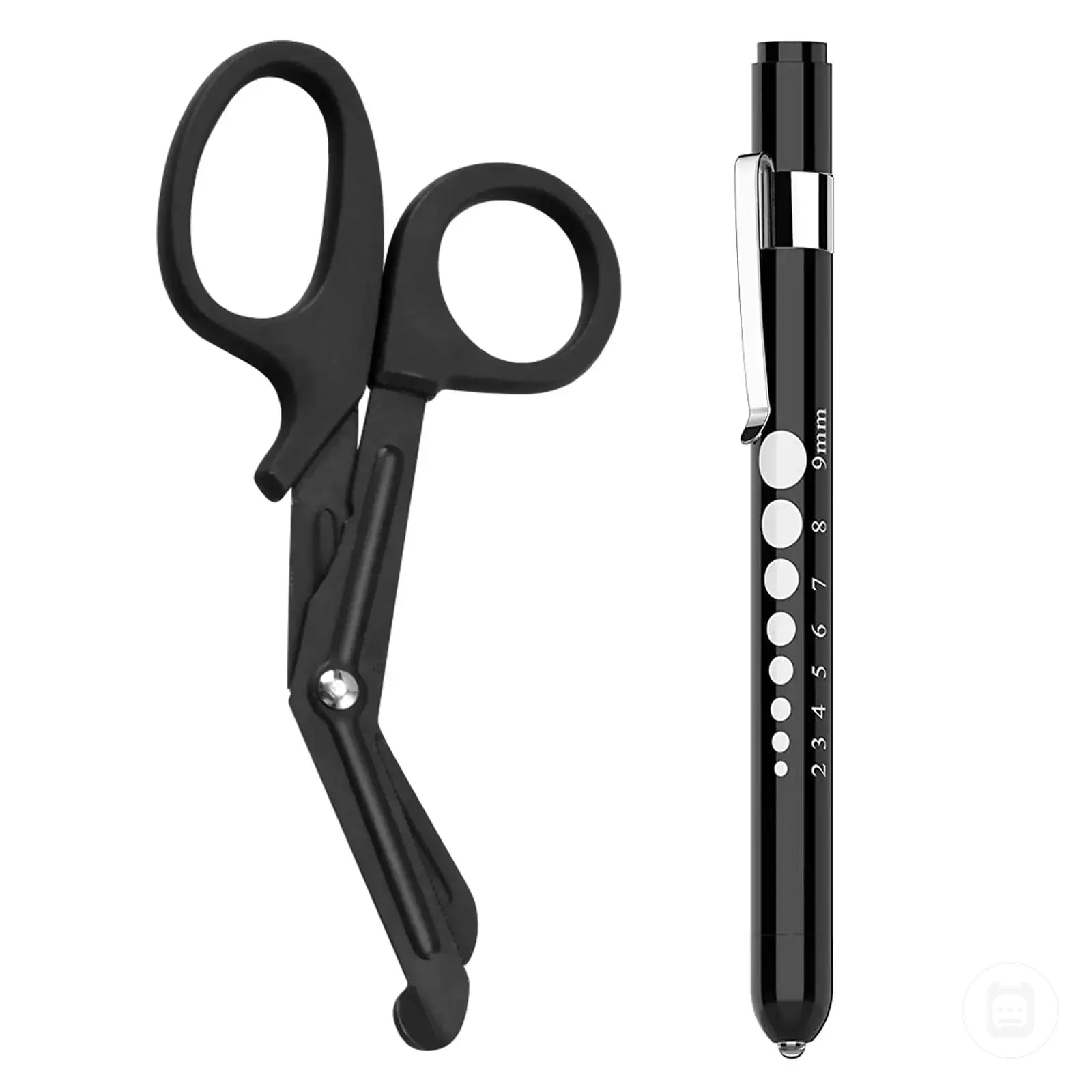
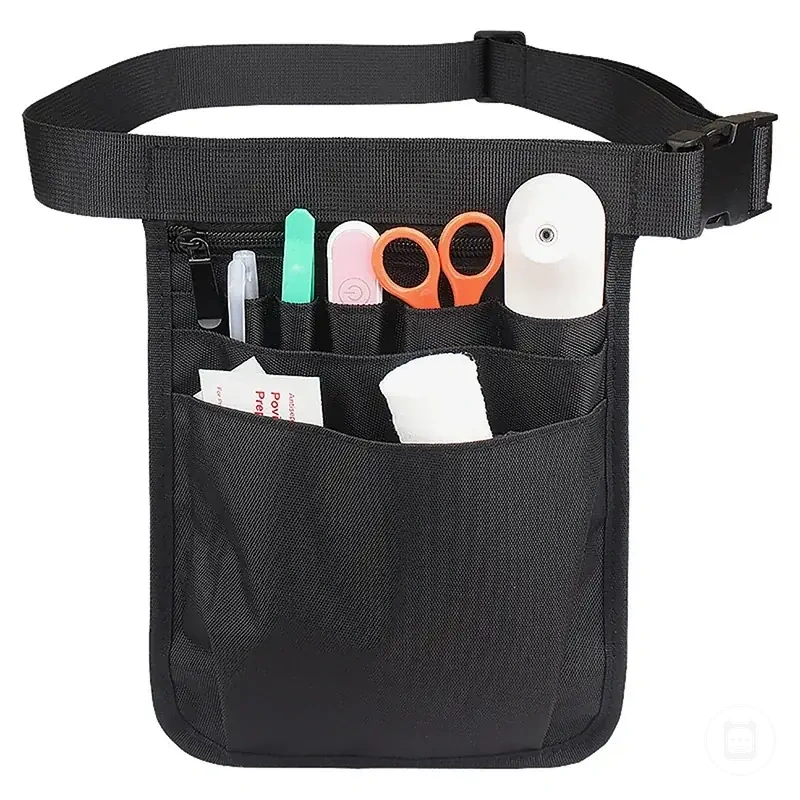
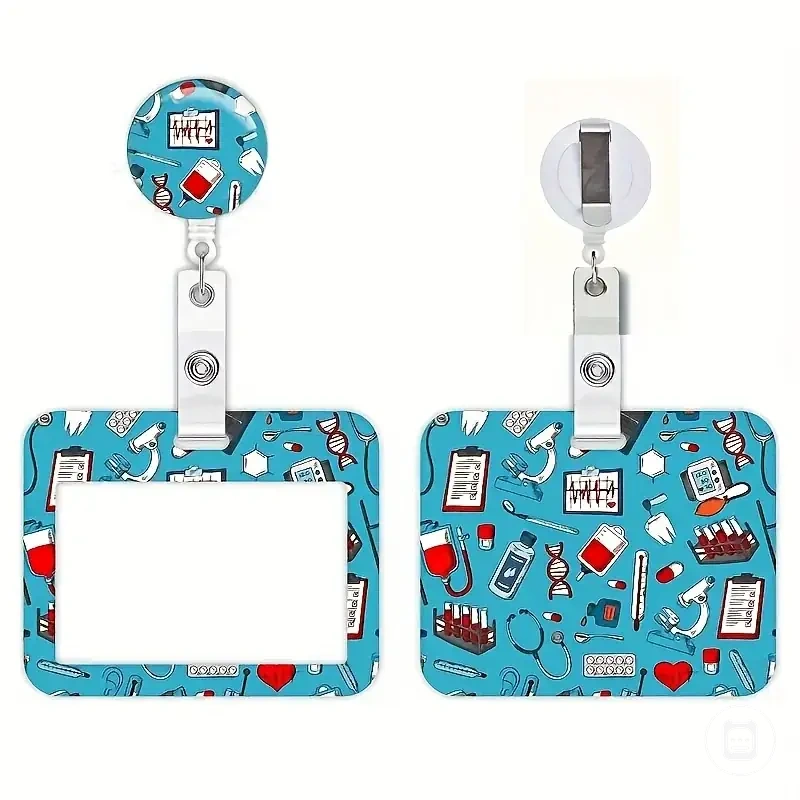
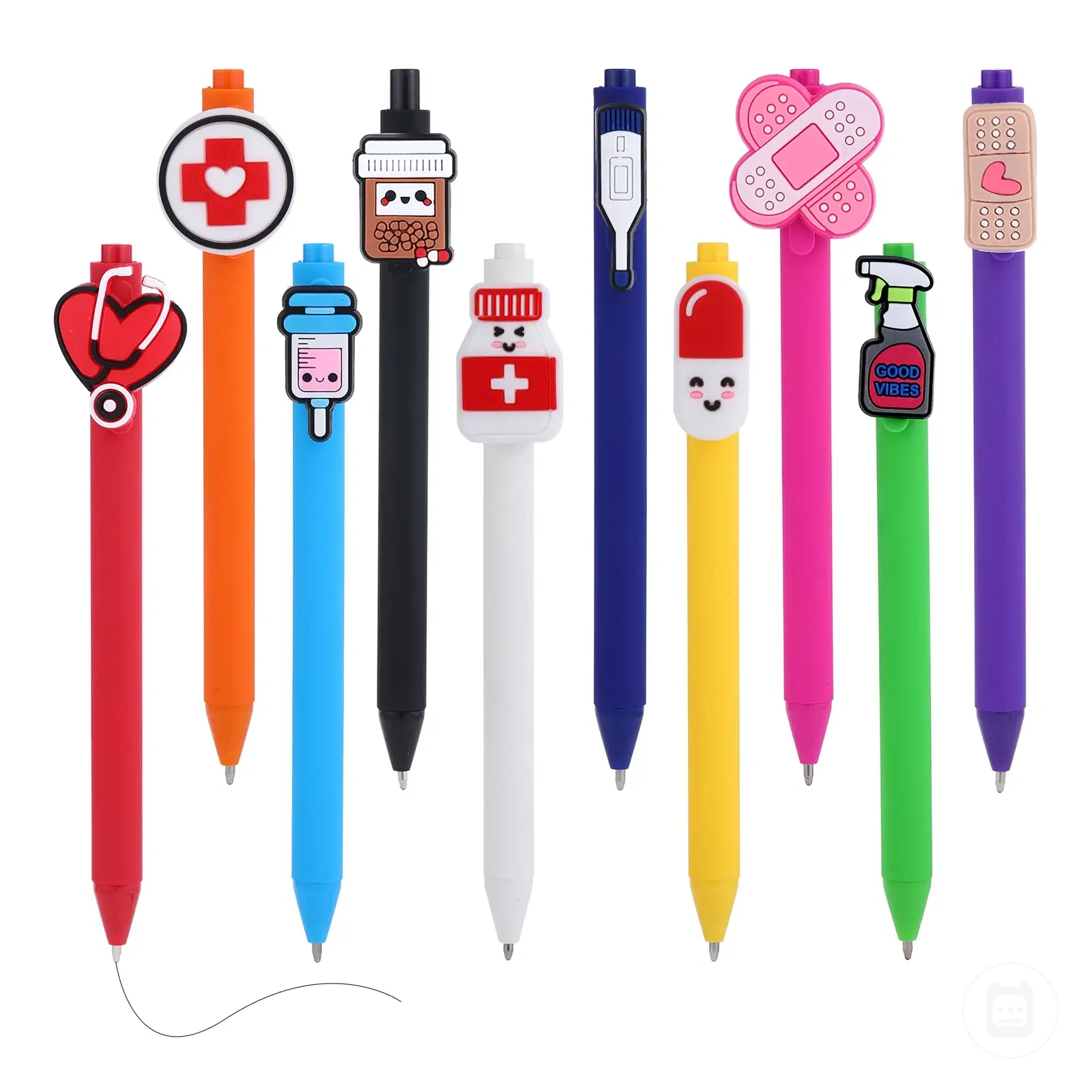
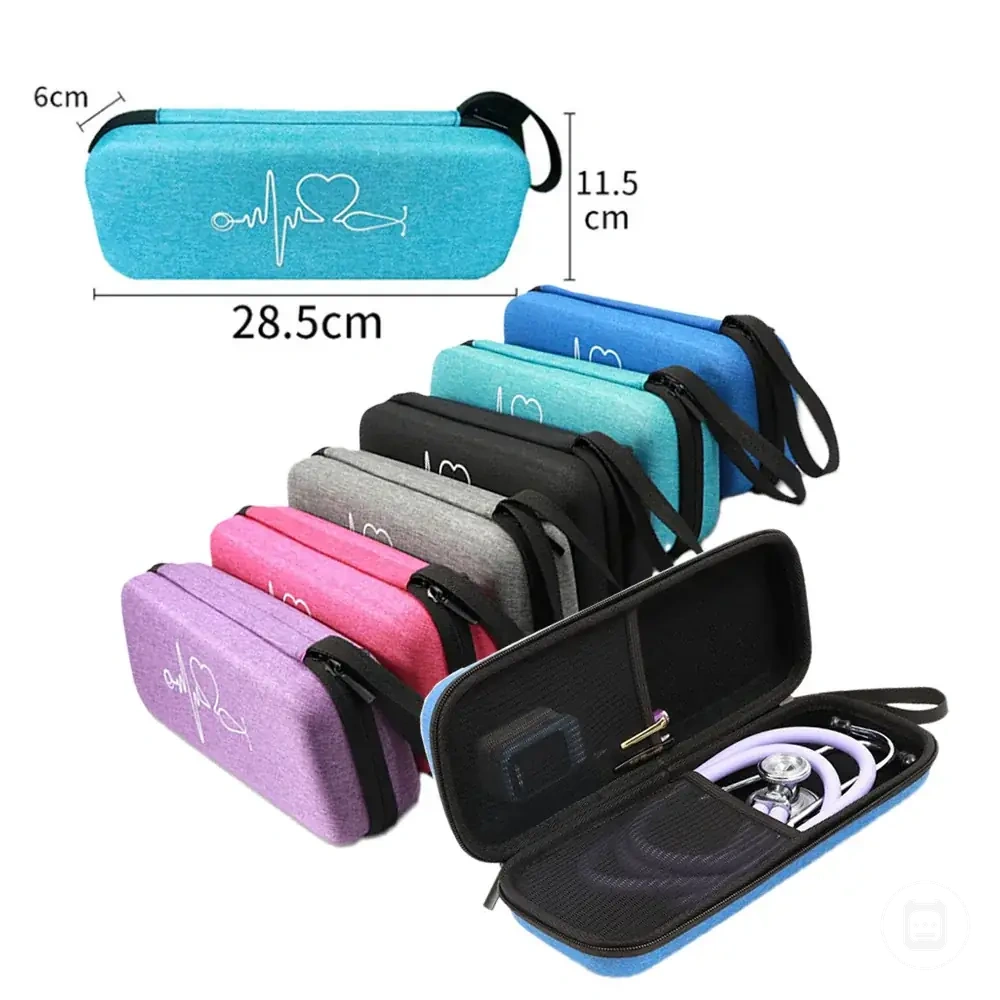
Here are product examples that may make comparison easier. Before buying, always review the compatibility criteria, essential features, and product details.
Final checks before choosing a nursing accessories bundle
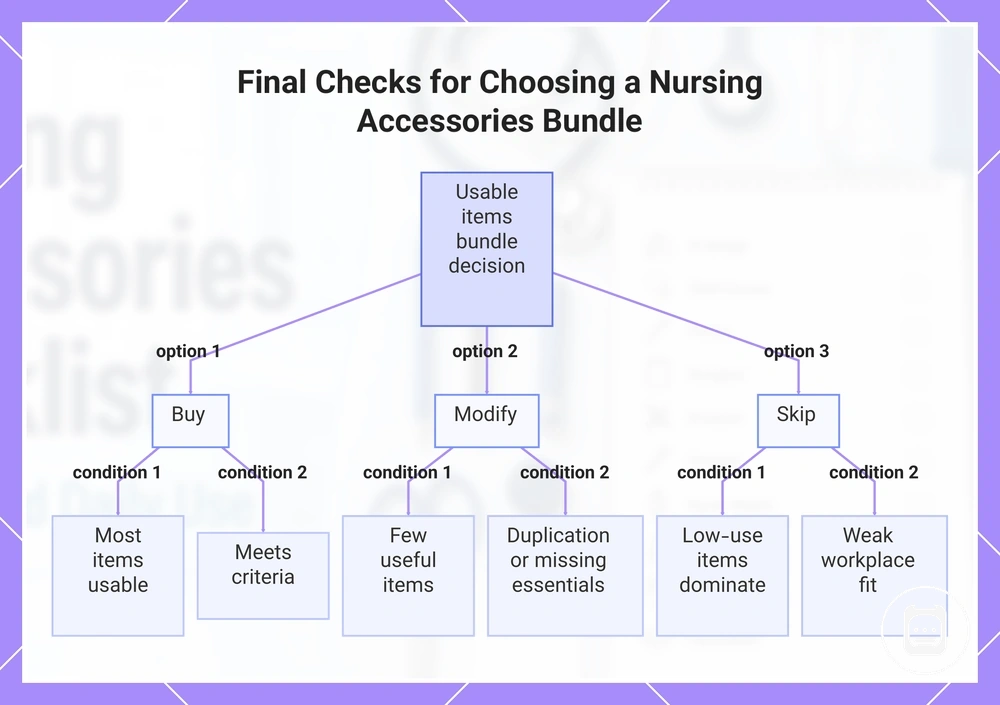
A nursing accessories bundle is worth considering only when most included items are usable for your work conditions, role needs, and daily workflow. An essentials kit should be evaluated by how many usable items it contains rather than by item count alone, making usable value more important than bundle size.
Duplication, low-use items, and poor workplace fit can reduce the usefulness of a nursing accessories bundle even when the bundle appears complete. A bundle may require modification when multiple items serve the same purpose or when certain accessories are unlikely to be used. Cleanability, portability, and workplace fit often provide stronger selection signals than item quantity. These final checks work alongside buying criteria before checking prices to support a criteria-based decision.
When most included items match daily responsibilities, portability needs, and workplace fit, a buy decision may be reasonable. When only a few items are useful, a modify decision may make more sense by focusing on the accessories that support actual work conditions. When duplication or low-use items dominate the bundle, a skip decision may be more appropriate. The final decision should remain based on selection criteria rather than product examples or item count alone, providing criteria-based decision support.
Here are product examples that may make comparison easier. Before buying, always review the compatibility criteria, essential features, and product details.
- Buy: Most usable items meet cleanability, portability, and workplace fit criteria.
- Modify: A few useful items justify the bundle, but duplication or missing essentials reduce overall suitability.
- Skip: Low-use items, repeated accessories, or weak workplace fit outweigh potential usefulness.
- Final check: Focus on usable items rather than item count when comparing a nursing accessories bundle or essentials kit.
This chart shows the three decision outcomes (buy, modify, skip) based on usable item evaluation and workplace fit.