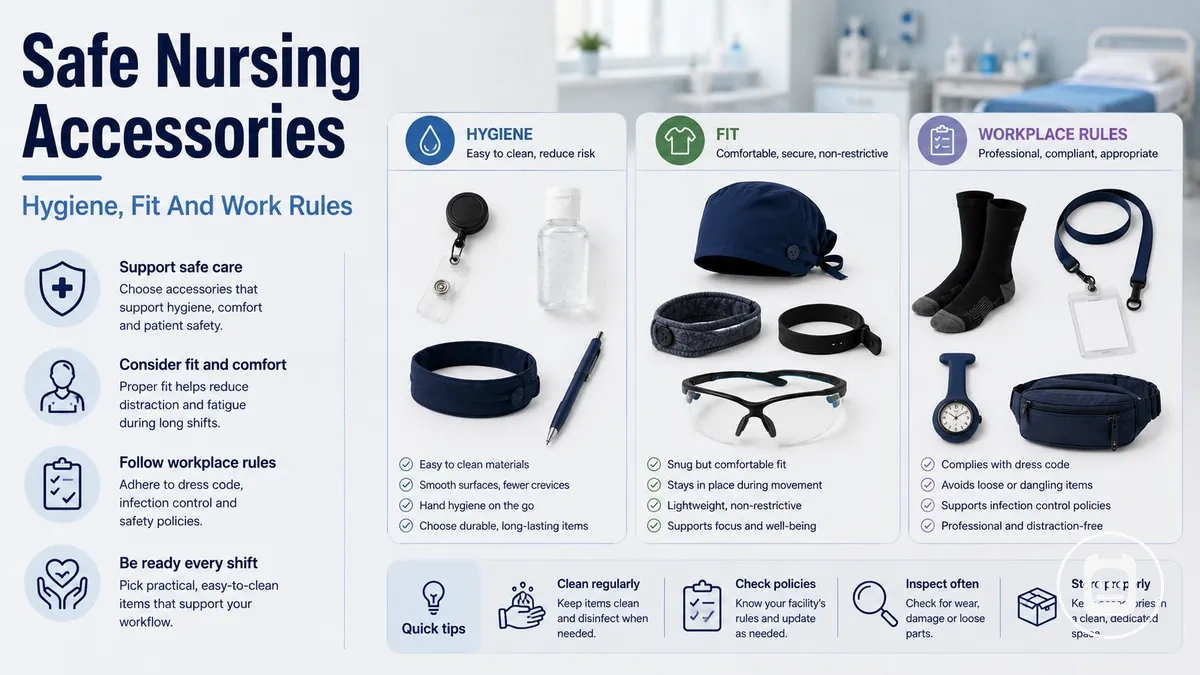
Safe nursing accessories for clinical work
Safe nursing accessories for clinical work are accessories that support daily tasks while helping reduce avoidable risks related to hygiene, movement, and workplace use. They are typically cleanable, low-risk to wear, and chosen according to the nurse’s role and setting rather than appearance alone. Their suitability often depends on hygiene, fit, and workplace rules.
Nurse accessories are decision-support items that may help organize tools or identification during clinical work when they match the needs of a specific clinical area. For broader context on accessory types and use cases, see the nursing accessories hub. Items such as a badge holder, lanyard, or washable pouch may be more suitable when they have a cleanable surface, support adjustability, and help avoid unnecessary snagging from high-contact items. These accessories do not replace formal infection-control supplies or workplace protocols, which serve a different purpose.
In one clinical setting, a badge holder or pouch may fit daily work because it supports movement and can be cleaned after regular use. In another setting, local policy, workplace rules, the clinical area, or the nurse’s role may change which work-safe accessories are appropriate. Safe nursing accessories for clinical work are therefore condition-based choices that depend on fit, hygiene needs, and local workplace expectations.
What makes a nursing accessory safe enough for daily use
A daily-use nursing accessory is safe enough for regular use when it helps reduce hygiene risk, avoids movement interference, and aligns with workplace expectations. Whether a specific item is acceptable depends on how it is used, where it is used, and how well it supports hygiene, movement, and workplace expectations.
A daily-use nursing accessory is a work-ready item that supports routine tasks without creating unnecessary handling, snagging, or cleaning concerns. Suitability often depends on the relationship between accessory type, contact frequency, material, closure, fit, and cleaning tolerance. The same nurse accessory may be appropriate in one role or work area and less suitable in another because local rules and workplace conditions can vary.
A compact badge holder with a smooth surface may suit one clinical area, while a loose accessory may create more movement interference in another setting. What makes a nursing accessory safe enough for daily use can be assessed through a small set of practical checks. The image below labels the conditions used to verify daily-use suitability.
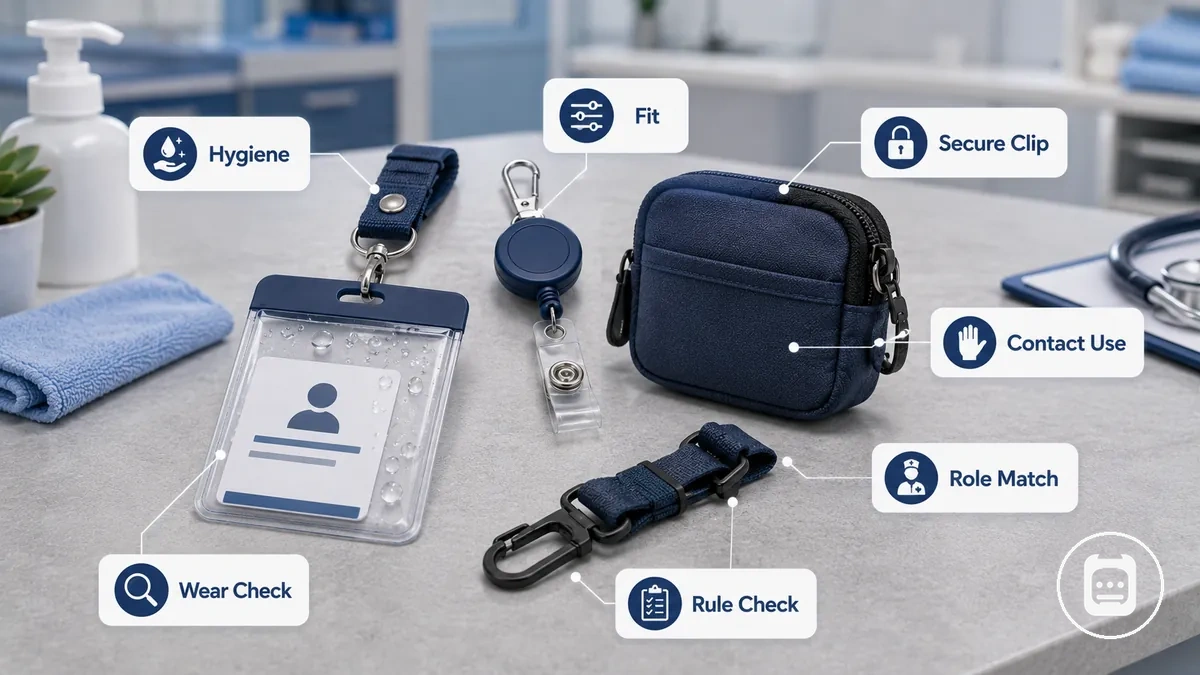
- Contact frequency: Higher contact frequency can increase hygiene risk and may require closer attention to handling and cleaning.
- Cleanability: Material, surface design, and cleaning tolerance influence whether an accessory remains suitable for regular use.
- Fit: A secure fit can help reduce movement interference during routine tasks.
- Attachment security: A reliable closure or attachment method may help limit snagging or accidental detachment.
- Local rule: Acceptability can depend on workplace expectations and local rule requirements.
- Role suitability: The work area and role may influence whether a clinical-use accessory is practical for daily use.
- Replacement signal: Visible wear, reduced cleaning tolerance, or an unreliable attachment can indicate that reassessment is needed.
When an accessory appears suitable in one workplace but not another, the difference is often linked to role, work area, exposure conditions, or local policy. Evaluating each condition separately can support a more accurate decision. This keeps the assessment focused on workplace context rather than broad assumptions.
Nursing accessories versus infection-control supplies
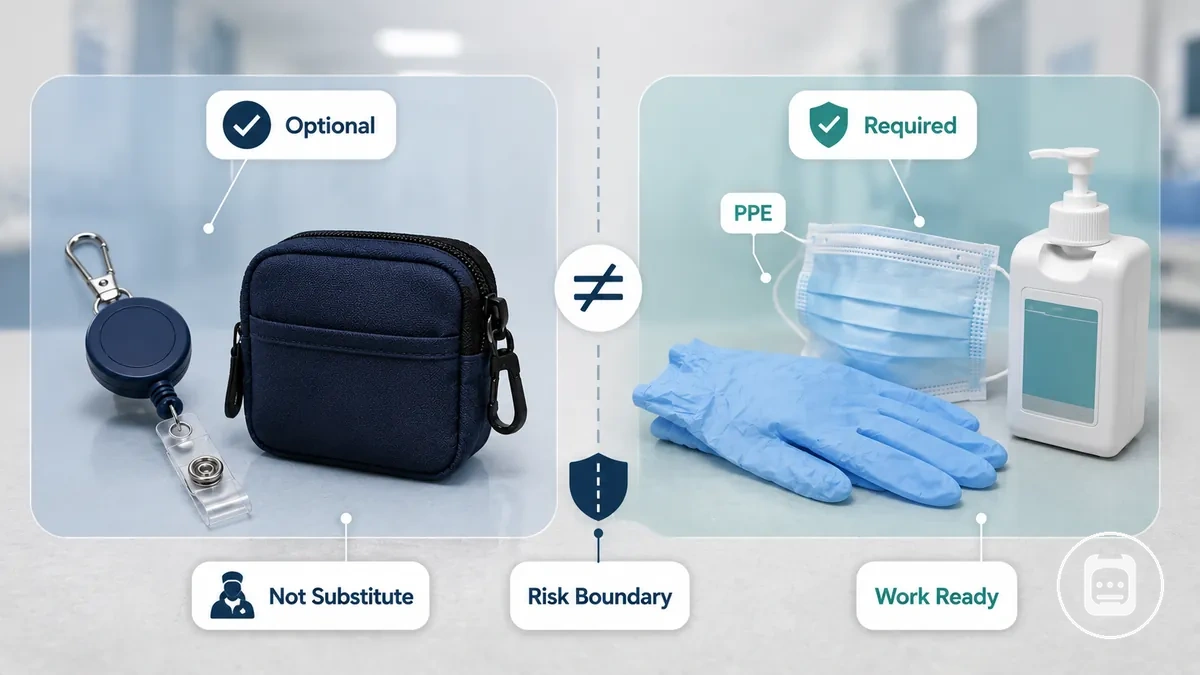
Nursing accessories are not infection-control supplies, and they do not replace PPE, required equipment, or workplace protocols. Nursing accessories support work readiness, while infection-control supplies serve a different purpose with a separate risk boundary.
A washable or cleanable accessory can be easier to maintain, but washable does not mean sterile. Nursing accessories versus infection-control supplies is often misunderstood when a cleanable badge reel, pouch, or similar work item is assumed to provide the same function as protective equipment. The distinction is that optional accessories support organization and routine work use, while infection-control supplies are associated with protection, cleaning, or workplace requirements.
Confusion can occur when optional accessories and required equipment appear in the same clinical area. The comparison below highlights the difference in purpose, control level, and risk boundary.
| Item type | Main purpose | Control level | Safe wording |
|---|---|---|---|
| Optional accessories | Work readiness and organization | Often varies by role or setting | Supports routine work tasks |
| PPE | Protective function | May be required by workplace protocols | Protective equipment |
| Cleaning tools | Cleaning and maintenance tasks | Usually linked to workplace processes | Cleaning support item |
| Personal items | Individual convenience | May be restricted in some work areas | Personal accessory |
| Workplace-issued equipment | Assigned workplace function | Managed through local requirements | Required equipment |
Infection-control supplies and nursing accessories remain separate categories even when both are used in the same work area. A cleanable accessory may support daily work, but it should not be treated as sterile equipment or as a substitute for PPE. Local policy and workplace protocols may determine which items are required, optional, or restricted.
Workplace rules for accessories nurses can wear
Accessories nurses can wear depend on employer policy, workplace rules, and the clinical area where they are used. What may be suitable in one setting can be restricted in another, so local verification is important.
In a low patient-contact area, a badge holder, watch, or pouch may be acceptable when workplace policy permits it. In higher-contact environments, dress code requirements, jewelry limits, or loose-item restrictions may influence what wearable accessories are appropriate. Unit responsibilities, patient-contact level, and role-specific expectations can affect suitability.
Questions about workplace rules for accessories nurses can wear often arise because the same accessory may be treated differently across roles and departments. The checklist below highlights common rule-check points used to assess accessory suitability.
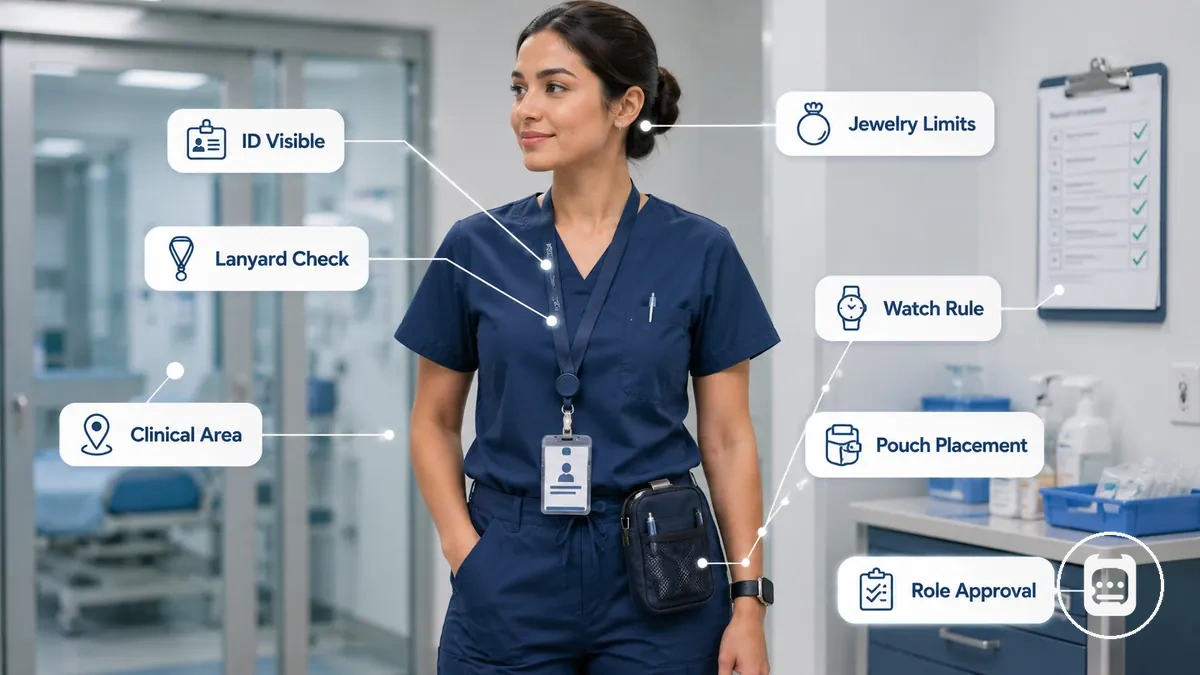
- ID visibility: Verify whether identification must remain clearly visible during work.
- Jewelry limits: Check whether rings, bracelets, or other jewelry items are restricted by dress code requirements.
- Dangling items: Review lanyard safety expectations and any limits on loose accessories.
- Hand or wrist items: Confirm whether watches or similar items are permitted in the clinical area.
- Pouch placement: Check whether pouches or attached storage items are allowed and where they may be worn.
- Clinical area: Requirements can vary based on patient-contact level and work environment.
- Role approval: Confirm that accessories align with role-specific expectations and employer policy.
Badge holders, watches, hair items, pouches, and lanyards may be permitted when they meet local workplace rules and dress-code limits. Their suitability depends on employer policy, the clinical area, and role-specific requirements rather than a single rule that applies across all settings.
Dress code limits, clinical areas, and role-specific restrictions
Dress code limits, clinical areas, and role-specific restrictions depend on the setting, task, and patient-contact level. An accessory that may be suitable in one department can become less suitable in another when visibility, movement, or contact requirements change. Employer instruction can further narrow accessory suitability.
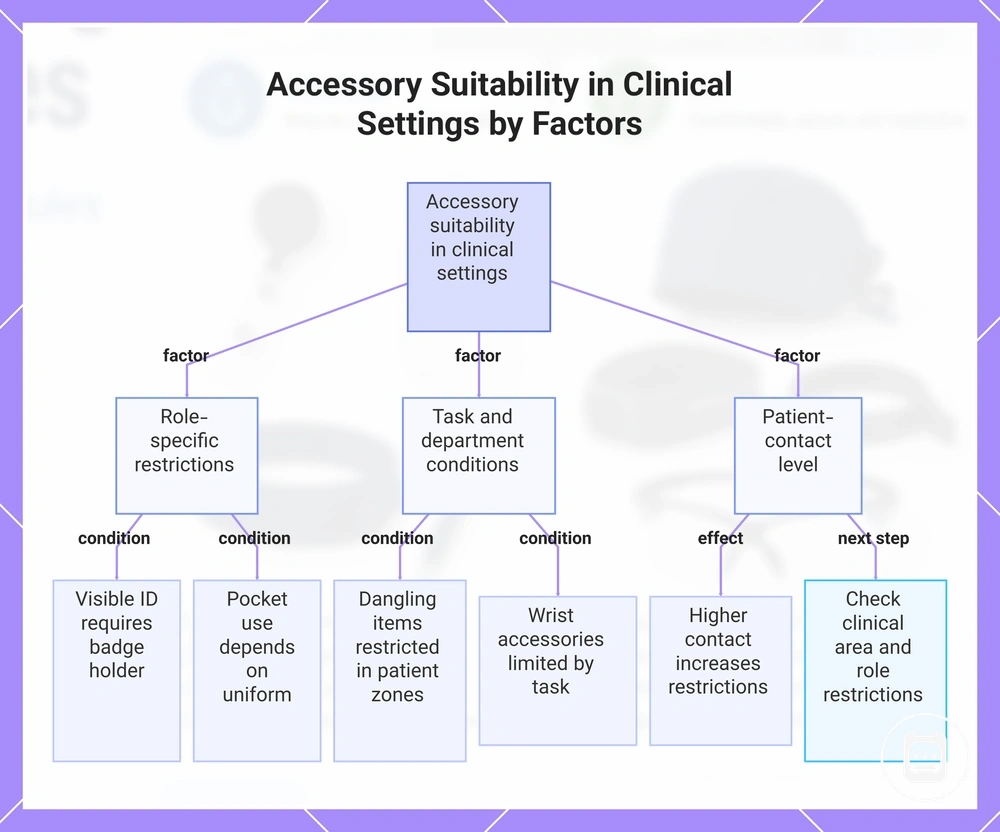
Role-specific restrictions often determine whether an accessory fits the work environment. The conditions below show how accessory suitability can change by task, department, or patient-contact zone, and outcomes may vary by role or unit rules.
- Visible identification: When a role requires visible identification, a badge holder may be preferred if identification must remain easy to see.
- Dangling items: In patient-contact zones, dangling items may face restrictions when snag risk becomes a concern.
- Wrist accessories: Watches or other wrist accessories may be limited when task requirements make them less suitable.
- Pockets: Pocket use may depend on uniform design and role-specific restrictions within the clinical area.
- Pouches: A pouch may be acceptable when placement aligns with wearable limits and does not interfere with duties.
- Patient-contact zones: Higher patient-contact activity can increase accessory restrictions depending on department expectations.
If an accessory appears acceptable in one unit but restricted in another, the difference is often linked to task requirements rather than the accessory alone. Checking the clinical area and role-specific restrictions can help clarify suitability.
This chart shows how accessory suitability depends on role-specific restrictions, task and department conditions, and patient-contact level, with examples and a practical check.
Hygiene risks in high-contact nursing accessories
High-contact nursing accessories can become a hygiene risk when they are touched often, exposed to surfaces throughout daily use, or difficult to clean effectively. Frequently handled items deserve more caution, and cleanability is often the most practical decision lens when evaluating continued use.
A badge reel, holder, lanyard, or pouch may contact hands, uniforms, workstations, and other contact surfaces during routine tasks. Pocket tools and personal carry items can also move between multiple touch points, which may increase hygiene concerns when handling is frequent. Surface exposure and cleaning difficulty often influence how much attention an accessory may require.
High-contact nursing accessories are easier to assess when each accessory is linked to its contact point and hygiene concern. The table below organizes common accessories by contact point, hygiene concern, and practical handling decision.
| Accessory | Main contact point | Hygiene concern | Safer handling decision |
|---|---|---|---|
| Badge reel | Hands and uniform area | Touched often | Review condition and cleanability regularly |
| Holder | Hands and identification surface | Frequent handling | Clean when exposure becomes noticeable |
| Lanyard | Neck area and contact surfaces | Difficult to clean in some designs | Assess wear and handling frequency |
| Pouch | Storage surfaces and hands | Repeated contact with stored items | Check condition and interior cleanliness |
| Pens | Hands and shared surfaces | Frequent handling | Clean or rotate as needed |
| Scissors | Hands and storage location | Multiple contact surfaces | Inspect before continued use |
| Clips | Uniform attachment points | Repeated touch and movement | Review for wear or buildup |
| Pocket items | Pockets and hands | Ongoing storage contact | Remove or replace if condition declines |
Normal daily-use caution does not mean every high-touch accessory requires removal. A clean and functional item may remain suitable for use, while visible soil, poor drying, or a condition that makes an item difficult to clean can indicate that it should be cleaned, removed, or replaced. The decision often depends on contact point exposure, condition, and continued cleanability rather than the accessory type alone.
Badge reels, holders, lanyards, pouches, and pocket tools
Badge reels, badge holders, lanyards, pouches, and pocket tools can be grouped by contact pattern, which reflects how they are worn, touched, stored, and exposed during work. Surface area, attachment method, cleaning access, and snag risk are observable attributes that help distinguish these accessory subtypes.
Different contact patterns can change how easily an accessory can be checked, handled, or maintained during routine use. The table below groups accessory types by contact pattern and safety watchpoint. For broader classification beyond these local attributes, see types of nursing accessories.
| Accessory type | Contact pattern | Safety watchpoint |
|---|---|---|
| Badge reels | Frequent hand contact through a retractable attachment method | Cleaning access and snag risk may vary by design |
| Badge holders | Regular handling of identification surfaces | Larger surface area can require closer condition checks |
| Lanyards | Worn around the neck with ongoing movement | Dangling sections may increase snag risk in some settings |
| Pouches | Stored against clothing while holding work items | Storage exposure can affect cleaning access |
| Penlights | Repeated hand use and pocket storage | Multiple contact surfaces may require attention to condition |
| Scissors | Handled directly and returned to storage points | Attachment method can influence retention and access |
| Clips | Connected to uniforms or holders | Smaller designs may differ in cleaning access and wear visibility |
A holder with fewer exposed edges may present a different cleaning-access profile than a design with more folds or attachment points. Likewise, a tool pouch with separate compartments may create a different surface-exposure pattern than a simpler design, so suitability can depend on use and setting.
Cleanable materials and washable accessory surfaces
Cleanable materials and washable accessory surfaces are defined by physical traits that affect cleaning access and moisture retention within the broader hygiene-risk context. Silicone, plastic, coated fabric, metal, and other material types differ through smooth surface characteristics, seams, absorbency, crevices, and drying behavior, which can influence hygiene implications when use conditions vary.
Cleanable materials and washable accessory surfaces are easier to compare when material traits are separated from cleaning methods. The table below compares material and surface attributes through surface texture, seams, absorbency, and drying behavior.
| Material or surface | Cleanability trait | Watchpoint | Decision cue |
|---|---|---|---|
| Silicone | Smooth surface with low absorbency | Condition may vary if textured sections are present | Often easier to assess when surfaces remain accessible |
| Plastic | Non-absorbent material with a wipeable surface | Crevices can reduce cleaning access | Check surface shape as well as material type |
| Coated fabric | Protective outer surface with limited absorbency | Seams may retain moisture longer than flat areas | Review seam design and drying behavior |
| Metal | Hard smooth surface | Joints and attachment points can create cleaning difficulty | Consider access around connected parts |
| Washable fabric | Flexible material with washable properties | Absorbency and drying behavior require attention | Assess moisture retention after use |
| Detachable parts | Improved access to separate surfaces | Additional joins may create small crevices | Evaluate both access and connection points |
| Smooth surfaces | Fewer interruptions across the surface area | Condition still depends on overall design | Compare texture and accessibility together |
| Crevices | Restricted cleaning access | Moisture retention may persist longer in enclosed spaces | Use caution when access is limited |
A cleanable surface is not the same as a surface that remains sterile, because material selection and cleaning outcomes are separate considerations. Choosing materials with accessible surfaces is only one part of hygiene management; for cleaning methods and maintenance practices, see clean nursing accessories.
Fit and adjustability factors that affect safe movement
Fit and adjustability factors that affect safe movement depend on fit, attachment stability, and movement range during nursing tasks. Poor fit can create snagging, slipping, pressure, or access concerns, while an adjustable fit may help keep accessories positioned more consistently when task demands change.
During bending, reaching, patient handling, or commuting, accessory position can shift as body position changes. A lanyard that hangs too low may increase snagging concerns in certain situations, while a pouch placed where it limits movement range can affect access during routine tasks. Attachment stability and placement decisions often become more important when movement is frequent or unpredictable.
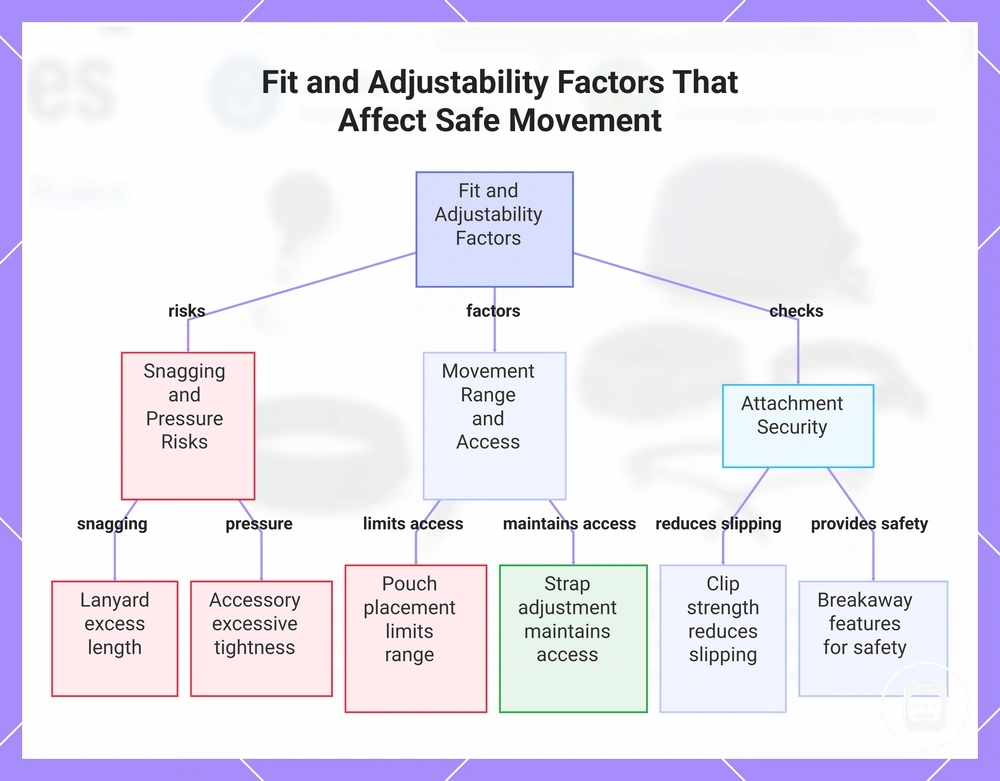
Fit and adjustability factors that affect safe movement are easier to evaluate when individual conditions are checked before regular use. The checklist below focuses on fit, attachment security, and movement range.
- Lanyard length: Excess length may increase snagging concerns when bending or reaching.
- Accessory tightness: Excessive tightness can create pressure and may reduce movement flexibility.
- Clip strength: A more stable attachment may reduce slipping when accessories are moved frequently.
- Breakaway features: Breakaway features may be appropriate when workplace rules and snag-risk conditions support their use.
- Pouch placement: Placement that limits movement range or access can interfere with task performance.
- Strap adjustment: Adjustable positioning may help maintain access when body position changes throughout a shift.
- Glove access: Accessory placement should allow glove access without creating unnecessary movement restrictions.
Fit and adjustability decisions vary by role, task, and body position rather than a single universal standard. A secure fit for commuting may require different placement or attachment choices than a setup used during patient handling, so movement safety depends on the relationship between accessory placement, attachment stability, and task demands.
This chart shows the main fit, attachment, and movement factors that affect safe movement during nursing tasks, including risks, access issues, and security checks.
Accessory features that support safer selection
Accessory features that support safer selection depend on matching features to work conditions rather than choosing by appearance alone. Safer selection is usually based on hygiene needs, fit requirements, workplace rules, and daily task exposure.
Accessory features are physical or functional traits that can influence how an item performs in a specific setting. Washable surfaces, sealed edges, smooth edges, adjustable fit, secure clips, breakaway options, low-bulk shape, role suitability, and replaceability each address different conditions, so the value of a feature depends on where and how the accessory is used.
When multiple features appear useful, selection can become difficult because one feature may improve one condition while creating a different limitation. The table below organizes accessory features that support safer selection through conditions, trade-offs, and decision cues.
| Feature | Condition it helps with | Safety trade-off | Selection cue |
|---|---|---|---|
| Washable surfaces | Frequent handling and surface exposure | Cleaning access still depends on overall design | Prioritize when hygiene concerns are higher |
| Sealed edges | Reduced exposure at joins and openings | May not address all cleaning-access limits | Consider when surface continuity matters |
| Adjustable fit | Changing movement and task requirements | Incorrect adjustment can reduce usefulness | Use when body position changes often |
| Secure clips | Attachment stability during movement | Stronger attachment may not suit every setting | Match to movement demands and task exposure |
| Breakaway options | Situations where snagging concerns exist | May separate under specific conditions | Consider alongside workplace rules |
| Low-bulk shape | Restricted spaces and frequent movement | May reduce carrying capacity | Prioritize when access and movement matter |
| Easy removal | Frequent repositioning or temporary removal | Can affect attachment stability if overused | Use when task demands change often |
| Role suitability | Department-specific expectations | May limit otherwise useful features | Check role and workplace requirements first |
| Replaceability | Wear, damage, or condition decline | Replacement timing depends on use conditions | Consider long-term maintenance needs |
During daily work, hygiene priorities, access needs, movement demands, and workplace policies may not point toward the same feature. A washable surface may support hygiene goals, while a low-bulk shape may better support movement range, so feature value depends on which condition has greater importance in the specific situation.
Safer selection comes from comparing feature benefits against the conditions they are intended to address rather than searching for one universally safest feature. When role suitability, secure attachment, cleanable design, and replaceability are evaluated together, accessory choices can align more closely with actual work demands.
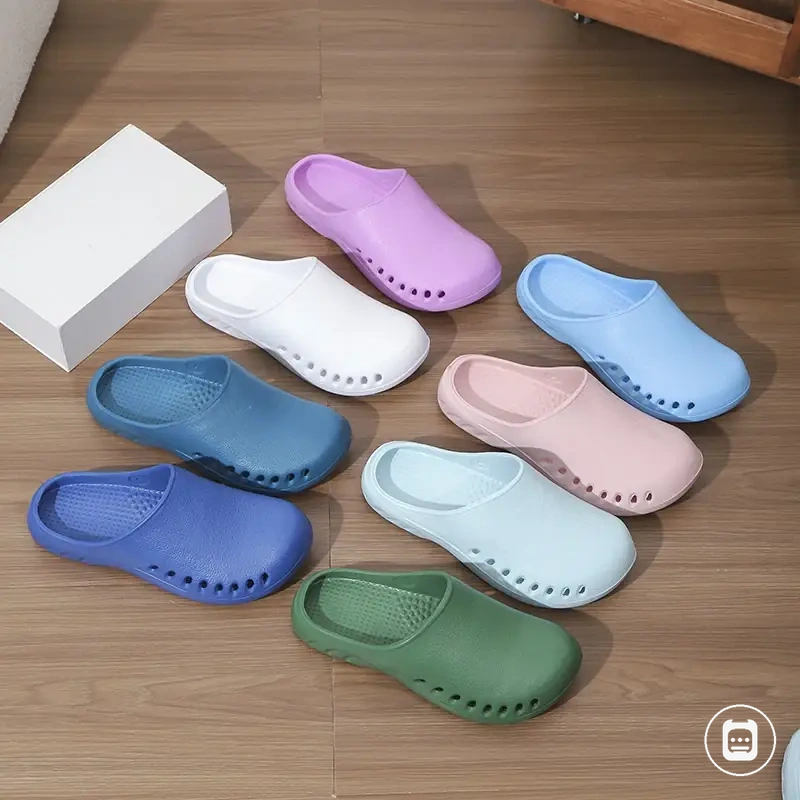
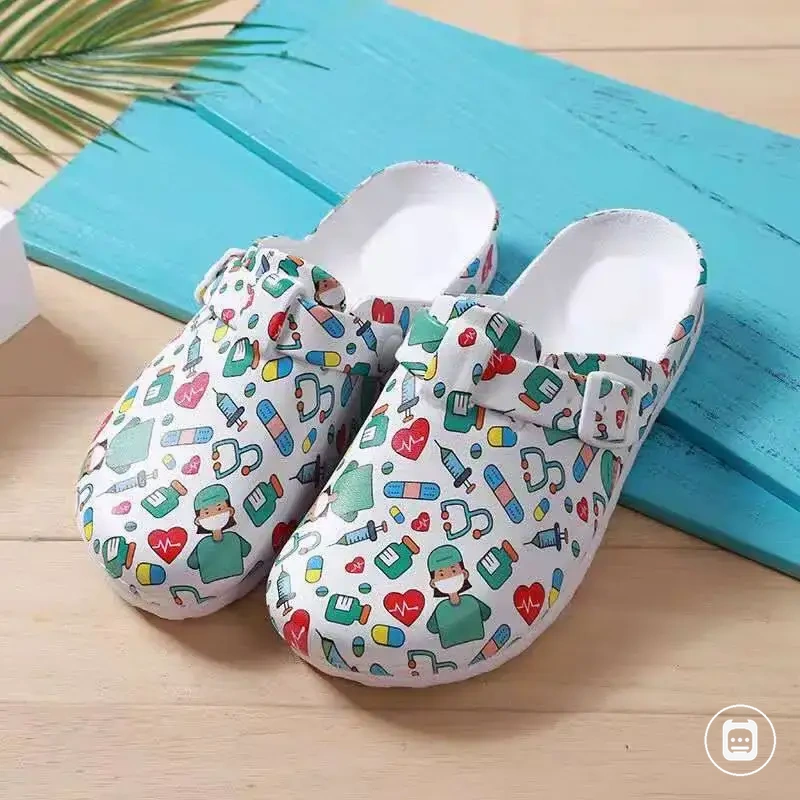
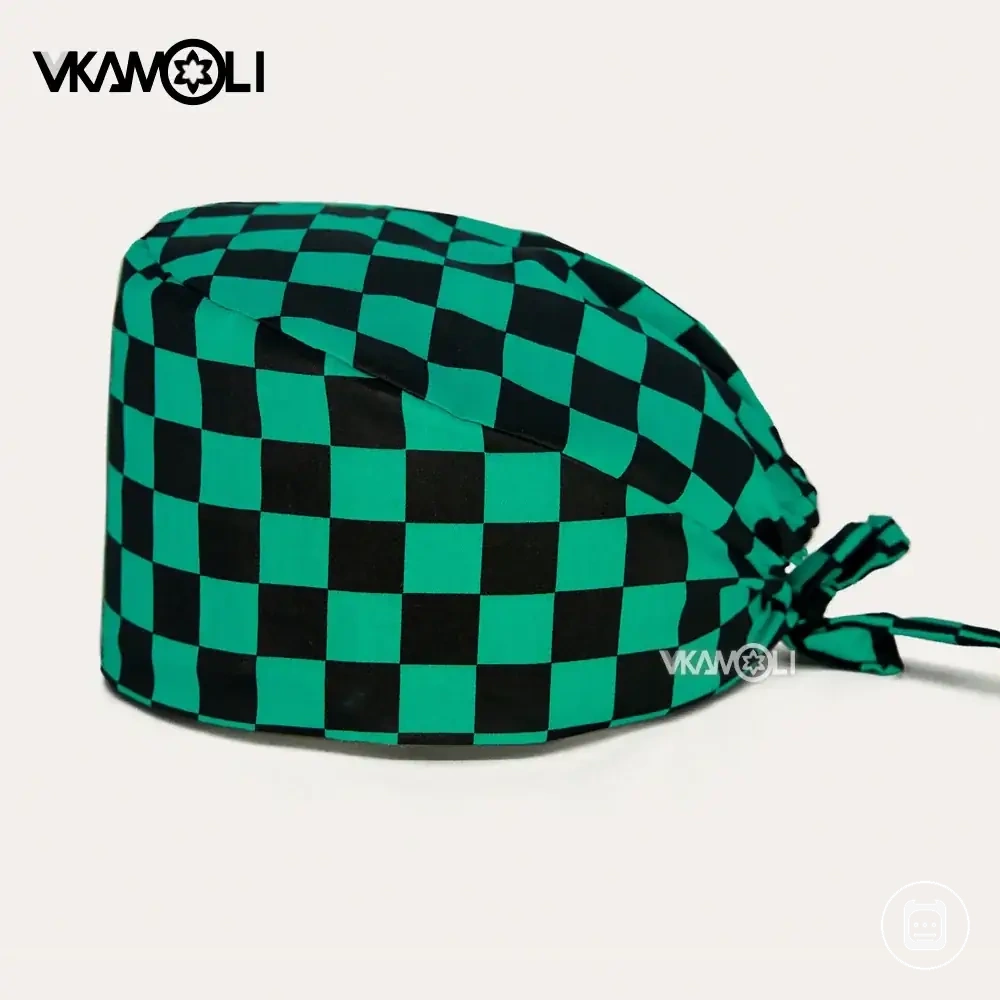
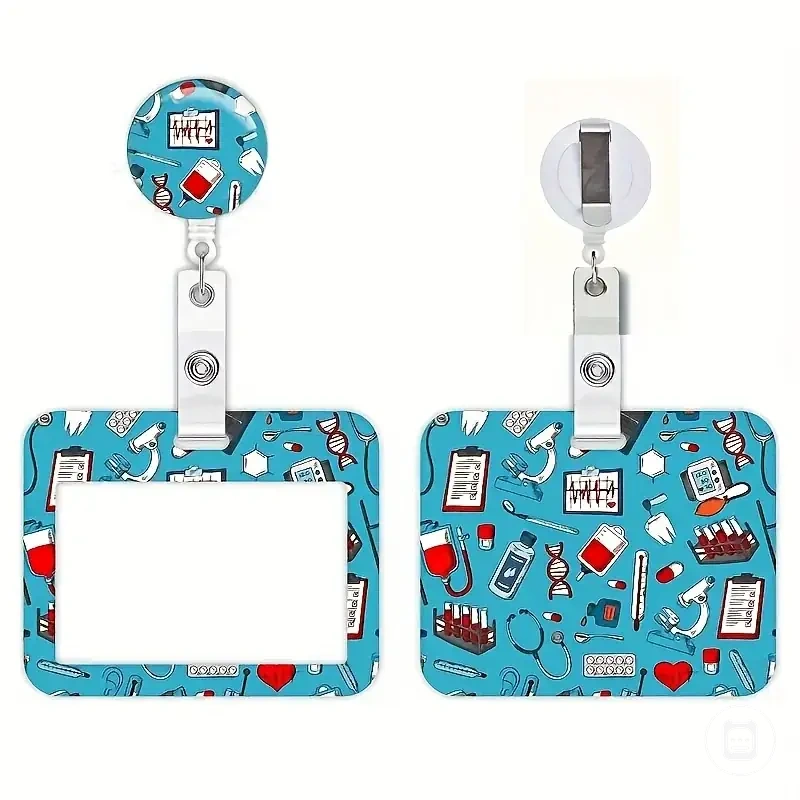
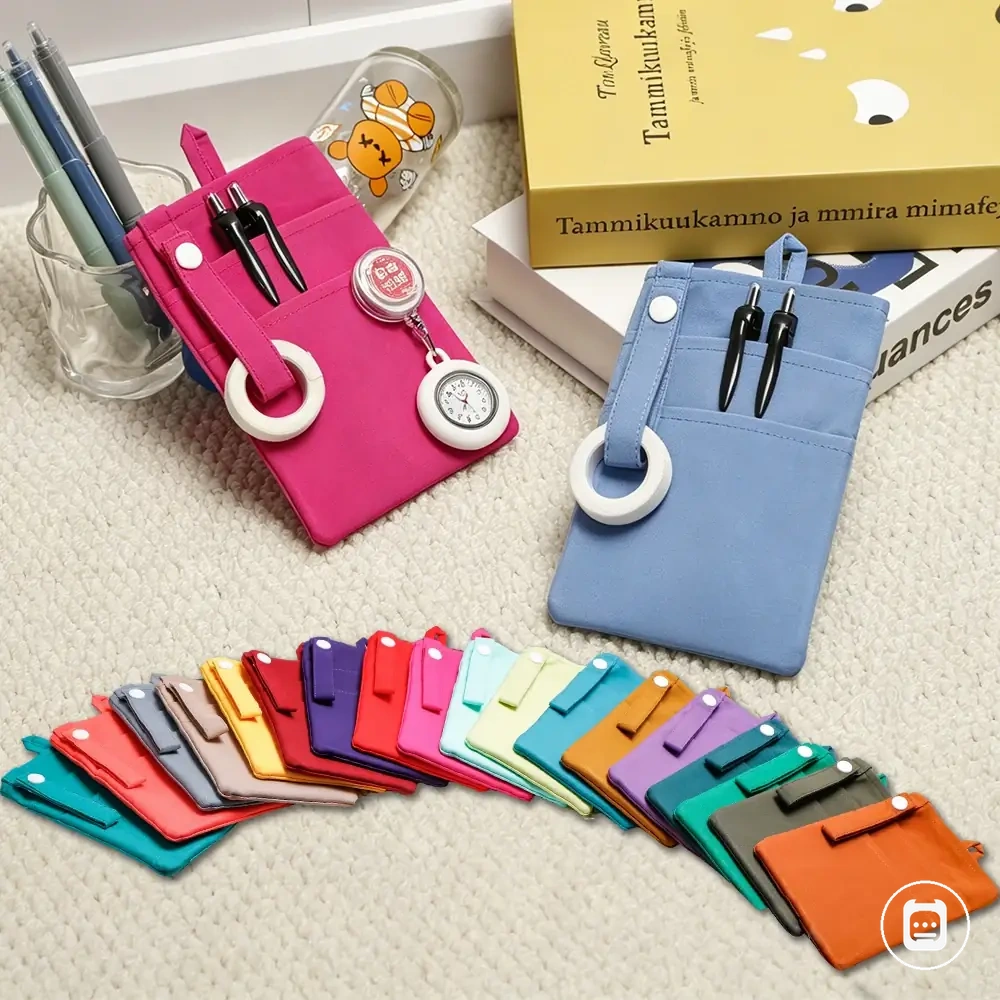
Here are product examples that may make comparison easier. Before buying, always review the compatibility criteria, essential features, and product details.
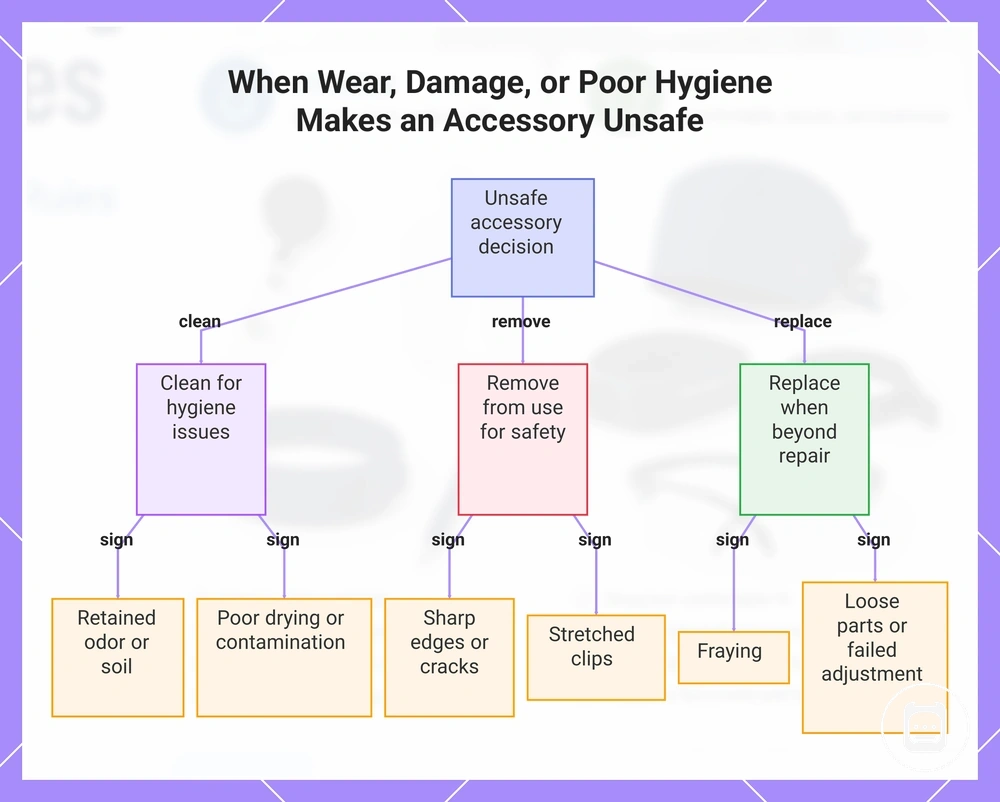
When wear, damage, or poor hygiene makes an accessory unsafe
Wear, damage, or poor hygiene can make an accessory stop supporting safe clinical work when the item no longer stays secure, cleans well, or remains practical to use. The appropriate response is to decide whether the accessory should be cleaned, removed from use, or considered for replacement based on the visible sign and likely issue.
An unsafe accessory is not defined by age alone. Clean is the first decision when the issue is visible soil or a limited hygiene issue, remove from use is the safer decision when sharp edges, loose parts, or failed adjustment could affect movement or handling, and replacement may be needed when damage or poor hygiene can no longer be addressed effectively.
When wear, damage, or poor hygiene makes an accessory unsafe, the warning signs usually appear in how the item looks, feels, dries, or stays attached. The diagnostic checklist below connects each sign to a likely issue, potential risk, and decision signal.
- Cracks: A crack can create a weak point or rough surface, increasing damage risk, so remove from use if secure handling is affected.
- Fraying: Fraying can indicate material breakdown and reduced reliability, so consider replacement when the accessory no longer maintains its intended condition.
- Stretched clips: A stretched clip can reduce attachment security and increase movement risk, so remove from use if slipping becomes noticeable.
- Broken closures: Broken closures can prevent secure fastening and increase loss or movement risk, so replacement may be appropriate when closure function fails.
- Retained odor or visible soil: Persistent odor or visible soil can signal a continuing hygiene issue, so reassess whether the accessory can still be cleaned adequately.
- Poor drying or absorbent contamination: Ongoing moisture retention or contamination can reduce hygiene suitability, so continued use should be reconsidered when drying remains difficult.
- Sharp edges: Sharp edges are a clear damage sign that can affect handling safety, so remove from use until the issue is resolved through replacement.
- Loose parts or failed adjustment: Loose parts and failed adjustment can create unstable movement or poor fit, so replacement may be needed when the accessory no longer stays secure.
An accessory may still appear usable after cleaning but remain unsuitable if poor drying, weak attachment, or structural damage continues to affect function. When the decision moves beyond surface care and becomes a condition issue, it may be appropriate to replace nursing accessories based on security, cleanability, and overall condition.
The myth is that a worn accessory becomes suitable again after cleaning, but cleaning does not correct cracks, broken closures, sharp edges, or failed adjustment. If uncertainty remains after reviewing the condition signs, the nursing accessories FAQ can help clarify common questions about clean, remove-from-use, and replacement decisions.
This chart shows the three main response decisions for unsafe accessory signs and the key indicators for each.