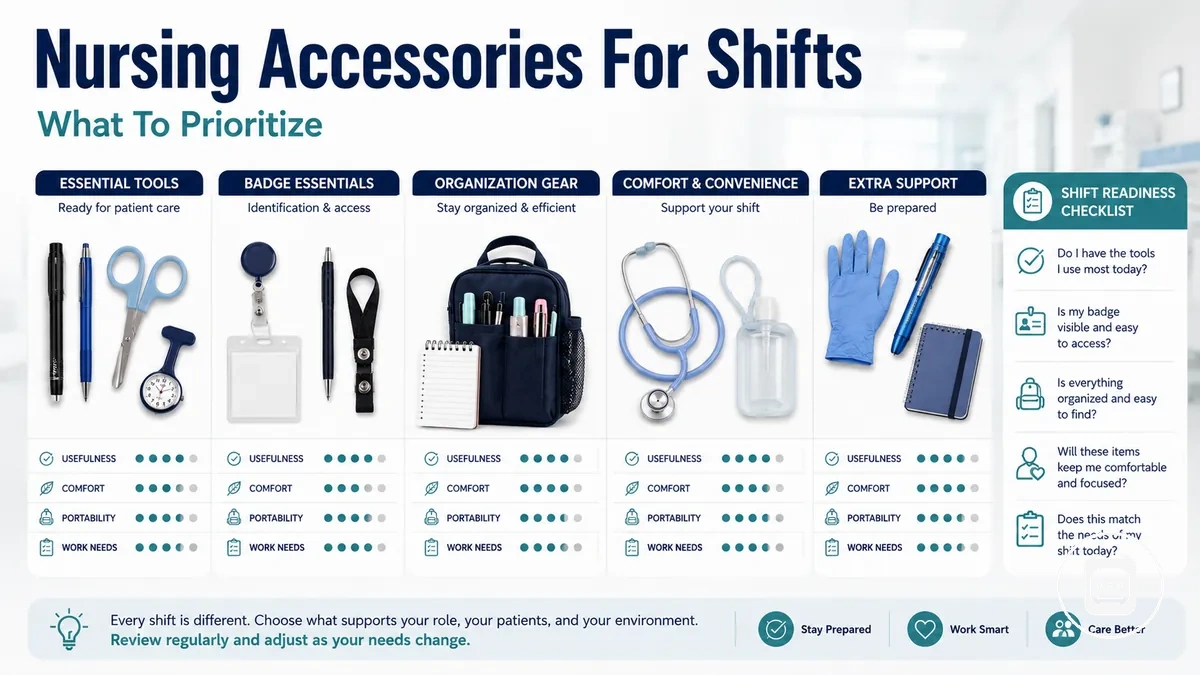
Nursing Accessories for Work Shifts
Nursing accessories for work shifts are practical support items that help nurses maintain access to frequently used tools, improve organization, and support daily workflow. Rather than functioning as a shopping list, nursing accessories serve as decision-support items that can support readiness, safe carrying, and efficient access during work shifts.
During a busy shift, the usefulness of nurse accessories often depends on how frequently tools are used and how easily they can be accessed. A work setting with constant movement may favor lightweight organization methods, while another department may place greater value on storage capacity or quick identification. These preferences can vary by role, department, workflow, and shift length.
Nursing accessories for work shifts are usually selected by matching work needs to practical use conditions. Shift essentials, nursing tools, badge items, organizers, and other work accessories can support organization and access, but comfort, hygiene, and workplace fit may depend on workplace policies and personal workflow. This decision framework helps prepare readers for evaluating tools and organization options without treating every item as universally necessary.
Common decision areas for nursing accessories often include:
- Badge items and access tools that can support quicker identification and workplace entry where required.
- Organizers and small storage accessories that can help keep nursing tools visible and easier to manage during work shifts.
- Comfort-related accessories that may influence carrying preferences under different shift conditions.
- Hygiene-focused accessories that can affect cleaning routines, storage choices, and daily handling practices.
- Shift essentials selected according to work setting demands, workflow patterns, and readiness priorities.
What Work-Shift Nursing Accessories Need to Support
Work-shift nursing accessories support access, readiness, organization, comfort, and safe task performance during daily clinical responsibilities. Their value comes from helping nurses manage work conditions more effectively rather than simply increasing the number of items carried. Together, these functions define what work-shift nursing accessories need to support.
During busy rounds, repeated tool access can make organization and accessibility more important than storage volume alone. Extended standing time may increase the importance of comfort-focused work accessories, while shift pressure can make consistent placement of commonly used nursing tools more valuable. The practical effect of any accessory group often depends on workflow demands, task frequency, workplace expectations, and department-specific conditions.
What Work-Shift Nursing Accessories Need to Support becomes easier to evaluate when accessory groups are connected to support functions, work conditions, and practical effects. The image below highlights common support categories and their work-shift roles without focusing on specific products.
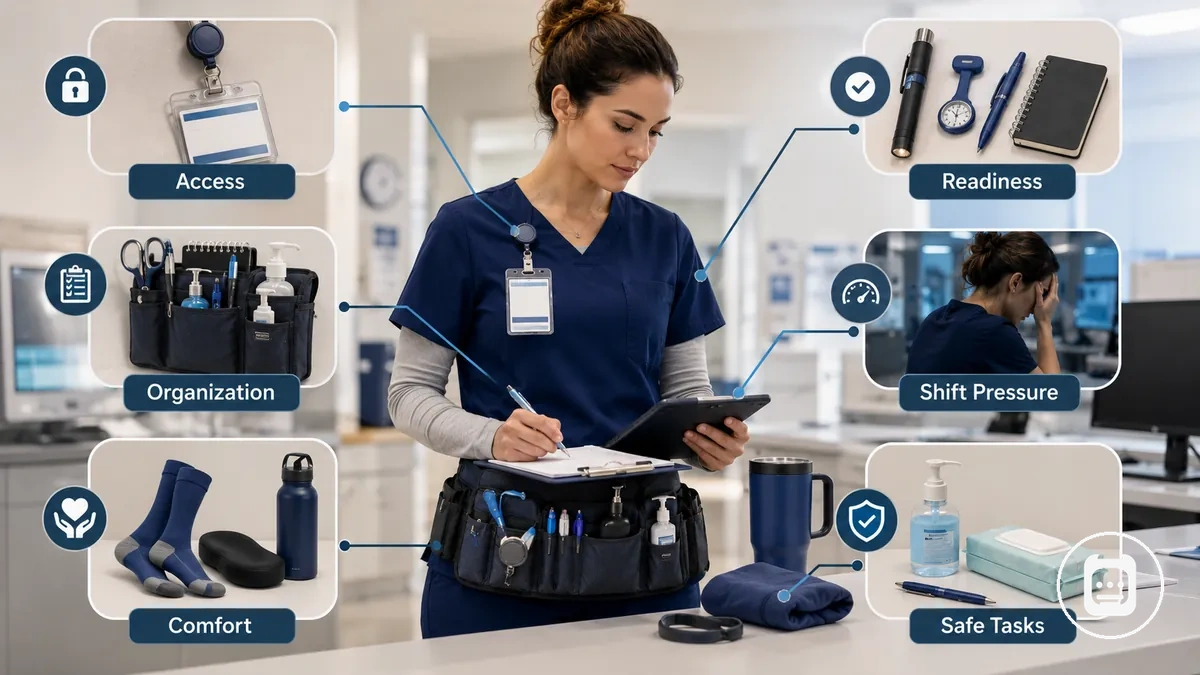
Work-shift nursing accessories are most useful when their support function matches the condition they are intended to address. For broader category context and related accessory considerations, visit the nursing accessories hub.
- Repeated tool access may increase the value of access-focused accessories, influencing placement and carrying decisions.
- Shift pressure can make organization-focused accessories more useful, influencing storage and item-management choices.
- Long standing time may increase interest in comfort-focused accessories, influencing wear and carry preferences.
- Workplace identification requirements can affect the role of badge and access accessories, influencing attachment choices.
- Handling and storage conditions may affect hygiene-related accessory decisions, influencing material and maintenance preferences.
Core Tools Nurses Use During Patient Care
During patient care activities, core tools often vary according to task type, workplace expectations, and how frequently a tool is used. Core tools support different functions, from assessment and documentation to identification and task-specific access. The most useful combination usually depends on role, workplace, and patient-care responsibilities.
When information needs to be recorded, referenced, or carried between tasks, documentation items and badge items can support workflow efficiency. Documentation items are work tools whose primary attribute is information capture, while badge items often provide identification or quick-reference access. In settings with frequent movement between patient-care tasks, these tools may improve convenience, although their value depends on workplace systems and task frequency.
When closer observation is required, assessment tools such as a penlight may support specific visual checks. Core tools differ by attribute and condition of use; a penlight emphasizes visibility, while scissors emphasize cutting or access-related utility. A tool that supports one patient-care activity may offer limited benefit during a shift focused on documentation, coordination, or administrative responsibilities.
Core Tools Nurses Use During Patient Care becomes easier to evaluate when nursing tools are grouped by function and access needs rather than by product type. The image below highlights common tool categories and the work-shift functions they may support.
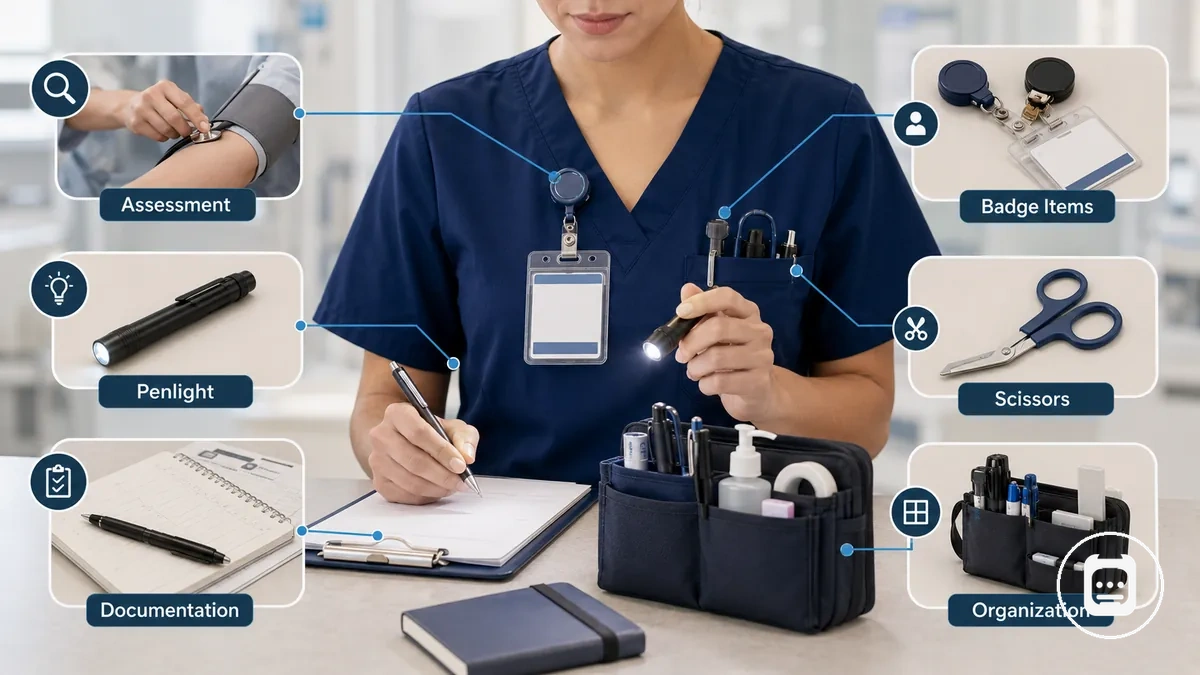
- Assessment tools → observation-focused attribute → used when visual checks are needed → may support task-specific evaluation.
- Documentation items → information-recording attribute → used when notes or references are required → may support workflow continuity.
- Scissors → cutting and access-related attribute → used when materials require adjustment or opening → usefulness depends on task type and workplace policy.
- Badge items → identification and reference attribute → used when role visibility or quick-reference access is helpful → may support workplace navigation.
- Small work accessories → organization-focused attribute → used when carrying multiple nurse tools → may reduce time spent locating frequently used items.
Different workplaces and patient-care roles may emphasize different core tools based on workflow patterns and task frequency. For a broader view of related categories that can complement these tool groups, see essential work accessories. Tool selection is usually most effective when matched to practical responsibilities, workplace expectations, and individual workflow needs.
Assessment, Documentation, and Small Clinical Tools
During routine patient care tasks, assessment tools, documentation items, and small clinical tools can support quick checks, note-taking, and task-specific observations. Assessment, Documentation, and Small Clinical Tools are best grouped by work function so their task fit can be evaluated within a specific role and workflow.
Assessment, Documentation, and Small Clinical Tools become easier to evaluate when grouped by the task condition they support. The image below highlights common item categories and their practical work-shift functions.
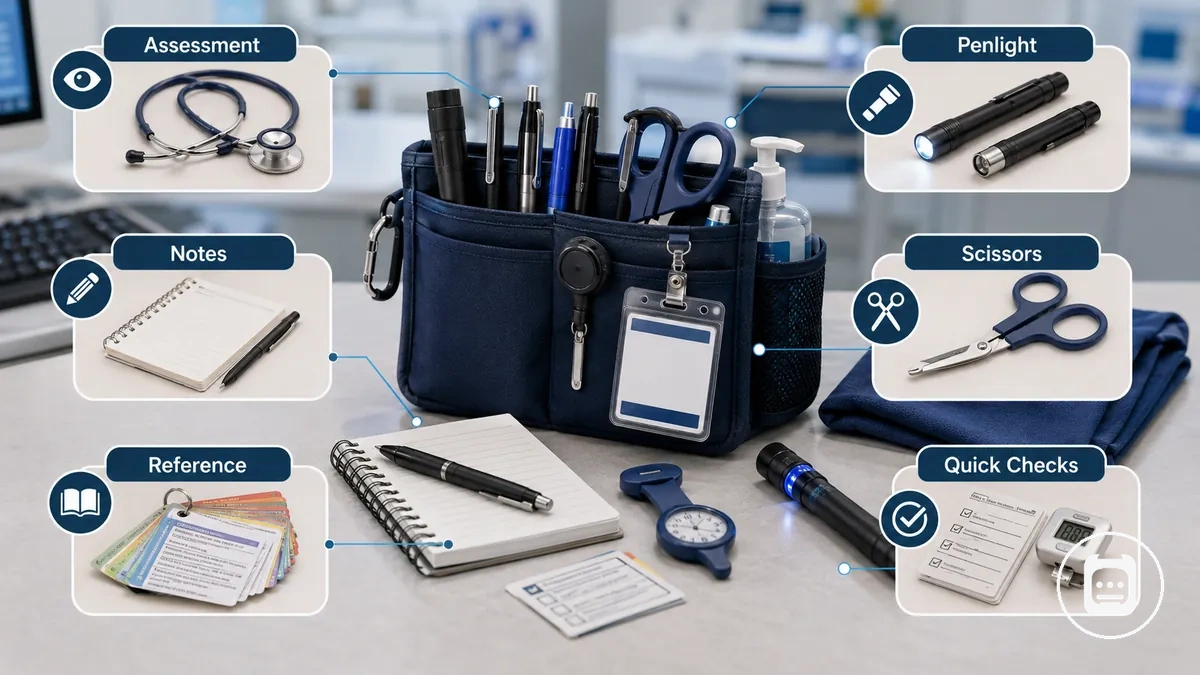
- Penlights → assessment tools → used during quick checks that require focused visibility → may support task-specific observation.
- Pens and notepads → documentation items → used when notes or reminders need to be recorded → may support information tracking during routine care.
- Scissors → task tools → used when materials require adjustment or opening → usefulness depends on workplace tasks and policy.
- Mini reference cards → quick-reference tools → used when information needs to be accessed rapidly → may support workflow continuity.
- Small clinical tools → organization-focused tools → used when frequently handled items need consistent placement → may reduce time spent locating task tools.
Role scope, workplace policy, and task frequency can influence which assessment tools, documentation items, or pocket tools are appropriate to carry. An item that supports quick checks in one setting may offer limited value in another, so carry decisions are usually best matched to local responsibilities and workflow needs.
Badge, ID, and Fast-Access Work Items
During a busy shift, Badge, ID, and Fast-Access Work Items can support repeated access needs by improving visibility, reach, and retention of frequently used identification items. Fast access becomes more relevant when routine movement between tasks creates repeated retrieval needs throughout the workday.
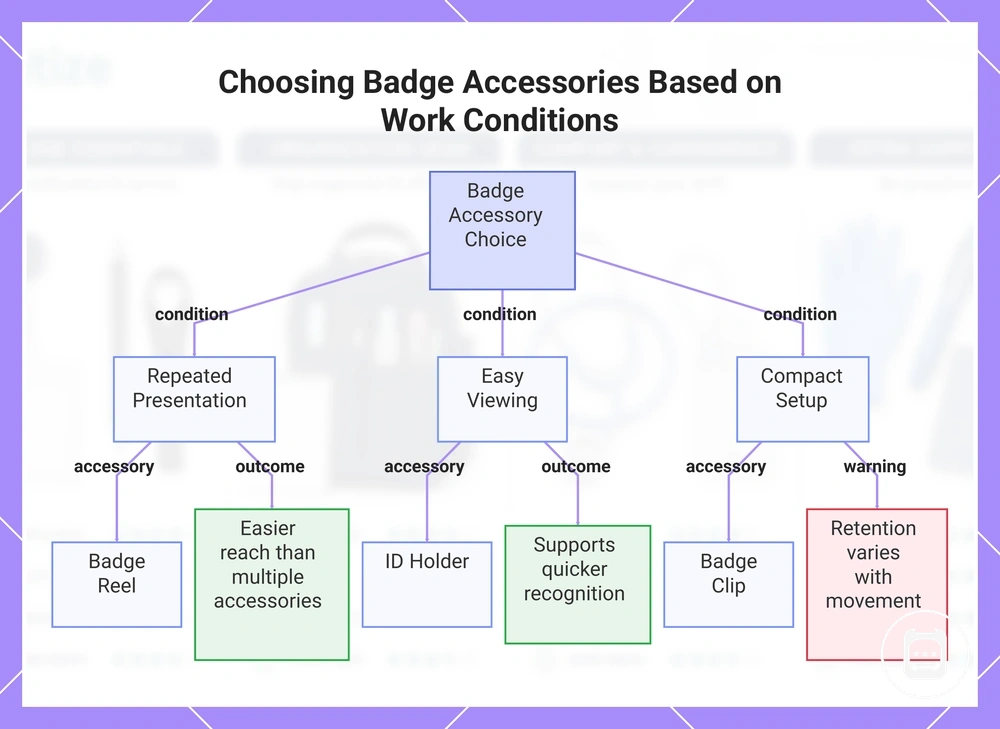
When access items are used frequently, the attachment method can influence convenience, visibility, and retention. The comparison below highlights how common badge accessories differ by access attribute and work condition.
- Badge reel → extended reach attribute → useful when identification needs to be presented repeatedly → may improve convenience while helping retain the attached item.
- ID holder → visibility attribute → useful when identification should remain easy to view → may support quicker recognition during routine activities.
- Badge clip → direct attachment attribute → useful when a compact setup is preferred → retention may vary with movement and attachment conditions.
- Small attachments → quick-access attribute → useful when lightweight items need consistent placement → excessive attachments may increase clutter or reduce organization.
- Fast-access items → reach and retention attribute → useful when frequently used items need predictable access → effectiveness depends on workflow and carrying preferences.
A badge reel carrying a single frequently used item may provide easier reach than attaching multiple accessories to the same location. Workplace policy, movement requirements, and retention preferences can influence whether badge accessories, ID accessories, or other access items are appropriate for a specific role.
This chart helps compare badge accessories by matching their attribute to the work condition and expected outcome.
On-Body Organization During a Shift
On-body organization helps nurses carry selected accessories without slowing movement or hiding frequently used items. During a shift, storage choices often depend on access frequency, carry weight, and how often an item needs to be reached while moving between tasks.
Pockets, pouches, utility belts, and clips create different storage-location effects because each option changes visibility, comfort, and retrieval conditions. Pockets may suit lightweight items used frequently, while pouches can help separate accessories when organization becomes difficult. Utility belts may increase carrying capacity, but comfort can vary with carry weight, movement demands, and workplace expectations.
Wearable organization often requires balancing readiness against bulk. Carrying less may support faster movement, while carrying enough accessories may improve readiness for routine work conditions. Clips can help keep frequently used items accessible, although the practical effect depends on placement, item weight, and access frequency.
The table below compares storage location choices by access frequency, carry weight, hygiene considerations, comfort, and practical work-shift effects.
| Entity/Option | Attribute or Condition | Practical Effect | Decision Cue |
|---|---|---|---|
| Pockets | High access frequency, light carry weight | Can keep commonly used items within easier reach | Useful when movement and quick retrieval are priorities |
| Pouches | Grouped storage and item separation | May improve organization of multiple accessories | Consider when loose items become difficult to manage |
| Utility Belts | Expanded carrying capacity | Can increase storage while affecting comfort differently by use conditions | Depends on carry weight and movement requirements |
| Clips | External attachment and visibility | May improve access to frequently used items | Useful when access matters more than storage volume |
| Bag Separation | Items stored off-body | Can reduce on-body clutter while keeping lower-frequency items available | Consider for accessories that are not needed regularly |
On-body organization is usually most effective when storage choices match access frequency, hygiene considerations, and comfort needs rather than maximizing the number of carried items. For broader storage planning beyond wearable organization, see organizing nursing accessories.
Pocket Organizers, Utility Pouches, and Belt Options
During a work shift, a pocket organizer, utility pouch, or belt option can change how accessories are carried, reached, and managed. The most suitable format usually depends on capacity needs, reach requirements, carry weight, and fit within the workplace context.
When accessories become difficult to organize or retrieve, the carrying format can influence storage access and movement impact. The comparison below highlights how attachment method, capacity, cleaning practicality, and fit differ across common on-body organization formats.
| Entity/Option | Attribute or Condition | Practical Effect | Decision Cue |
|---|---|---|---|
| Pocket Organizer | Internal attachment method, moderate capacity | Can keep frequently used items grouped with minimal added bulk | Consider when reach and compact fit are priorities |
| Utility Pouch | External attachment method, increased capacity | May separate accessories more clearly and improve storage access | Useful when carried items exceed available pocket space |
| Belt Option | Waist-mounted attachment method | Can distribute storage while affecting movement differently depending on carry weight | Depends on fit, workplace conditions, and movement needs |
| Organizer Pouch | Structured storage and cleaning practicality | May improve separation of tools and accessories | Consider when organization is more important than maximum capacity |
In workplaces where only a few items are needed repeatedly, minimal carry may be sufficient because storage access remains straightforward without additional weight. The right pocket organizer, utility pouch, or belt option usually depends on workplace context, cleaning needs, movement requirements, and the amount of storage required rather than any format being universally preferable.
What to Keep on Your Uniform Versus in a Work Bag
Frequently used, lightweight items that fit workplace expectations usually belong in uniform carry, while backup items, bulky items, or lower-frequency accessories usually fit a work bag. This shift carry split helps balance access frequency, comfort, and readiness without placing every item in the same location.
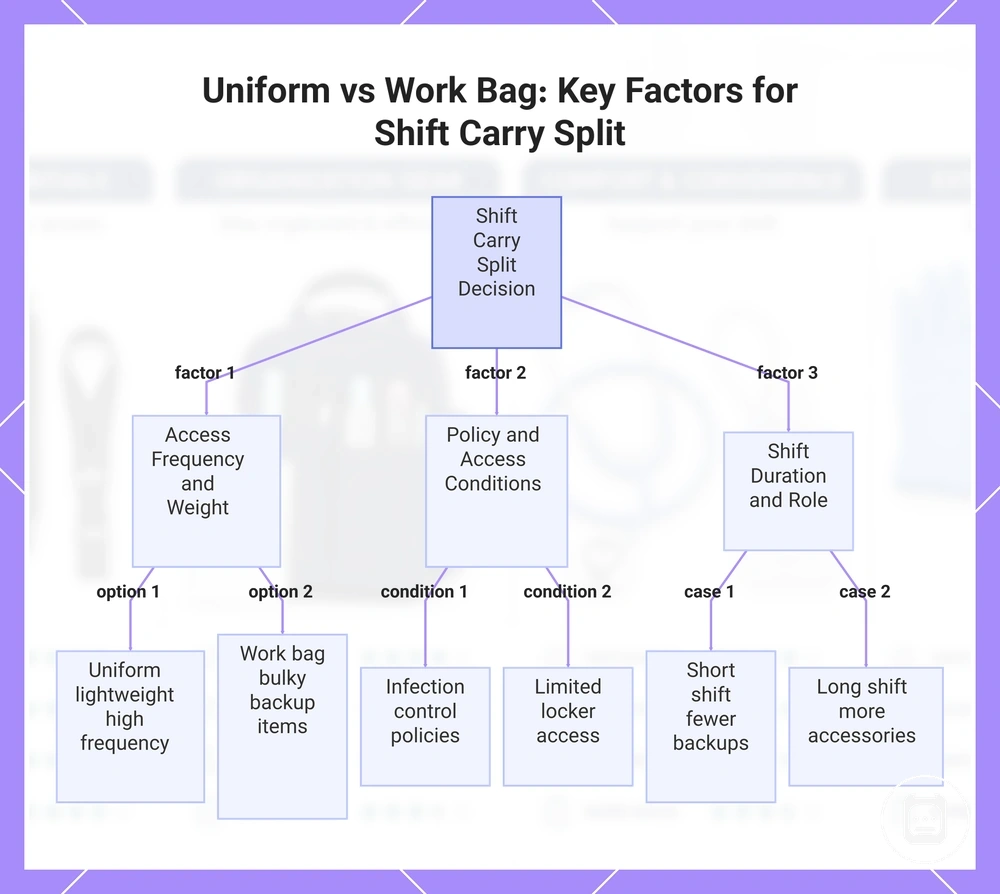
When deciding between uniform carry and a work bag, item location is often determined by access frequency, weight, backup needs, and practical workplace conditions. The comparison below organizes the decision so commonly used accessories remain accessible while less frequently used bag items stay available when needed.
- Uniform carry → lightweight items with high access frequency → can support quicker retrieval during routine tasks.
- Work bag → backup items and bulky items → can reduce on-uniform weight while keeping additional supplies available.
- Lower-frequency accessories → often fit better in a work bag → may reduce clutter during active movement.
- Infection-control concerns or workplace policies → may influence item location decisions → depends on local requirements and storage practices.
- Personal comfort and carry weight → can affect the shift carry split → heavier loads may be easier to manage away from the uniform.
Short shifts may require fewer backup items, while a long shift or floating role may increase the value of keeping additional accessories in a work bag. Limited locker access can also influence placement decisions because stored items may be less convenient to retrieve during the shift. For related portability considerations, see portable accessories for shifts.
This chart shows the main factors that determine whether items should be carried on the uniform or placed in a work bag, based on access frequency, workplace conditions, and shift type.
Choosing Accessories by Shift Length and Work Setting
Accessory suitability depends on shift length, work setting, care setting, workflow intensity, and workplace rules rather than a universal list of nursing accessories. The same accessory can be practical in one department context and less useful in another because task frequency, storage access, and movement demands may differ.
When shift conditions change, accessory suitability often changes as well. The table below organizes work condition, accessory attribute, and decision effect so nursing accessories can be evaluated according to setting fit rather than assumed compatibility.
| Entity/Option | Attribute or Condition | Practical Effect | Decision Cue |
|---|---|---|---|
| Long Shift | Extended shift duration and repeated task frequency | Frequently used accessories may need easier access throughout the shift | Consider organization and access needs when items are used repeatedly |
| Night Shift | Different workflow intensity and storage access conditions | Accessory placement may influence retrieval convenience during routine tasks | Match placement to access frequency and workflow patterns |
| Clinical Rotation | Changing department context and workplace rules | Accessory suitability may vary between care settings | Review local expectations before deciding what to carry |
| High-Mobility Work Setting | Frequent movement and limited storage access | Lightweight accessories may be easier to manage during active workflows | Prioritize items that are needed regularly while moving |
| Uniform and Hygiene Requirements | Workplace rules and hygiene-related conditions | Accessory choice may be influenced by local carrying limitations | Align accessory selection with workplace expectations and practical needs |
Department type can influence accessory suitability because care setting responsibilities often affect which tools require frequent access. Storage access can also change the decision effect; when supplies remain readily available nearby, fewer accessories may need to stay on the person throughout the shift.
A long shift, night shift, clinical rotation, or high-mobility work setting does not automatically require a specific accessory setup. Accessory suitability usually depends on how shift length, workflow intensity, workplace rules, storage access, and department context interact within the work setting.
New-Nurse, Long-Shift, and Night-Shift Accessory Needs
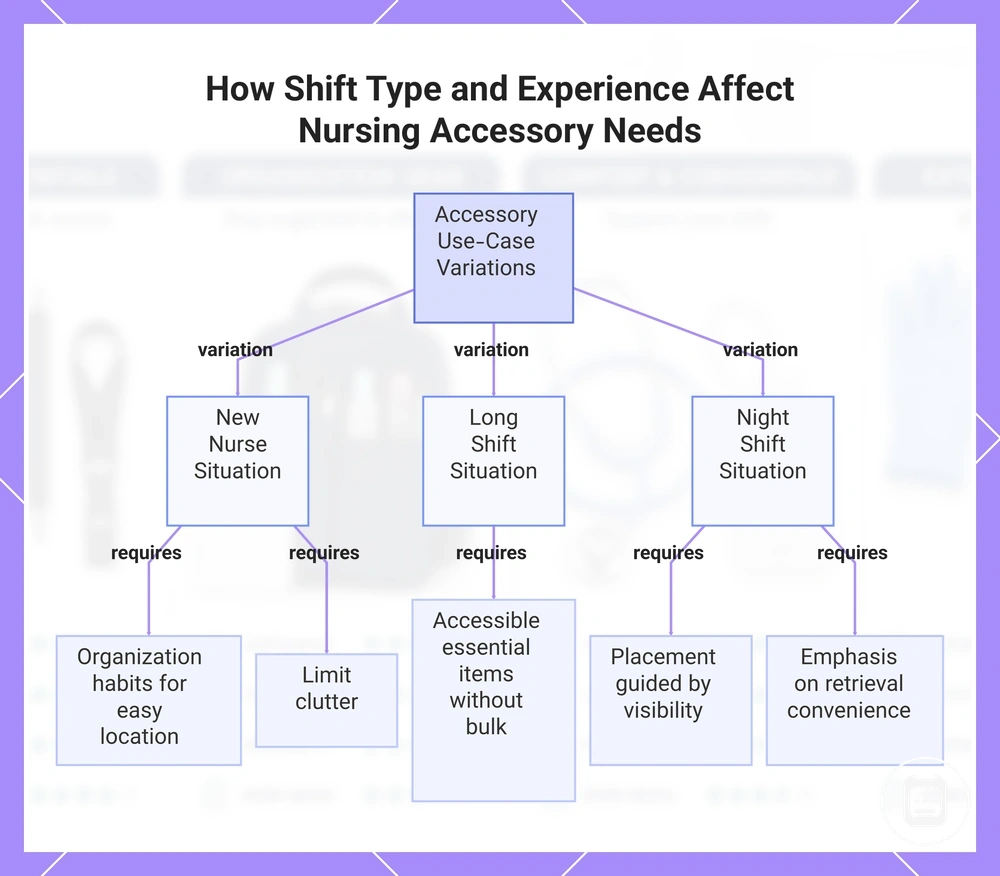
A new nurse, long shift, or night shift can change how nursing accessories are used, but these situations are use-case variations rather than separate buying lists. Accessory needs usually depend on role fit, work conditions, visibility needs, and organization habits rather than experience level or shift timing alone.
When shift variation changes task flow, small adjustments in visibility, access, or organization may be more useful than carrying additional items. A new nurse may prefer simple organization habits that make frequently used tools easier to locate while limiting clutter. A long shift can increase the value of keeping essential support available throughout the day, and a night shift may place greater emphasis on visibility when retrieval conditions are less convenient.
- New nurse → consistent organization habits → may make commonly used accessories easier to locate during routine tasks.
- Long shift → fatigue-related conditions → may increase the value of keeping essential items accessible without adding unnecessary bulk.
- Night shift → visibility-related conditions → may influence where frequently used accessories are placed.
- Backup tools → occasional-use support → can remain available when needed without becoming part of daily clutter.
- Clutter reduction → clearer role fit → may help balance essential support with practical carrying needs.
For example, a long shift may encourage greater attention to comfort during long shifts, while a new nurse or night shift worker may focus more on visibility and organization. The most suitable accessory setup usually depends on the work setting, responsibilities, and need to keep essential support available without carrying unnecessary items.
This chart shows how accessory needs vary for new nurses, long shifts, and night shifts, focusing on organization, accessibility, and visibility adjustments.
Practical Trade-Offs Between Portability, Comfort, and Readiness
Portability, comfort, and readiness depend on balancing carry weight, tool reach, backup capacity, movement comfort, and workplace acceptance rather than maximizing a single priority. A light setup may support easier movement, while a prepared setup may improve access to needed accessories during a shift.
Trade-offs become easier to evaluate when portability, comfort, and readiness are compared against the conditions that influence accessory use. The comparison block below connects accessory attributes to practical effects and decision cues without assuming a universal solution.
| Entity/Option | Attribute or Condition | Practical Effect | Decision Cue |
|---|---|---|---|
| Light Setup | Lower carry weight and fewer accessories | May improve movement comfort and reduce carrying burden | Consider when frequent movement is part of the work setting |
| Prepared Setup | Greater backup capacity and tool availability | May reduce the need to retrieve items from another location | Consider when task variation is less predictable |
| High Tool Reach | Frequently used items kept accessible | May support quicker access during routine tasks | Useful when the same accessories are used repeatedly |
| Reduced Cleaning Burden | Fewer carried accessories and attachment points | May simplify routine cleaning and item management | Consider when accessory maintenance is a concern |
| Workplace Acceptance | Local rules, storage practices, and carrying expectations | May influence which accessories are practical to carry | Match accessory choices to workplace conditions |
A carry trade-off often appears when backup capacity increases because additional accessories can add weight and affect movement comfort. In contrast, reducing carry weight may improve portability but can limit immediate access to backup tools when work conditions change.
When storage access is nearby and movement is frequent, a lighter setup may be sufficient. When backup capacity and tool reach become more important because tasks vary throughout the shift, a more prepared setup may be justified. The most suitable balance usually depends on how portability, comfort, readiness, and workplace acceptance interact in the specific work setting.
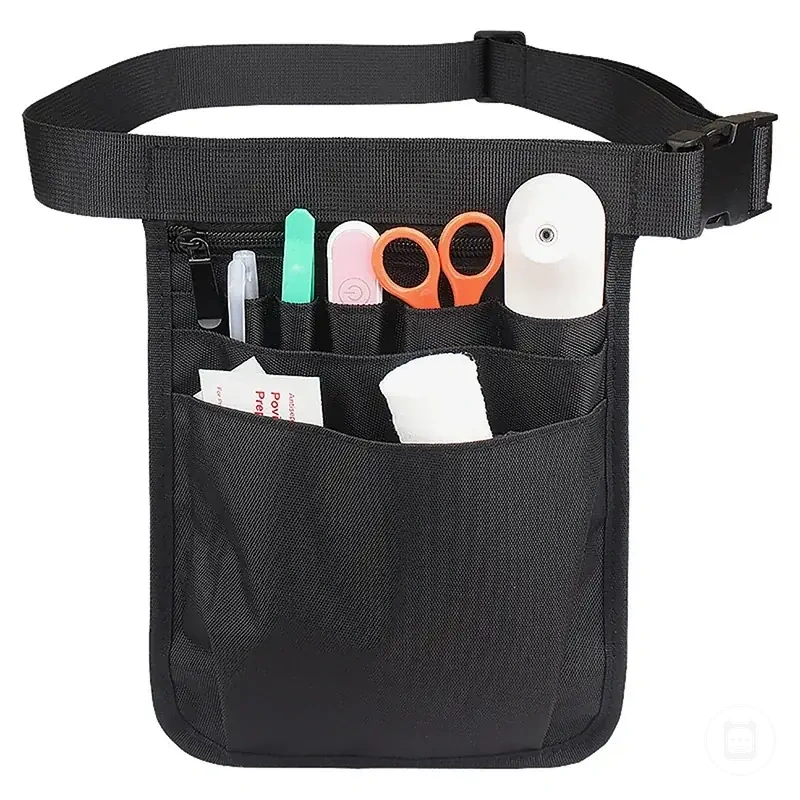
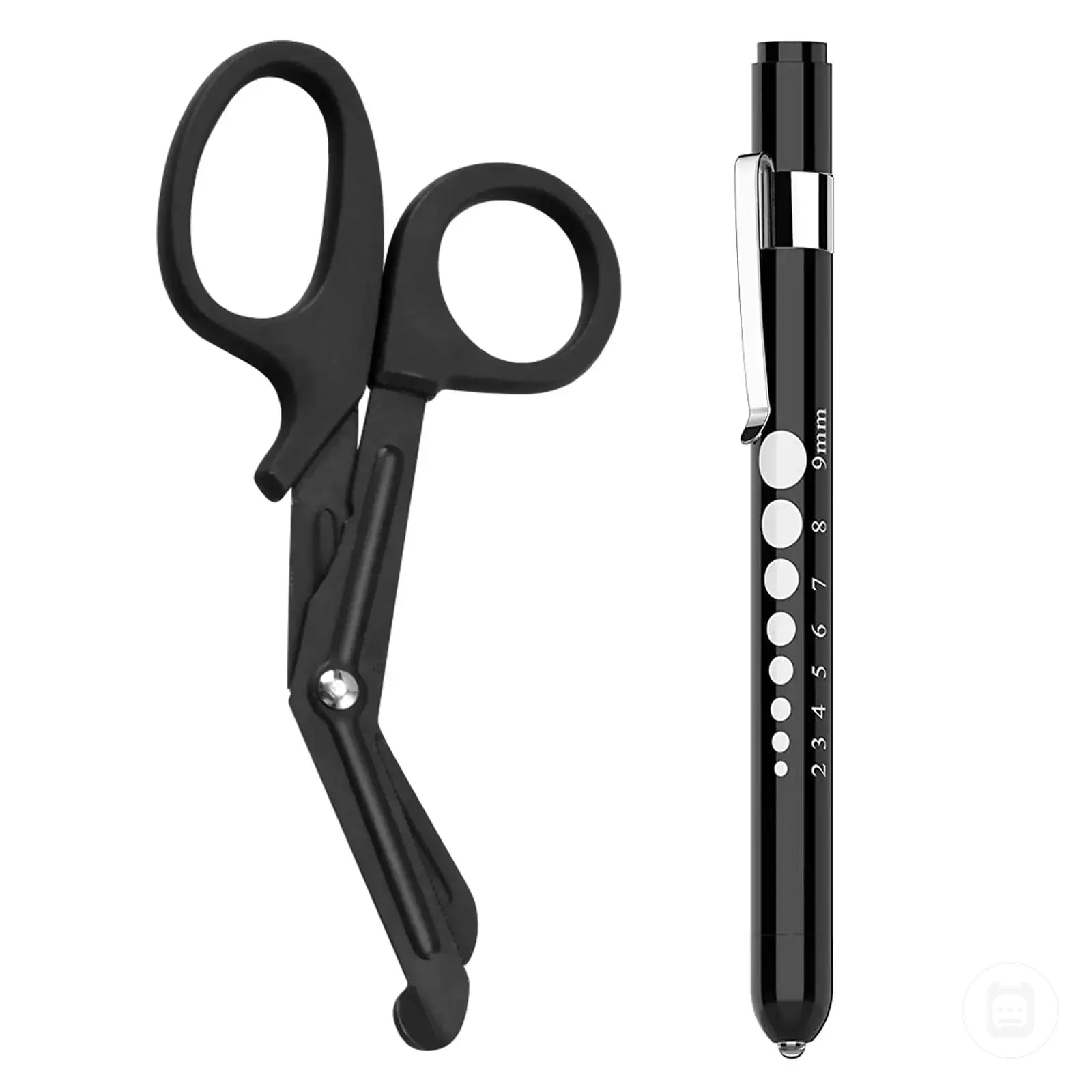
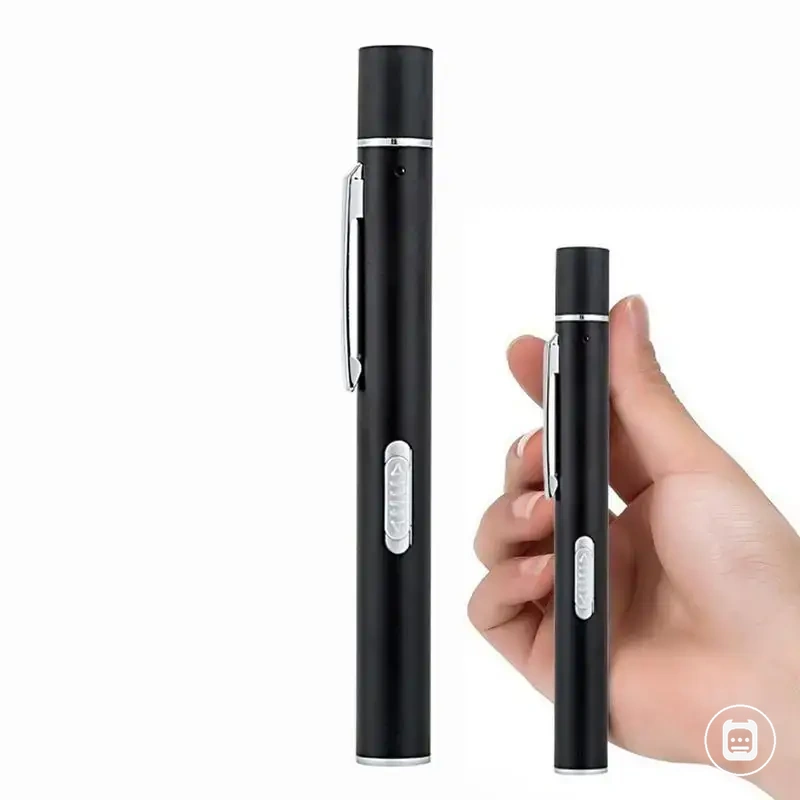
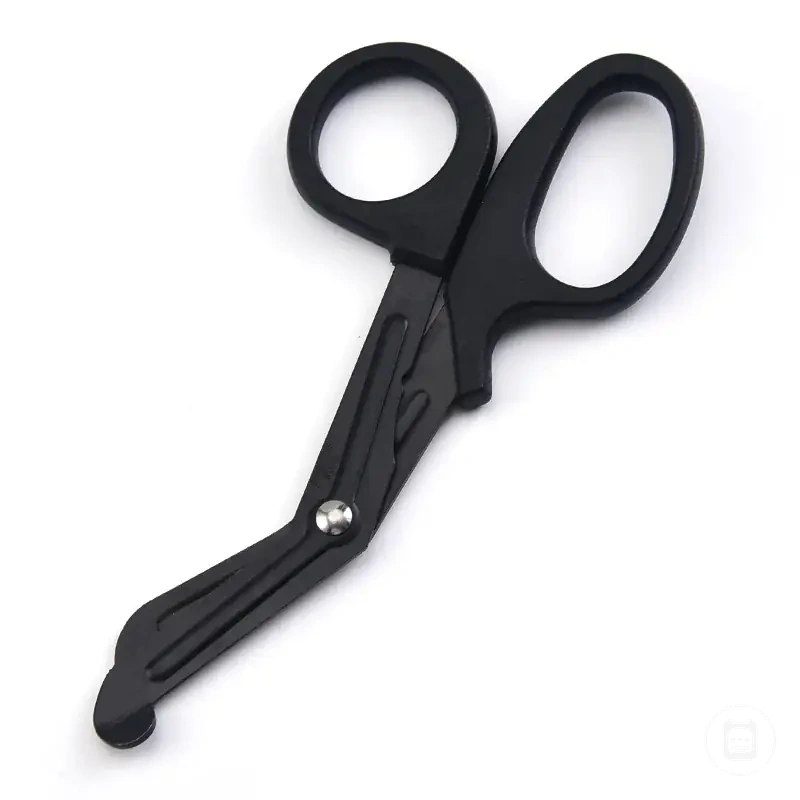
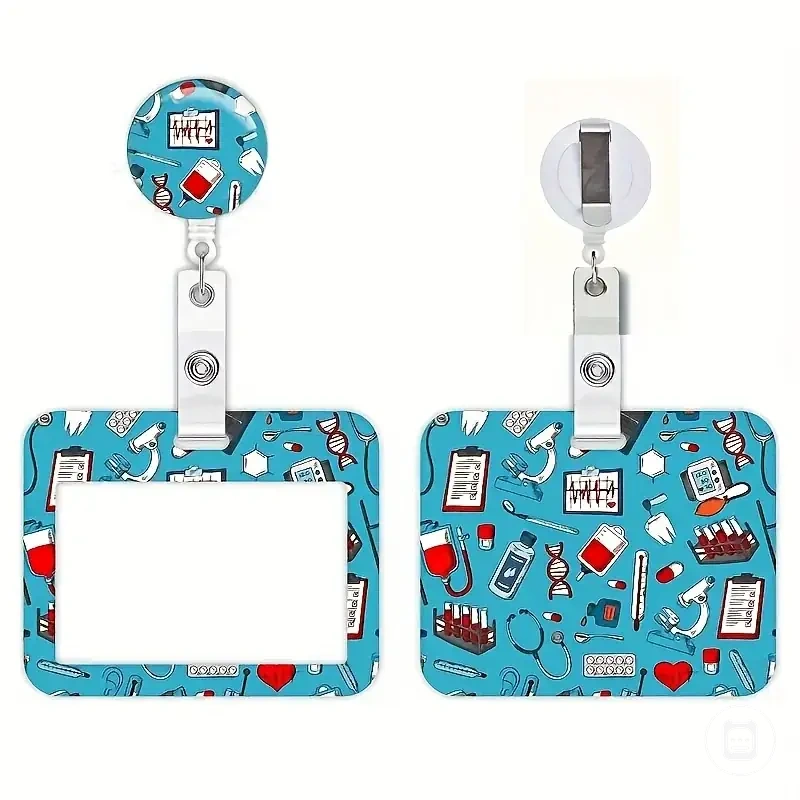
Here are product examples that may make comparison easier. Before buying, always review the compatibility criteria, essential features, and product details.
Workplace Fit, Hygiene, and Safe Use Limits
When nursing accessories are carried during a shift, workplace fit, hygiene, and safe carrying limits can influence whether an item is appropriate for daily use. Workplace rules, movement demands, and cleaning expectations may differ by setting, so accessory decisions usually depend on local conditions rather than a universal standard.
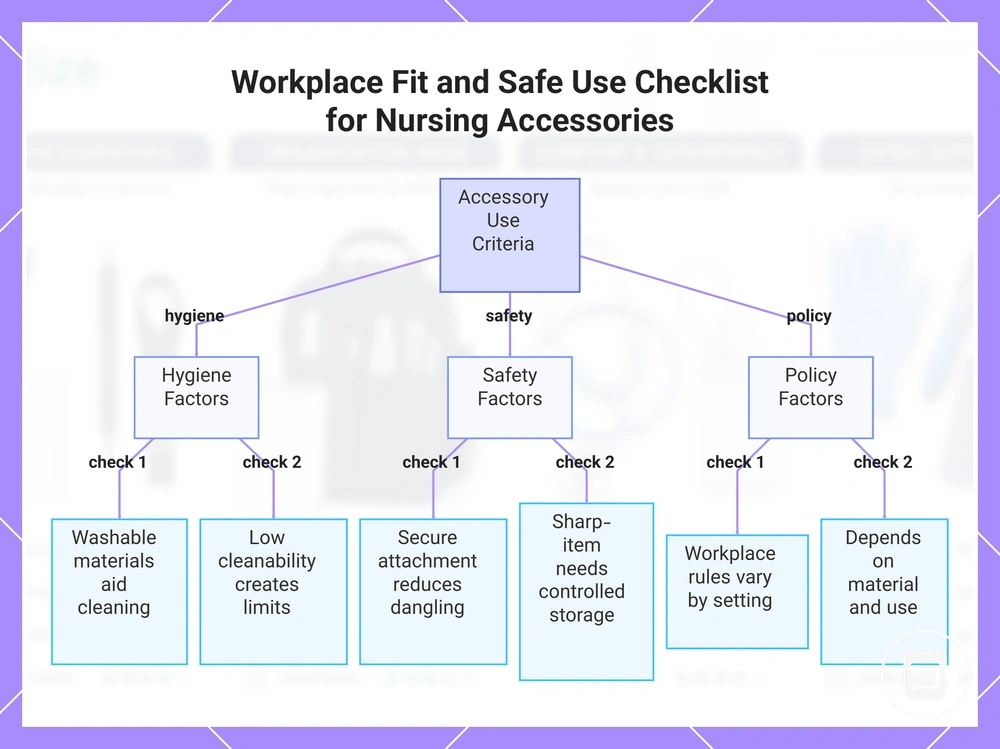
Hygiene concerns often affect material and storage decisions. Washable materials may be easier to maintain when routine cleaning is expected, while materials with lower cleanability can create additional hygiene limits depending on use conditions. Workplace fit is usually influenced by the relationship between material choice, cleanability, risk considerations, and practical work requirements.
Safe carrying depends on how accessories are attached and managed during movement. Secure attachment may reduce issues associated with dangling items when walking, bending, or performing routine tasks, while poor attachment can affect safe use in active work environments. Sharp-item handling may require additional caution because carrying methods that suit one accessory may not be appropriate for another, especially when workplace rules or movement conditions vary.
The checklist below helps verify workplace fit and safe-use limits before accessories are added to a work-shift setup. It focuses on practical conditions that can influence carrying decisions without assuming a specific workplace policy.
- Washable materials → may support routine cleaning needs → influences whether an accessory fits local hygiene expectations.
- Secure attachment → may reduce interference from dangling items during movement → influences placement and carrying decisions.
- Sharp-item handling → may require more controlled storage methods → influences safe carrying choices.
- Workplace rules → can vary between settings and roles → influences which accessories are practical to carry.
- Policy variation and hygiene limits → may depend on material, storage method, and use conditions → influences final accessory decisions.
When workplace fit or hygiene expectations are unclear, accessory choices are usually most effective when matched to local requirements and actual work conditions. Cleaning, replacement, and formal safety policies may require deeper treatment outside routine work-shift use, so policy variation should remain part of the final decision.
This chart organizes the key factors and checklist items that determine workplace fit, hygiene, and safe carrying limits for nursing accessories.
Buying Priorities for Work-Shift Nursing Accessories
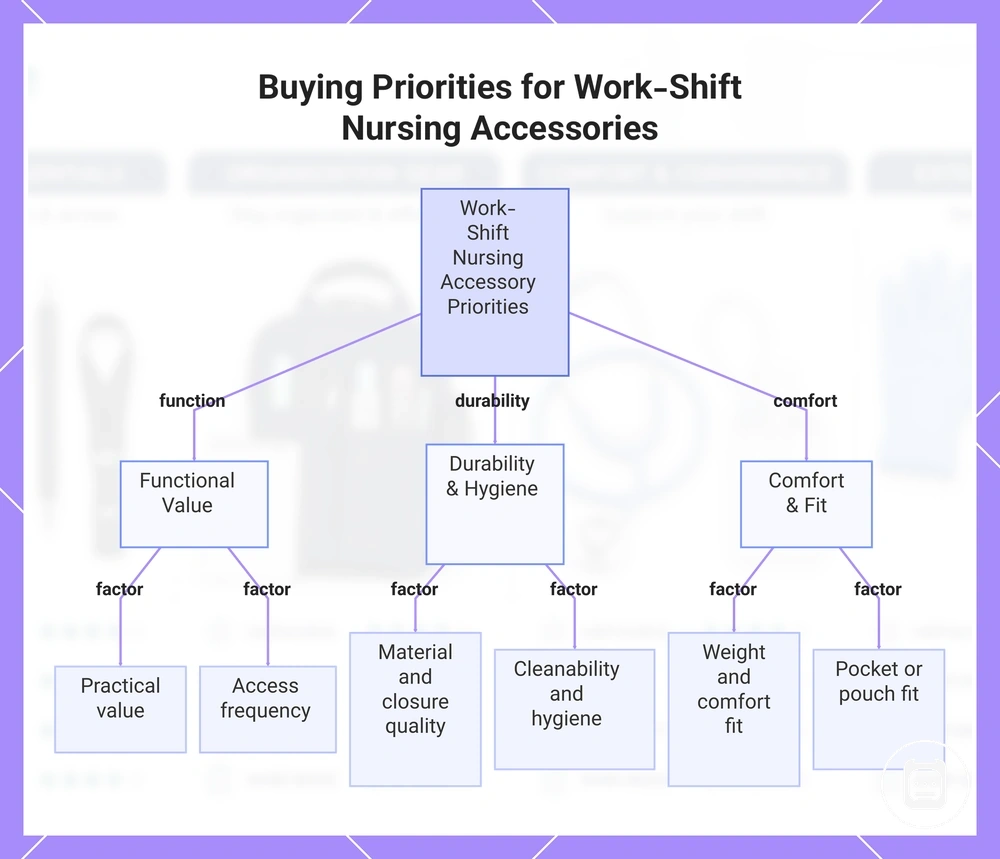
Buying priorities for work-shift nursing accessories depend on practical value, durability, access frequency, hygiene suitability, and comfort fit rather than item popularity. Accessories that support routine shift tasks consistently often deserve higher priority than items used only occasionally.
Selection criteria become more useful when each accessory is evaluated by its work-shift role. An accessory with high access frequency may provide greater practical value than one with additional features that are rarely used. Durability can depend on material choice, closure quality, cleanability, and how frequently the accessory is handled during a shift. Replacement likelihood may also influence a purchase decision when repeated use or workplace conditions increase wear.
Buying priorities should distinguish essential support from optional convenience. Nursing accessories that support routine access, organization, identification, or workflow tasks often justify greater attention because they affect daily use conditions more directly. As a criteria reference, essential work accessories can help clarify which functions are needed regularly and which remain secondary to routine shift demands.
The checklist below organizes buying criteria by actual shift use rather than popularity. Each condition explains why the criterion matters and what decision effect it may have.
- Practical value → supports routine work tasks → influences whether an accessory deserves regular use.
- Access frequency → affects how often an item is needed during a shift → influences overall priority.
- Material and durability → may affect long-term usability under repeated handling → influences replacement likelihood.
- Closure or attachment quality → may affect retention during movement → influences day-to-day practicality.
- Cleanability and hygiene suitability → may affect workplace fit → influences material selection decisions.
- Weight and comfort fit → may affect carrying convenience throughout a shift → influences whether an accessory remains practical for regular use.
- Pocket or pouch fit → affects how easily an accessory integrates into a carry setup → influences usability during routine tasks.
When accessories appear similar, practical value, access frequency, and hygiene suitability often provide clearer decision signals than appearance alone. The most suitable purchase decision usually depends on how well an accessory supports routine work conditions, whether its comfort fit remains practical during use, and how replacement likelihood aligns with expected wear.
Here are product examples that may make comparison easier. Before buying, always review the compatibility criteria, essential features, and product details.
This chart organizes the key buying criteria for work-shift nursing accessories by functional value, durability and hygiene, and comfort and fit.